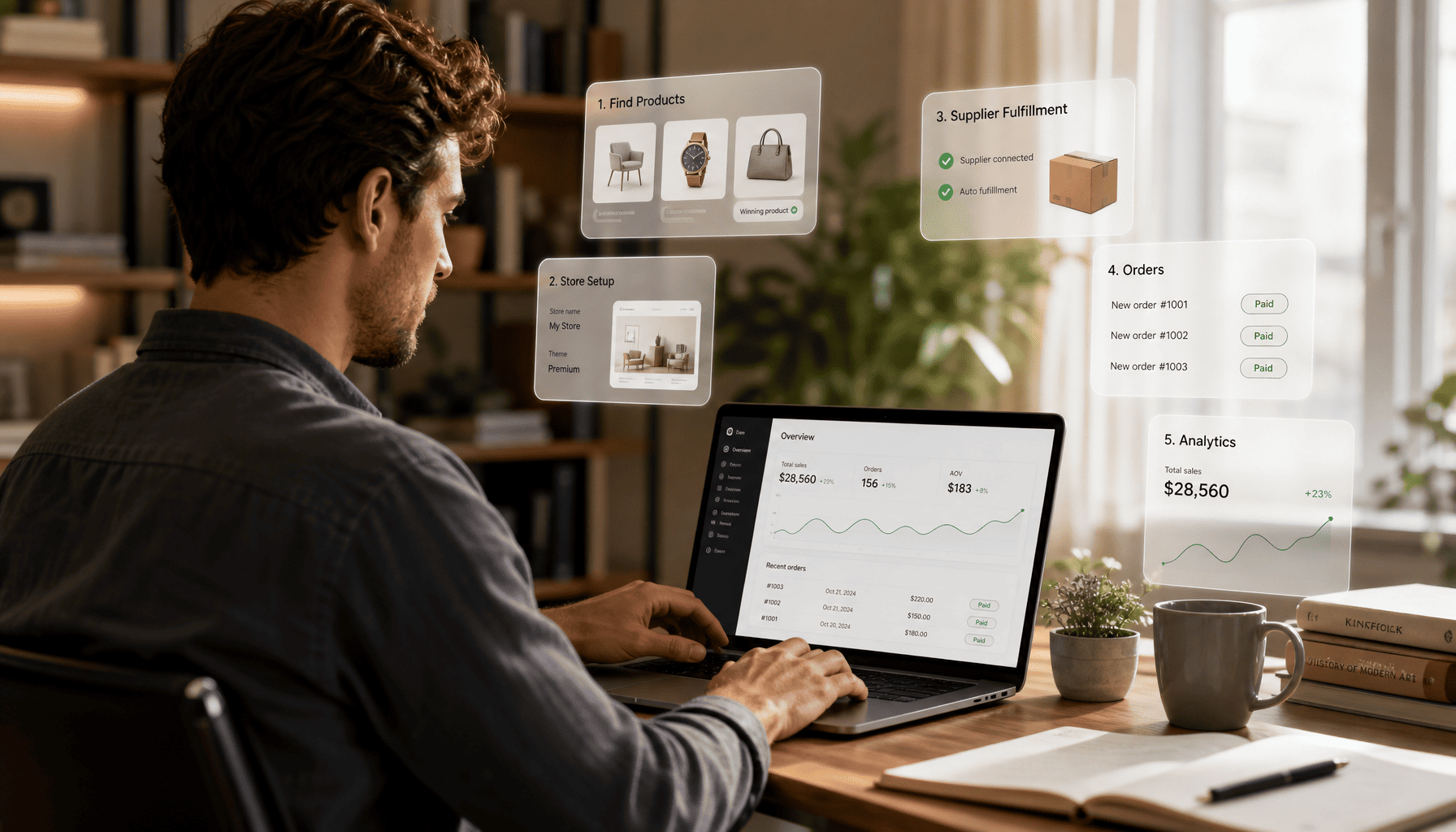
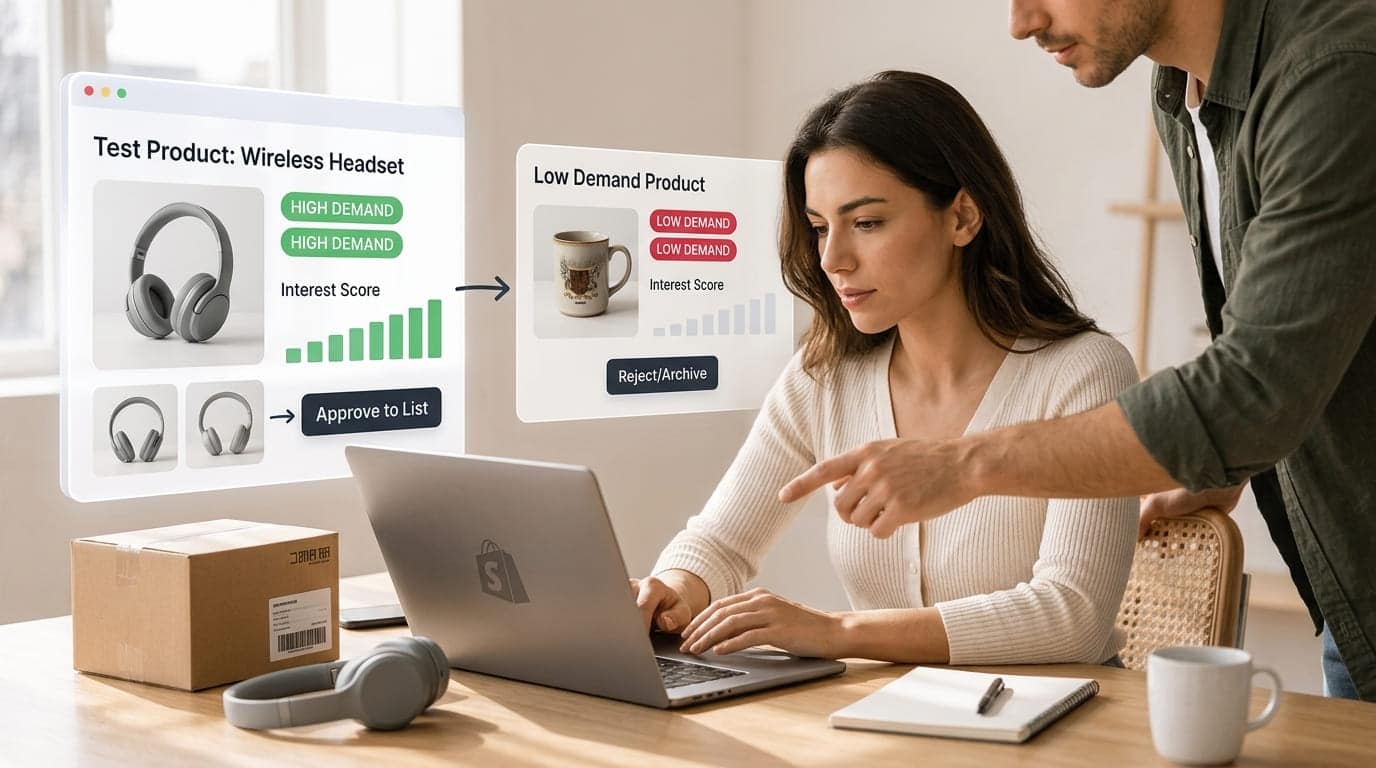
To spy on dropshipping competitors effectively through comprehensive Ecommerce Competitor Research, track what they sell, promote, price, and change over time. Combine public store signals, advertising activity, traffic, reviews, sales data, and product trends before treating any item as a potential winner.
This process is useful for store owners who want faster product research without blindly copying another seller. The goal is to find evidence of demand, understand why an offer may be working, and decide whether you can create a stronger one.
Ad Spy tools make that process faster, but they do not turn public information into perfect knowledge. Sales volume and revenue figures from third-party tools are generally estimates, so the strongest decisions come from comparing several independent signals.
Key Takeaways
Combine store activity, advertising, pricing, traffic, reviews, and product trends instead of relying on one metric.
Shopify spy tools can reveal useful public information, but estimated sales are not confirmed order data.
Long-running ads and repeated creative testing may indicate demand, but neither proves profitability.
Shopify store tracking becomes more useful when you monitor changes over time.
Product research should identify demand and opportunities for differentiation.
💡Pro Tip:Start with a short competitor watchlist. Track five to ten Shopify stores in your niche and compare the same signals each time: new products, price changes, promotions, bestseller placement, and active ads.
Why Does Competitor Intelligence Matter for E-commerce Sellers?
Competitor intelligence helps e-commerce sellers replace assumptions with observable market evidence. By studying what other stores sell, promote, price, add, remove, and advertise, you can see where demand appears to exist and where competitors may be leaving gaps that your own store can address.
Dropshipping moves quickly. A product category can attract dozens of sellers once demand becomes obvious, while yesterday’s winning products can become crowded just as fast.
Competitor analysis gives you context before you make a decision. It can show whether one store appears to be experimenting with a product or whether multiple stores are consistently promoting similar items.
It also helps you think beyond the product itself. Analyzing offers and pricing strategies with a Facebook ad spy tool helps improve competitive positioning. Shopify’s current competitive-analysis guidance similarly recommends examining competitor products, prices, positioning, advertising, sales channels, and customer journeys rather than looking at price alone.
That means the real question is not simply, “What are other dropshippers selling?”
A better question is: What does the available evidence suggest is working, why might it be working, and can I create a better offer around the same demand?
What Can Competitor Research Tell You?
Competitor research can reveal patterns in product selection, pricing, ad strategies, positioning, store design, sales and customer acquisition.
Look for products receiving prominent placement or repeated promotion. Then study the surrounding offer: discounts, bundles, shipping, ad creatives, landing pages, product descriptions, and possible profit margins.
Repeated observations turn isolated details into market intelligence.
What Competitor Signals Should You Track?
Competitor signal
What to look for
What it can tell you
Product catalog
New items, bestseller placement, repeated promotion
Which products or categories receive priority
Competitor ads
Ad longevity, creative variations, offers
Where sellers continue investing
Pricing and offers
Price changes, discounts, bundles
How the product is positioned
Reviews and engagement
Review growth, comments, complaints
Demand signals and customer pain points
Traffic trends
Traffic estimates and sources
Whether attention appears to be growing ( Sales )
Store changes
Products added, removed, or repriced
What may be tested, scaled, or abandoned
No single signal proves that a product is profitable. The useful insight comes from comparing several signals over time.
What Can’t Spy Tools Tell You?
Dropshipping spy tools can estimate information that a merchant has not publicly disclosed, but those estimates are not audited financial records.
Shopify order records require authorized access. Knowing a store’s URL does not provide an outside research platform unrestricted access to its private order database.
If a sales tracker displays monthly sales or monthly revenue, use the figure as directional evidence and cross-check it against observable behavior.
How Do You Spy on Shopify Without Accessing Private Data?
You can spy on Shopify by analyzing public products, collections, prices, discounts, ads, reviews, technology, traffic estimates, engagement data, and visible store changes.
A product shown on the homepage, featured in collections, and promoted repeatedly deserves more attention than something buried deep in the catalog.
Store analysis becomes even more useful when you watch changes. New products, price adjustments, revised product descriptions, and repeated promotions can reveal what a seller is actively testing.
Why Are Successful Stores Worth Studying?
Successful stores show how product selection, pricing, merchandising, and marketing strategies can work together.
Do not clone them. Look for patterns and weaknesses such as poor reviews, confusing offers, slow-shipping complaints, weak differentiation, or generic messaging.
What Should the Best Spy Tools Help You Validate?
The best spy tools should answer practical questions: Is demand visible? Are sellers continuing to promote the product? Is momentum sustained? How crowded is the market? Which offers and creatives recur?
Some spy tools specialize in an ad library and ad tracking. Others focus on Shopify stores, installed apps, traffic, product discovery, or sales tracking.
Using multiple tools can make dropshipping research fragmented. Sell The Trend combines product research with Store Intelligence, while its Chrome Extension can surface Shopify information and save Facebook ads for further analysis.
💡 Pro Tip: Build evidence, not assumptions. Do not label a product a winner because one seller carries it or one sales tracker displays a large number.
The stronger approach is to find independent signals pointing in the same direction.
Proven Techniques for Spotting Bestsellers
To find winning products, start with the storefront, then validate what you see using advertising, traffic, reviews, sales tracking, and external trend data.
How Can Shopify Stores Reveal Product Demand?
Shopify stores can reveal useful clues through product placement, collections, promotions, recently added items, and bestseller sorting.
Repetition matters. A product receiving homepage placement and continued promotion is more interesting than an item that simply exists in a large catalog.
How Do You Find Best-Selling Products Inside a Competitor’s Catalog?
Catalog sorting by best-selling items can reveal competitors’ top performers. Shopify supports a BEST_SELLING collection sort option.
However, top products are not automatically trending products. An older item may rank highly because of its sales history, while a newer product is accelerating faster.
Combine bestseller placement with recent advertising, reviews, catalog changes, and broader product trends.
Which Product Changes Should You Monitor?
Watch products being added or removed, price changes, discounts, variants, descriptions, and shifts in visibility.
One edit means little. Repeated changes around the same product category can indicate testing or scaling.
How Do You Track Competitor Stores Over Time?
To track competitor stores effectively, use a consistent watchlist and record the same signals at regular intervals.
Building a watchlist of competitors can aid in tracking changes in product offerings. This historical view is what makes Shopify store tracking valuable.
No title
💡 Pro Tip:Compare changes, not just snapshots. A snapshot shows what a store looks like today; tracking reveals what the seller keeps changing.
When products are repeatedly added, retained, promoted, repriced, or removed, you have a better basis for deciding what deserves deeper analysis.
A competitor ad reveals what a seller is promoting, how the offer is framed, which creative angle is being tested, and whether promotion continues.
Competitors’ ads can reveal details about successful products and marketing strategies.
Study the hook, ad copy, discount, demonstration, call to action, and landing page—not just the item itself.
If several Shopify competitors repeatedly advertise similar products, that pattern can justify further competitor analysis. It does not prove that every campaign is profitable.
What Does an Ad Spy Tool Actually Show You?
An ad spy tool makes public ad data searchable. Depending on the platform, you may use advanced filters for advertiser, country, product category, engagement metrics, ad format, date range, or campaign longevity.
AdSpy tools help identify winning products and ad strategies.
An ad library therefore makes it easier to compare creatives and offers at scale instead of relying on endless manual scrolling.
Why Does Ad Longevity Matter?
Active ads can indicate a product generating stable sales.
The word indicate matters. The longevity of an ad is a useful signal, but it cannot reveal exact profit margins or return on ad spend.
It becomes more convincing when the same product receives repeated advertising, customer engagement, prominent storefront placement, and supportive trend data.
What Does Ad Tracking Reveal About Product Longevity?
Ad tracking helps distinguish short tests from sustained promotion.
A seller might launch several testing ads, then stop most of them quickly. The creatives that remain active for weeks deserve closer attention.
Repeated hooks, refreshed ad creatives, and new variations can indicate continued investment in the underlying offer.
Which Ad Creatives Are Worth Studying?
Look for longevity, repeated variations, engagement metrics, clear offers, and consistency with wider marketing strategies.
Compare the hook, ad copy, demonstration, price, bundle, and call to action. Facebook ads are especially useful because advertising libraries and specialized ad spy platforms make campaigns easier to inspect.
Minea tracks ads across Facebook, TikTok, and Pinterest.
Minea updates its ad database regularly for real-time insights.
No title
💡 Pro Tip:Separate testing ads from scaling ads. Give more weight to repeated creatives and sustained promotion than to a newly launched advertisement.
How Accurate Are Sales Estimates From Spy Tools?
Sales estimates from dropshipping spy tools are directional intelligence, not audited financial data.
Platforms may model inventory movements, timestamps, pricing, traffic estimates, storefront changes, and other public signals to estimate sales volume.
Sales data accuracy is limited by timestamp tracking methods. A product update does not necessarily represent an order, while inventory can change for unrelated reasons.
How Accurate Are the Numbers?
There is no universal accuracy percentage that applies to every tool and every store.
Sales estimates from spy tools are often 30-50% accurate.
Treat that figure as an industry estimate rather than a guaranteed benchmark. Accuracy depends on the methodology, available information, store size, and signals being tracked.
What Does PPSPY Claim About Sales Accuracy?
PPSPY claims 80.5% accuracy for sales data estimates.
That is a vendor-reported claim, so it should not be confused with independently verified Shopify order information.
An estimate becomes more useful when it aligns with healthy traffic, sustained promotion, customer reviews, bestseller placement, and adoption by other sellers.
If those signals conflict, investigate before acting.
No title
💡 Pro Tip:Treat estimated revenue as directional. Saying “Store A appears larger than Store B” is safer than treating an exact-looking monthly revenue figure as confirmed.
How Can Traffic Reveal Whether a Product Has Real Momentum?
Using tools like Similarweb can provide insights into competitor website traffic.
Traffic estimates are still estimates, but they can help identify relative momentum and changing acquisition patterns.
Why Does Traffic Source Analysis Matter?
Traffic source analysis is critical for understanding how competitors attract customers.
A business driven by paid social may require a different growth strategy from one relying on organic search, direct traffic, or referrals.
Compare traffic trends with advertising rather than treating either metric alone as proof.
What Do Reviews and Social Proof Reveal?
Social proof signals include review counts and customer engagement on social media.
Reviews can expose demand as well as problems in competing offers.
Monitoring customer reviews can highlight common complaints and desired features.
Repeated complaints about quality, sizing, shipping, instructions, packaging, or missing features can reveal ways to create a better offer.
How Can Customer Complaints Create Product Opportunities?
Product differentiation is essential for standing out among competitors.
If customers like the underlying product but repeatedly complain about one weakness, consider whether a better supplier, clearer product descriptions, a stronger bundle, or better service solves it.
The objective is not merely to import products that other sellers already carry. It is to use their results to understand how your version can compete.
How Can Google Trends Validate Trending Products?
Google Trends can validate whether interest in products is stable or growing.
Use it as validation rather than the main product discovery engine. When your spy tools surface an opportunity, broader search behavior can help reveal whether interest appears stable, rising, seasonal, or fading.
No title
💡 Pro Tip: Look for multiple signals moving together. A potential winner becomes more interesting when advertising persists, traffic remains healthy, reviews grow, storefront visibility stays high, and product trends support the same demand.
That is the difference between guessing and evidence-based bestseller identification.
Can Reverse Image Search Reveal a Competitor’s Supplier?
Reverse image search can connect a product photo to supplier listings, marketplaces, and similar offers. Using reverse image search can expose competitors’ suppliers and pricing. Use it to compare sourcing options and profit margins, not as proof that a competitor buys from a specific supplier.
It can also uncover dropshipping products sold under different names across Shopify stores, which keyword research may miss.
Which Are the Best Dropshipping Spy Tools for Different Research Jobs?
The best dropshipping spy tools are not interchangeable. Some focus on ad spy data, others on Shopify store analysis, app detection, technology, or product research. The best dropshipping spy tools for you depend on the question you need answered.
Tool
Best use
Useful signal
Sell The Trend
Analyzing stores + product discovery
Store Intelligence, competitor products, NEXUS research
Koala Inspector
Shopify spy tools
Bestsellers, apps, themes, traffic and ads
Minea
Ad spy
Facebook, TikTok and Pinterest ads
BigSpy
Large ad library
Cross-platform ad creatives
PPSPY
Sales prediction
AI-modeled product and store data
Dropship.io
Product + researching competitors
Weekly products, ads and advanced filters
Store Inspector / BuiltWith
Tech-stack research
Apps, themes, pixels and technology changes
ZIK Analytics
Niche research
Trending stores, products and niches
When comparing the best dropshipping spy tools, favor observable evidence over a flashy dashboard. Competitor analysis is crucial for dropshipping success, but a tool is useful only if its data helps you make a better decision.
What Does Koala Inspector Reveal?
Koala Inspector has over 250,000 users for Shopify store analysis. Its tools surface themes, installed apps, products, traffic signals, and advertising information from Shopify stores.
Koala Inspector reveals best-selling products in Shopify stores. It also offers a free Chrome extension and a free plan, making it one of the free tools available for Shopify research.
How Large Is BigSpy’s Ad Library?
BigSpy has over 1 billion ad creatives in its database. Its site says the database covers nearly 10 million advertisers.
For useful ad data, narrow the database by product category, platform, engagement, and longevity. That makes it easier to separate top-performing ads from noise, including Facebook ads and Pinterest ads.
What Can Minea, PPSPY, and Dropship.io Add?
Minea’s ad spy covers Facebook, TikTok, and Pinterest ads, while its current plans include Magic Search.
PPSPY uses AI to predict sales data for trending products. Its site says its algorithm predicts order data to help identify best-selling products.
Dropship.io provides real-time data on competitor performance. Its platform combines product, store, Facebook ad, and TikTok research with advanced filters.
Dropship.io offers a weekly portfolio of trending products. Its Portfolio currently releases up to 40 products each week.
What About Tech-Stack and Niche Research?
Store Inspector focuses on tech stack analysis without sales estimates. It emphasizes apps, themes, pixels, and public technical signals.
BuiltWith tracks technology changes over time for competitor stores. Its historical reporting and Change API can identify technology additions and removals.
ZIK Analytics tracks competitor stores to identify trending niches. Its Shopify tools surface trending stores, products, niches, and keyword trends.
These specialist tools explain why the best dropshipping spy tools are often judged by use case rather than one universal feature list.
No title
💡 Pro Tip: Match the Spy Tool to the question. Do not subscribe to multiple dropshipping spy tools just because each offers more data. Decide whether you need ad creatives, traffic, app detection, supplier clues, sales estimates, or product discovery first.
For e-commerce market intelligence, the shortest workflow is usually the one that answers your decision question with the fewest unsupported assumptions.
How Do You Turn Competitive Insights Into Product Decisions?
Structuring data across competitors helps identify trends and successful practices.
Create a simple comparison sheet for potential winning products. Record demand signals, ad activity, competition, selling price, sourcing cost, customer complaints, and ways your offer could differ.
This converts dropshipping spy tools from browsing aids into decision tools.
Which Signals Should You Compare Across Dropshipping Stores?
Compare five areas across dropshipping stores: demand, momentum, competition, margin, and differentiation.
A candidate becomes stronger when several Shopify dropshipping stores promote it, Facebook ads or Pinterest ads persist, reviews grow, and the economics leave room for acquisition and fulfillment costs.
Weak engagement, crowded offers, poor supplier economics, or dependence on one short-lived campaign should lower confidence.
How Do You Score a Potential Winning Product?
Ask five questions:
Demand: Are people buying, reviewing, searching for, or engaging with it?
Momentum: Are traffic, ads, and product trends stable or rising?
Competition: How many Shopify stores are pursuing the same opportunity?
Margin: Is there enough room between sourcing cost and selling price?
Differentiation: Can you improve the product, offer, creative, shipping, or positioning?
This framework helps successful dropshippers find winning opportunities without assuming every bestseller will fit their business model.
How Should Competitor Intelligence Shape Your Marketing?
Use market intelligence to identify patterns, not to duplicate sales funnels or creatives. If several sellers lead with the same pain point, that may confirm what buyers care about, but your ad copy and positioning should still create a distinct reason to buy from you.
No title
💡 Pro Tip: Look for the gap behind the bestseller. Ask, “What are buyers still complaining about, and how can my offer solve it better?”
👉 Ready to turn competitor signals into your own shortlist of winning products? Use Sell The Trend’s Store Intelligence and product research tools to move from discovery to validation in one workflow. Start your 14-day free trial with Sell The Trend.
How Does Sell The Trend Turn Competitor Data Into Action?
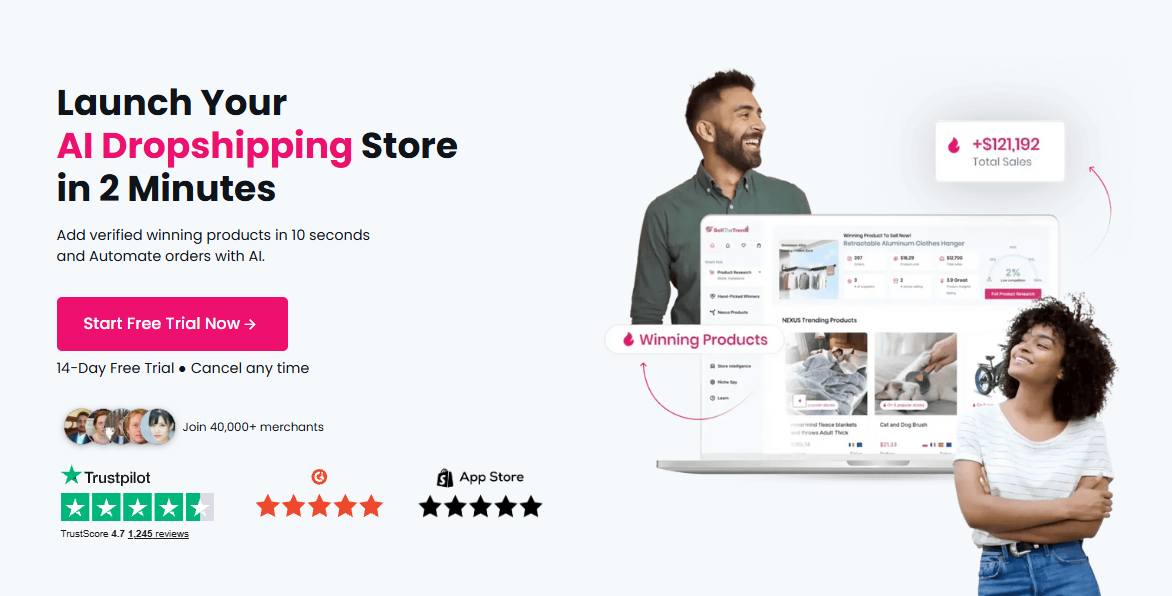
Sell The Trend brings store analysis, product research, ad spy workflows, and product discovery into one all-in-one platform. Instead of jumping between several dropshipping spy tools, you can move from a competitor store to potential winning products, then validate those products with NEXUS Product Research and broader market signals.
The goal is not to collect more competitor data. It is to turn store, ad, pricing, and product signals into a faster decision about what to test, how to position it, and whether the opportunity still has room to grow.
How Does Store Intelligence Help You Spy on Shopify Stores?
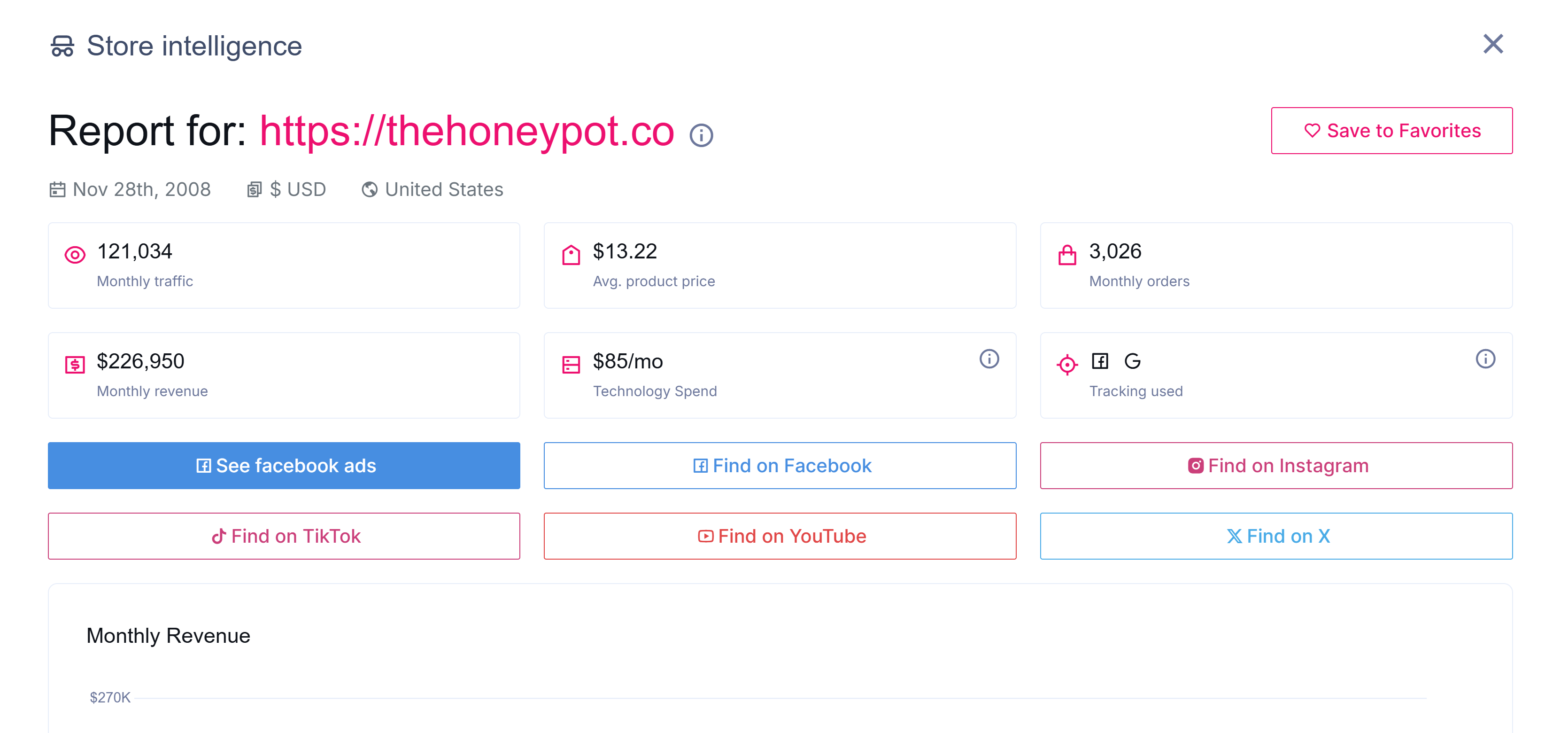
Sell The Trend’s Store Intelligence lets you enter a Shopify-powered store URL and review information such as products, pricing, traffic, orders, revenue estimates, and other store-level metrics. It can also surface a store’s top-selling products and recently added products.
That gives store owners a more structured way to spy on Shopify stores than manually browsing page after page.
For example, if a competitor appears to be adding several related products while repeatedly promoting one of them, Store Intelligence can help you compare those signals in one place.
It can also show average product price and monthly earnings estimates, which are useful as directional indicators when combined with the sales-data caveats covered earlier.
How Can Store Intelligence Help Find Winning Products?
Store Intelligence helps you find winning products by narrowing your attention to the products a competitor appears to prioritize.
You can then compare those products against:
product trends,
pricing,
competition,
Facebook ads,
customer feedback,
and wider e-commerce demand.
That is more useful than assuming every item in successful Shopify stores deserves to be copied.
Sell The Trend also documents Store Intelligence as a way to see top-selling products and competitor ads, which makes it a practical bridge between Shopify spy tools and ad spy research.
How Does NEXUS Product Research Validate What You Find?
NEXUS Product Research adds a second layer of validation after competitor discovery.
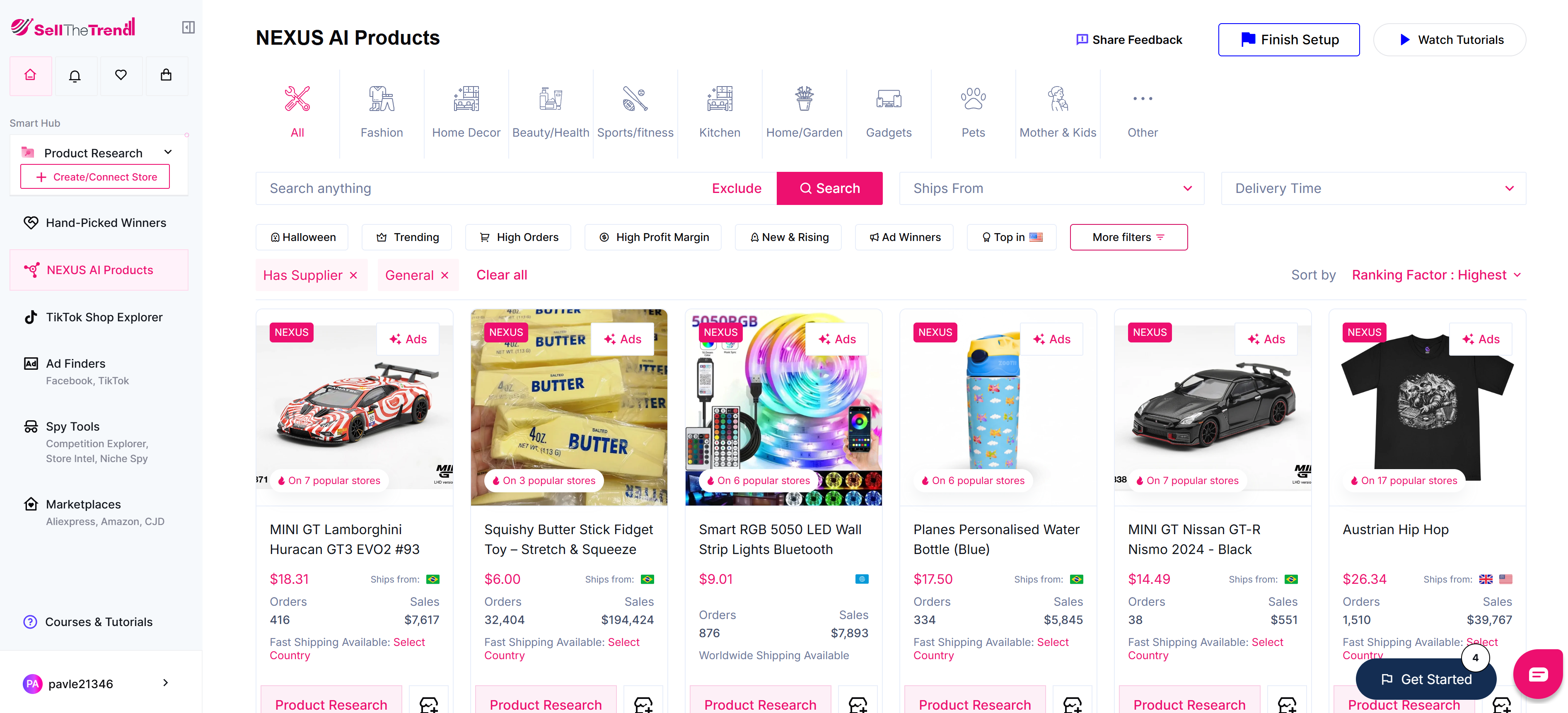
Sell The Trend describes NEXUS as an AI-powered product research system that analyzes 26 data points for products and competitors. It is designed to surface trending products, competition levels, pricing insights, and opportunities across different niches.
That means you can move from:
“This competitor is selling it”
to:
“Does broader data suggest this is actually worth testing?”
That distinction is important. Good dropshipping research should not stop at imitation.
No title
💡 Pro Tip: Use competitors for discovery, and NEXUS for validation.
A useful workflow is:
Find promising products in Shopify stores.
Check whether the same items appear in competitor ads.
Review pricing and customer feedback.
Validate demand and competition with NEXUS.
Test only the products that survive all five checks.
That process gives winning products a much stronger evidence base.
How Does the Chrome Extension Speed Up Store Analysis?
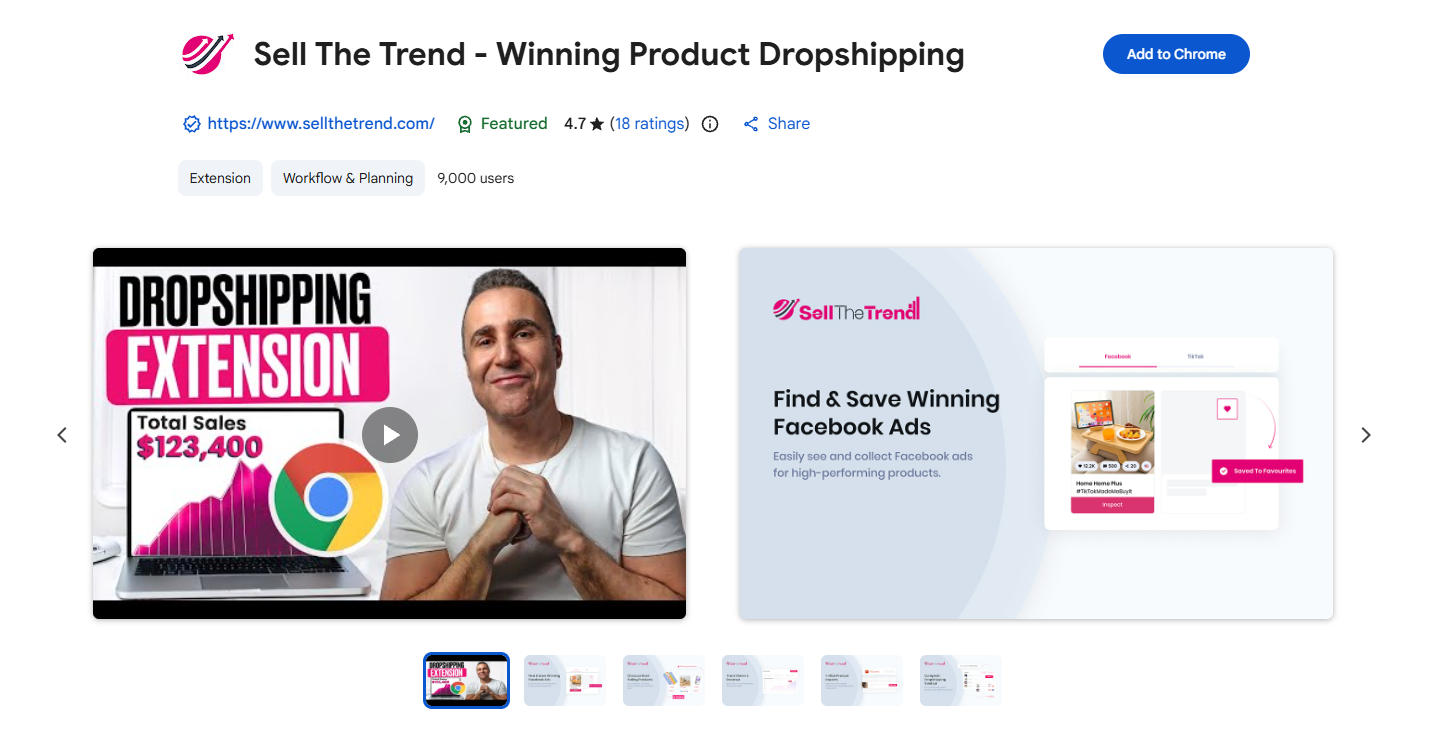
Sell The Trend’s Chrome Extension adds competitor intelligence directly to your browser.
It can help you spy on Shopify stores and view information such as bestsellers, revenue data, and installed apps. It can also save Facebook ads for later review.
For product sourcing, the Chrome Extension can also import products from AliExpress and CJDropshipping, helping connect product discovery with store execution.
That makes the Chrome Extension useful when you want to move quickly between Shopify stores, ad spy research, and product validation without opening multiple tools for every step.
How Can the Chrome Extension Help With Facebook Ads?
If you come across useful Facebook ads while researching competitors, the Chrome Extension can save those ads for later analysis.
You can then compare:
hooks,
ad copy,
offers,
creative format,
pricing,
and landing pages.
This is especially useful when you are reviewing top-performing ads or trying to understand why several competitors use similar angles.
Pinterest ads and TikTok ads may require other ad spy tools, but Facebook ads can be captured directly through the Sell The Trend browser workflow.
Why Use One Platform Instead of Several Spy Tools?
Using separate Shopify spy tools, ad spy platforms, product research apps, supplier tools, and product importers can create fragmented workflows.
Sell The Trend’s advantage is not that every specialist tool becomes unnecessary. It is that core competitor research, predictive product research, product discovery, supplier workflows, and Chrome Extension functionality can be handled from one platform.
That can reduce the amount of manual research required before you decide whether a product deserves testing.
Yes, when you are analyzing publicly available information such as products, pricing, ads, reviews, traffic estimates, and visible store changes.
Competitor analysis should not involve unauthorized access to private accounts, dashboards, or customer information.
Can You See Exactly How Many Sales a Shopify Store Makes?
Usually not from public data alone.
Shopify spy tools can estimate the volume of sales or revenue using observable signals, but those figures should be treated as estimates rather than confirmed order data.
How Do You Find Best-Selling Products on Shopify Stores?
Start with bestseller sorting, product placement, repeated promotion, advertising activity, reviews, and catalog changes.
The strongest signal is agreement across several data points rather than one bestseller list.
What Is the Difference Between an Ad Spy Tool and a Shopify Spy Tool?
An ad spy tool focuses primarily on advertising intelligence such as creatives, engagement, platforms, and campaign longevity.
Shopify spy tools focus more on store-level information such as products, pricing, apps, themes, traffic, and estimated sales.
How Long Should You Track a Competitor Before Acting?
Long enough to distinguish a one-off test from repeated behavior.
If a product remains prominent, continues receiving ads, and shows supporting demand signals over multiple observations, it deserves more attention than a product seen once.
Can Competitor Research Guarantee a Winning Product?
No.
It just improves your odds by helping you identify demand, momentum, and market gaps, but every product still requires testing.
Should I Use Several Dropshipping Spy Tools?
Sometimes.
Specialist dropshipping spy tools can provide useful additional data, but using too many platforms can slow the process. Start with the question you need answered, then choose the tool that provides the clearest evidence.
What Is the Best Way to Find Winning Products From Competitor Data?
Use multiple signals together: store activity, sales estimates, ad longevity, traffic, customer reviews, pricing, and product trends.
Then validate the opportunity before spending heavily on ads.
Conclusion: Turn Competitor Intelligence Into Better Product Decisions
Spying on dropshipping competitors works best when you treat it as structured market intelligence, not shortcut hunting.
The most reliable approach is to combine Shopify store analysis, ad spy data, sales estimates, reviews, traffic, pricing, and product trends. When several independent signals point in the same direction, you have a stronger reason to test.
Sell The Trend brings Store Intelligence, NEXUS Product Research, the Chrome Extension, and broader product discovery into one workflow, helping you move from competitor observation to informed action faster.
Lisa is an eCommerce and digital marketing specialist with over 6 years of experience helping online businesses grow through data-driven strategy and hands-on execution.
She has worked across dropshipping and direct-to-consumer channels, focusing on product research and performance marketing. At Sell The Trend, she creates practical, research-backed content to help merchants make confident decisions.