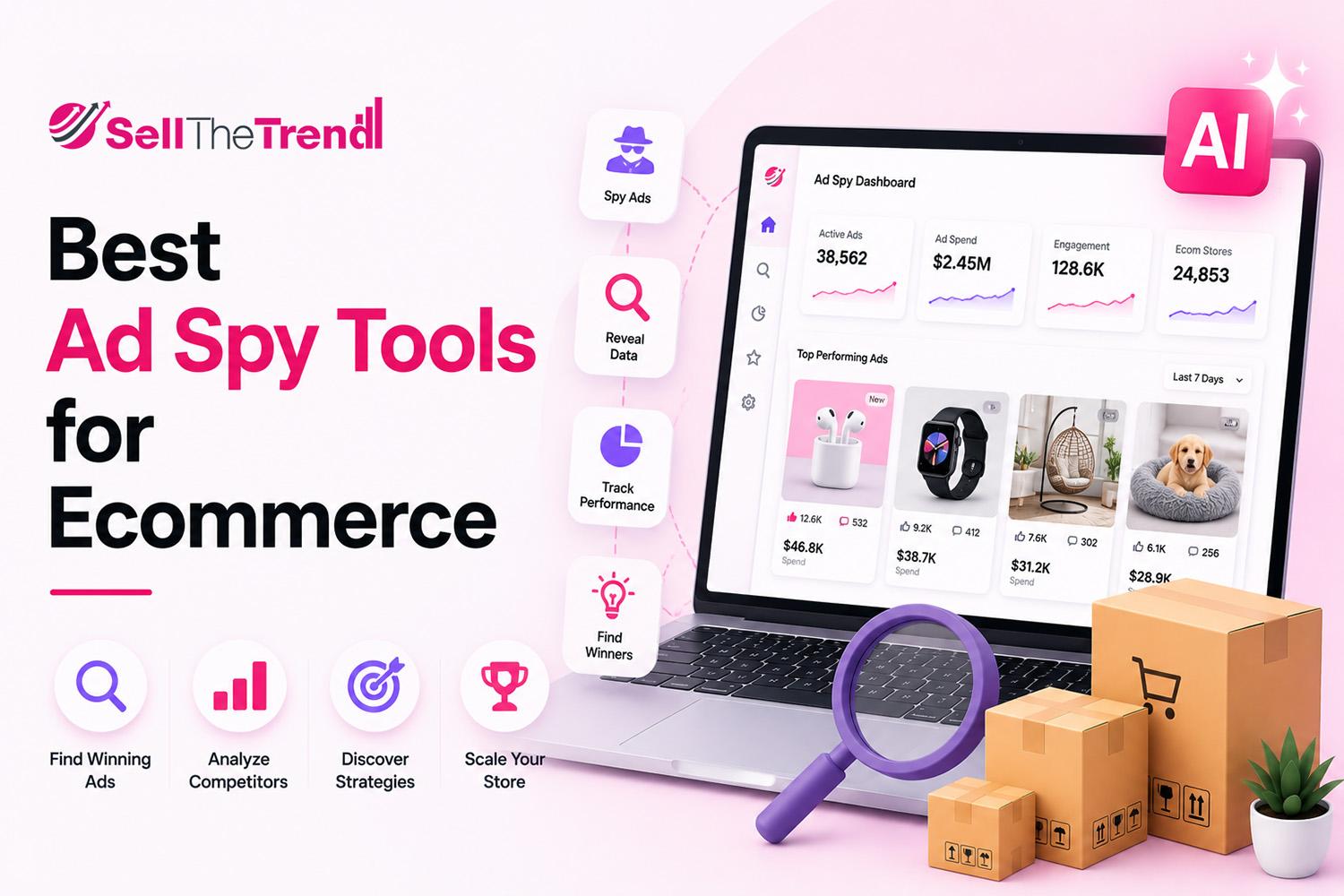
The best ad spy tools for ecommerce in 2026 are Sell The Trend, Minea, BigSpy, Pipiads, and AdSpy. These platforms provide critical market intelligence by tracking millions of live ad creatives across platforms such as Facebook, Instagram, and TikTok. Choosing the right spy tool allows e-commerce brands to analyze competitors’ ads, study profitable ad strategies, and uncover high-performing ads to systematically validate product demand before spending a marketing budget.
The e-commerce landscape has shifted permanently. Years ago, you could browse a supplier catalog, launch a few basic campaigns, and reliably generate sales. Today, skyrocketing client acquisition costs and hyper-accelerated product saturation mean that launching without validation can quickly waste ad budget.
If you are an independent dropshipper, a growing brand owner, or a marketing agency manager, you know the stakes. You cannot afford to guess what consumers want. You need to know what they are actively purchasing before you allocate a single dollar to your marketing spend.
This guide is designed to shift your approach from speculative guessing to a more evidence-based research process. We will answer a fundamental question: how do experienced sellers uncover winning products and validate market demand before investing capital?
Most guides online simply give you a generic list of software links.
We are going deeper.
We will outline the exact validation workflows used by experienced ecommerce teams, examine how to strip actionable market intelligence from live ad creatives, and evaluate the top industry analysis tools to help you choose the right spy tool for your business model.
What Are the Key Takeaways?
Key Takeaways
Validation Over Speculation: Successful e-commerce brands use real-time ad data to validate consumer demand and ad velocity before investing in active ad campaigns.
Multi-Platform Tracking is Mandatory: Modern product validation requires tracking multiple channels simultaneously, specifically monitoring trending ads across Facebook, Instagram, and TikTok to combat rapid product saturation.
Analyze the Full Funnel: True competitor analysis goes beyond the ad copy; it requires evaluating the entire customer journey, from creative engagement metrics down to competitor landing pages.
Centralize Your Workflow: Instead of paying for multiple single-purpose tools, leading sellers utilize all-in-one solutions like Sell The Trend’s native Facebook Ad Explorer and TikTok Viral Ads Explorer to bridge the gap between finding ads and launching products.
Target Data-Driven Growth: Merging direct ad intelligence with comprehensive product research and identifying the best dropshipping niches is a practical way to improve product selection before testing.
Mitigate Financial Risk: Leveraging ad intelligence tools protects your operating capital and saves significant time and ad spend during the initial product testing phase.
What is the Best Overall Ad Spy Tool for Ecommerce in 2026?
Sell The Trend is the best overall ad spy tool for ecommerce sellers who want more than a list of winning ads. It combines ad research, NEXUS product discovery, Store Intelligence, supplier research, and store automation in one workflow, making it a strong fit for sellers who want to move from product idea to launch faster.
Best for: all-in-one ecommerce intelligence Main advantage: connects ad discovery with product validation and launch workflows Best alternative for TikTok-only research: Pipiads Best budget-friendly database: BigSpy Best for deep Facebook and Instagram research: AdSpy
No title
Pro Tip: The best filters are usually date range, country, platform, ad duration, engagement, and landing-page URL. Start broad, then narrow your search. If you filter too tightly at the beginning, you may miss early product angles that have not yet reached large engagement numbers.
Ready to research products with stronger market signals before testing? Access millions of daily high-performing ads, track competitor stores, and uncover products with an ecommerce intelligence platform built for product research, ad tracking, and launch workflows. Start Your Sell The Trend Free Trial Today.
Why Do Ad Spy Tools Matter More Than Ever in 2026?
Ad spy tools matter in 2026 because ecommerce trends move quickly and paid testing is expensive. By reviewing active ads, engagement patterns, competitor stores, and product signals before launching, sellers can make better decisions about which products deserve testing and which ones may already be too crowded.
Also, an ad spy tool matters more than ever because skyrocketing customer acquisition costs and hyper-accelerated product saturation make blind testing harder to justify. By leveraging ad intelligence to monitor active ads, track engagement data, and evaluate competitors’ strategies, e-commerce stores can immediately identify stronger demand signals, study proven marketing hooks, adapt them ethically, and plan campaigns with clearer context on competitors and the market.
The traditional e-commerce playbook is broken because many trend-driven products now peak and fade faster than before. The massive rise in cross-border commerce, advanced AI-driven dropshipping automation, and TikTok Shop has allowed hot items to go viral, peak, and become more crowded faster than many sellers expect.
When thousands of storefronts gain immediate access to identical supplier pipelines, execution speed is everything. Waiting to analyze historical marketplace data means you are entering the market when the trend is already dying.
At the same time, ad spend efficiency is non-negotiable. Throwing broad budgets at unverified concepts to see what sticks will quickly drain your accounts. Paid customer acquisition channels require surgical precision from day one.
This is exactly why modern brands leverage advanced ad intelligence. An advanced ad spy tool acts as a window into active consumer behavior across multiple platforms. Instead of wondering if an angle works, you can review public signals from competitor campaigns.
No title
Pro Tip: Ad spy tools reveal successful ad strategies in your niche by showing you the exact visual formats, offers, and copy angles that are currently scaling.
Using dedicated spy tools not only shows you detailed visuals; it also gives you access to millions of ads that are updated daily. This constant stream of ad data lets you identify emerging, high-performing ads before they reach mass-market fatigue.
Furthermore, monitoring live ad campaigns allows you to accurately measure consumer interaction. High-performing platforms like Facebook and Instagram continue to drive a massive percentage of global e-commerce sales, while TikTok dominates short-form video discovery. By evaluating engagement metrics, such as comment velocity, share counts, and print longevity, you can systematically separate passing fads from stable, profitable trends.
Ultimately, integrating an ad spy tool into your daily product research workflow can reduce wasted research time and early testing costs. It gives you the power to analyze competitors’ ads, replicate proven marketing strategies, and enter the market with a clearer research advantage.
What Makes a Great Ad Spy Tool?
A reliable ad spy tool must provide real-time data capture and deep filtering mechanisms so you can find high-potential products before they become mainstream. To separate higher-quality software from low-tier scrapers, you need a strict evaluation framework. Not all spy tools are built equal; some update their databases slowly, while others fail to track emerging networks.
When evaluating software platforms, top e-commerce brands prioritize specific pillars of market intelligence:
Coverage for Multiple Platforms: The ability to scrape across Facebook, Instagram, TikTok, and Pinterest simultaneously ensures you don’t miss platform-specific trends.
Advanced Filtering and Smart Filters: Finding winning ads requires filtering by country, ad type, engagement metrics, and historical run times.
Data Freshness: The software must surface recently detected active ads quickly to give you an early-mover advantage.
Major ad platforms have developed robust, free ad transparency databases to assist the public. Free tools like the Meta Ads Library and Google Ads Transparency Center are authoritative starting points for manual observation. The Meta Ads Library allows searches by keywords or advertiser name for active and inactive ads across Facebook and Instagram. Similarly, the Google Ads Transparency Center enables users to view ads from any advertiser on Google, allowing searches by advertiser name or URL to see ads currently running.
Also, Semrush is an industry standard for viewing competitors’ ad spend and exact ad copy, TrendTrack monitors over 500,000 top-performing Shopify stores, and the Meta Ads Library is a free tool for analyzing competitors on Facebook and Instagram.
However, while these free options are great for basic usage, they lack the advanced filtering, aggregation, and tracking metrics that commercial spy tools provide. Effective commercial spy tools allow filtering by deep engagement metrics to instantly pinpoint top-performing ads.
The table below outlines the core evaluation criteria you should consider before investing in a paid platform:
Evaluation Criterion
What It Measures
Why It Matters For E-commerce
Global Coverage
Database reach across multiple countries and regions
Essential for scaling winning concepts into untapped international markets.
Audience Targeting Insights
Access to demographic, age, gender, and geographic breakdowns
Saves budget by optimizing your initial target audiences during campaign setup.
Trend Detection Velocity
How fast the system flags sudden spikes in creative engagement data
Allows you to catch viral products earlier in the trend cycle.
Validation Signals
Concrete performance metrics like view counts, share ratios, and comment growth
Separates low-budget test campaigns from scalable, highly profitable ad strategies.
Use stronger data before choosing what to test. Evaluate products with stronger signals before testing using an all-in-one platform built for modern e-commerce. Start your 14-day free trial with Sell The Trend today and get instant access to the advanced filters, live ad data, and multi-platform coverage you need to make better product decisions.
What Are the 7 Types of Product Validation (Beyond Basic Competitor Research)?
The 7 types of product validation are ad, trend, competitor, social proof, store, supplier, and saturation validation.
No title
Pro Tip: Relying strictly on basic competitor research is a trap. Seeing that another store is running an ad only tells you half the story. To build a highly resilient e-commerce business, top sellers utilize seven distinct layers of validation to ensure an item has genuine market depth.
1. Ad Validation
This layer monitors active ad campaigns to measure ad velocity and duration. If a brand continues to run the same ad creatives for weeks while scaling their ad spend, it is a useful signal that the ad may be performing well.
2. Trend Validation
Macro trends dictate long-term sustainability. True ad intelligence platforms track search interest and social media volume alongside raw ad data. This ensures you aren’t launching an item just as consumer interest begins to decline sharply.
3. Competitor Validation
By gathering competitive intelligence across multiple competitor stores, you can analyze how many other brands are currently scaling the item. If multiple stores are successfully running independent ad variations, it suggests there may be broader market demand to support multiple players.
4. Social Proof Validation
This involves diving deep into ad comments, sentiment analysis, and user-generated content shares. High comment velocity with positive buying intent (“I just bought this!” or “Tag a friend who needs this”) can indicate stronger buyer interest.
5. Store Validation
Some ecommerce intelligence tools estimate store performance, monitor product activity, and track visible growth signals. If a spy tool reveals that a store’s top-performing pages consistently feature a specific product line, it validates a stable backend ecosystem.
6. Supplier Validation
An advertising campaign might generate outstanding engagement, but if you cannot reliably source the item with a healthy profit margin, the business model collapses. True product validation means looking beyond the front-end ad creatives to check product availability, manufacturing capacity, and shipping reliability. Top brands use built-in analysis tools to compare available suppliers after discovering a trending ad, ensuring they can fulfill orders without severe logistical delays.
7. Saturation Validation
Before allocating significant funds, you must verify that an item has not already been aggressively scaled by hundreds of other dropshippers. Saturation validation requires analyzing the total number of unique ad accounts that run variations of the same product design. If a spy tool reveals massive data clusters of identical active adverts across Facebook, Instagram, and TikTok simultaneously, it indicates that the market is hitting high-frequency ad fatigue. In this scenario, you must either find completely fresh ad angles or pivot to a less saturated product selection.
What Are the Best Spy Tools for Ecommerce in 2026?
The best ad spy tools for ecommerce in 2026 are Sell The Trend, Minea, BigSpy, Pipiads, AdSpy, Dropship.io, and PPAds. Each tool serves a different use case, from all-in-one product research to TikTok ad tracking, Facebook ad mining, competitor store analysis, and budget-friendly market research.
The matrix below compares the top-tier solutions based on their core functionality, platform coverage, and value proposition:
Tool
Best For
Facebook Ads
TikTok Ads
Product Discovery
Pricing
Strength
Sell The Trend
All-in-one platform research & automation
Yes (Full Library Analytics)
Yes (TikTok Viral Ads Explorer)
Native NEXUS Engine
14-Day Free Trial available
Can reduce the need for separate research, sourcing, and launch tools, enabling a seamless transition from discovery to sourcing.
Minea
E-commerce product discovery
Yes (Comprehensive)
Yes (Premium Plan only)
AI-Powered Product Search
Paid Subscription starts at $49/mo
Tracks roughly 100M+ ads across social networks.
BigSpy
Multi-platform coverage on a tight budget
Yes (Broad coverage)
Yes (Standard tracking)
General Search Database
Basic Tier starts at $9/mo
Massive database covering 10 major platforms with over 1 billion ads indexed.
Pipiads
Deep TikTok ad monitoring
No (TikTok only focus)
Yes (Industry leader)
Viral Product Shortlists
Plans start around $77/mo
Specialized TikTok database featuring more than 20 million video ads.
AdSpy
Deep Facebook & Instagram tracking
Yes (Expansive database)
No (Social focus shifts)
Advanced Filter Tracking
Flat $149/mo access fee
Massive legacy database boasting over 206M ads across 88 languages.
Dropship.io
Store tracking & sales estimation
Yes (Ad extensions)
Limited (Sales focused)
Store Revenue Radar
Paid tier options vary
Excellent for tracking competitor stores and viewing live product revenue changes.
PPAds
TikTok-specific dropshipping research
No
Yes (Deep integration)
Trending TikTok Products
Premium tier structure
Tailored specifically to identify viral e-commerce products in short-form video feeds.
Reduce tool overlap in your research workflow. For sellers using separate tools for ad tracking, product research, and sourcing, an all-in-one workflow can be simpler. Unlock your 14-day free trial of Sell The Trend now and consolidate your e-commerce intelligence.
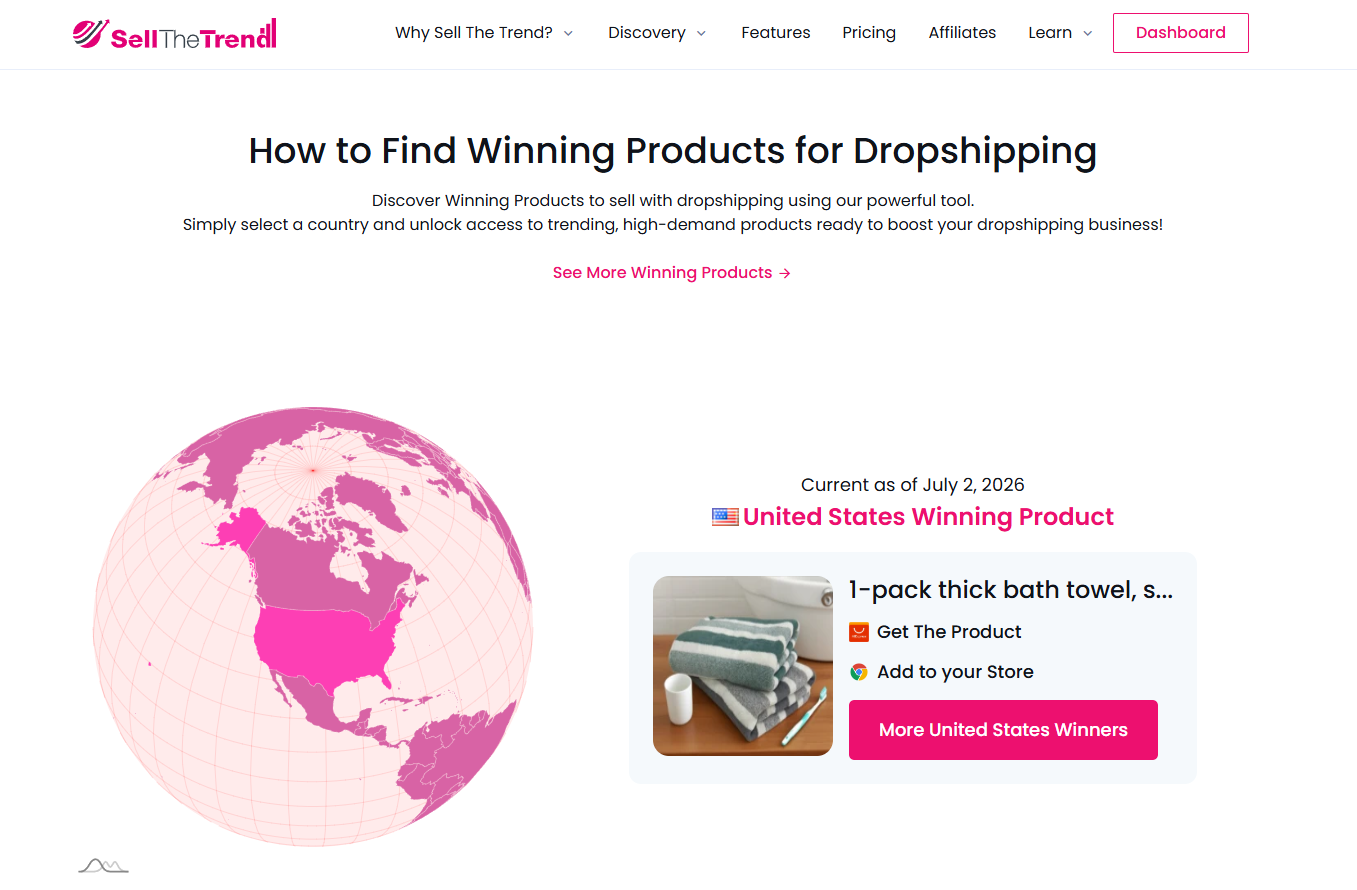
Why Is Sell The Trend the Best All-in-One Ad Spy Tool for Ecommerce?
Sell The Trend is the best all-in-one option for ecommerce sellers who want to connect ad research with product validation, supplier research, and store launch workflows. Instead of only showing ad creatives, it helps users move from product discovery to sourcing and store automation within a single platform.
Unlike standalone database scrapers, Sell The Trend positions itself as a comprehensive Ecommerce Intelligence Platform. It serves as a unified ecosystem built to eliminate the workflow friction of paying for multiple single-purpose subscriptions. Instead of jumping between disconnected software layers, users can smoothly execute a complete operational loop:
Find the ad: Use Facebook Ad Explorer or TikTok Viral Ads Explorer to identify recent ads with strong engagement.
Validate the product: Check it in NEXUS Product Research for demand, pricing, and trend signals.
Review competitors: Use Store Intelligence to study pricing, product pages, visible store signals, and ad activity.
Check suppliers: Compare supplier availability, shipping options, and margin potential.
Launch only when signals align: Move forward when the ad, product, competitor, and supplier data all support the test.
No title
Pro Tip: A practical workflow is to save the ad first, validate the product second, and check suppliers third. If you check suppliers before confirming demand, you may waste time sourcing products that no one is actively responding to.
The software houses several core assets engineered to optimize every stage of your product research:
Facebook Ad Explorer & TikTok Viral Ads Explorer: Native engines built for deep ad tracking and direct monitoring of real-time creative formats across major social networks.
NEXUS Product Research Engine: A proprietary discovery engine that uses advanced algorithms to rank products based on actual transaction data and social momentum.
Store Intelligence & Trend Discovery: Systems built to monitor successful e-commerce operations, allowing you to review competitor store, product, pricing, and visible performance signals, view incoming ad activity, and trace shifting consumer preferences before they cool off.
Product Validation: Built-in research signals that help assess demand, margin potential, and product viability before publishing a listing.
This centralized setup functions as a strong fit for scaling businesses. It allows you to uncover high-performing campaigns, view the target landing page, source the item from verified suppliers, and import the optimized layout directly into your store within a few clicks.
Minea is best for ecommerce sellers who want to research social ads, trending products, and competitor stores across visual platforms. Its strength is ad discovery and product research, especially for sellers who want to study creative angles and compare how products are promoted across multiple channels.
Minea operates as a highly responsive discovery engine tailored for modern drop-shippers and digital brands. The software focuses heavily on visual commerce channels, providing comprehensive ad intelligence across Facebook, TikTok, and Pinterest.
The platform’s standalone strength lies in its AI-powered product search for trending items. By automatically scanning 100M+ ads, the platform identifies fast-rising video clips and categorizes them by user interaction metrics.
Instead of manual browsing, users can use advanced filters to target specific markets, languages, and e-commerce platform technologies. This specialized architecture ensures you can study evolving creative configurations and scale multi-channel campaigns without missing hidden micro-trends on alternative feeds.
No title
Pro Tip: Use Minea to compare how the same product is promoted across different visual platforms. If the same product appears in several creative angles, study the hooks rather than copying the exact ad.
What Is BigSpy Best For?
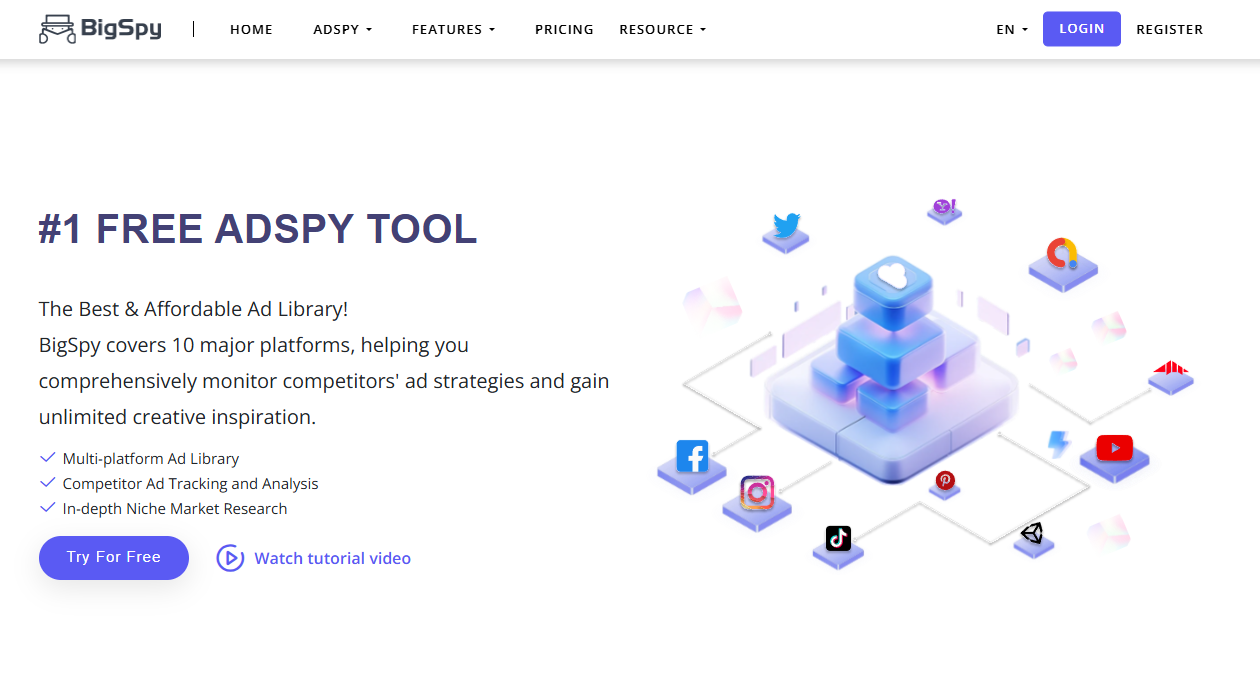
BigSpy is best for sellers who want broad ad coverage across many platforms at a lower entry cost. Its biggest advantage is database size and multi-platform reach, making it useful for early research, creative inspiration, and broad competitor ad discovery.
For businesses that require broad coverage across international networks, BigSpy offers a vast library. The platform indexes an immense volume of global data, tracking ad variations across 10 major platforms with over 1 billion ad creatives in its database.
Beyond standard social feeds, BigSpy provides distinct insights into alternative marketing ecosystems. It tracks ad formats from networks that many competitors ignore, making it a valuable asset for in-depth market exploration.
Feature Layer
Platform Capability
Platform Access
Includes data from alternative channels and traditional networks.
Tier Accessibility
Features a basic free plan for entry-level monitoring.
Search Options
Allows basic classification filtering by country and creative layout.
New marketers can utilize their basic free pricing options to handle initial market scouting before committing to a paid tier. This makes it an approachable option for studying basic ad designs and analyzing high-volume data streams without upfront overhead.
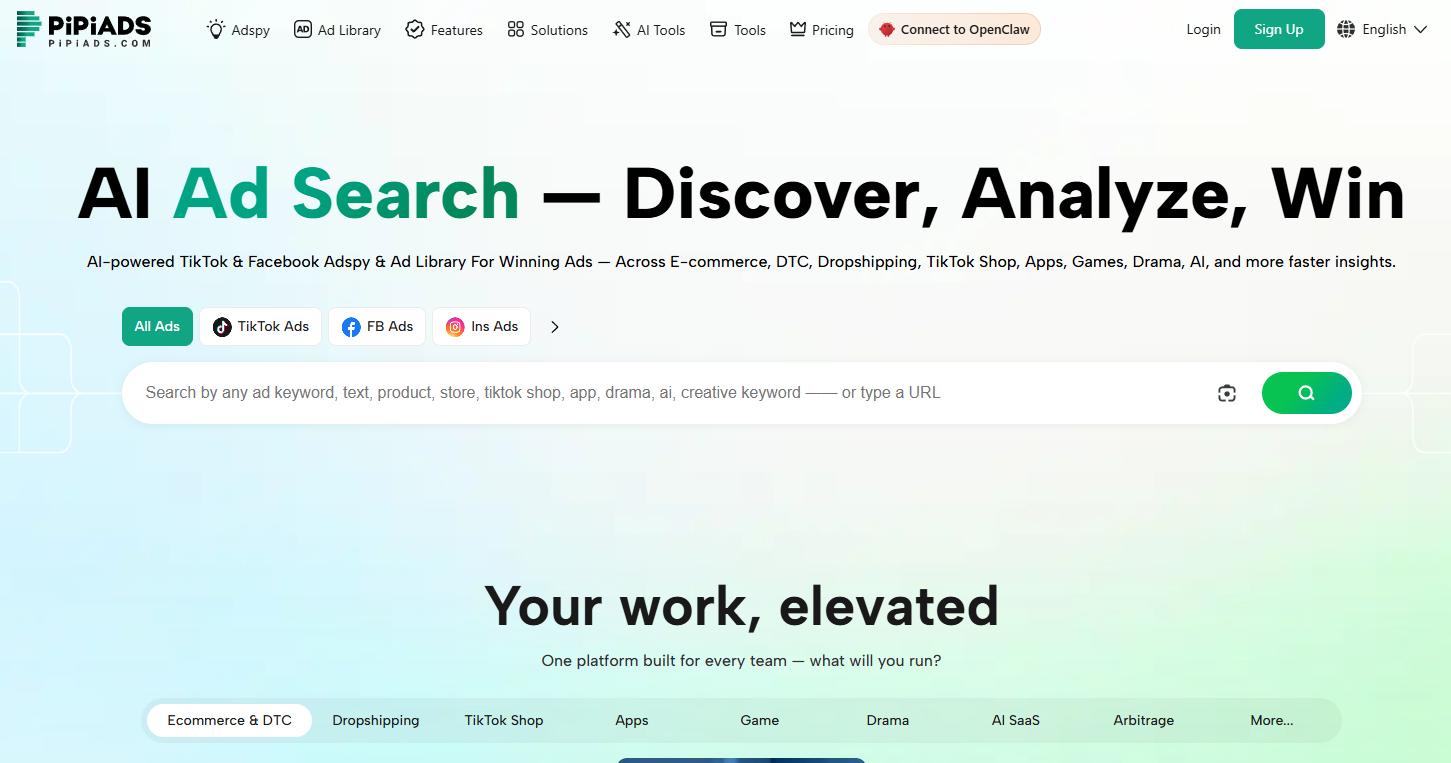
What Is Pipiads Best For?
Pipiads is best for teams focused heavily on TikTok and short-form video ad research. It helps sellers study viral creatives, TikTok Shop ads, engagement signals, and product trends to understand which video formats are gaining attention before creating their own campaigns.
As short-form video content dominates online commerce, Pipiads has positioned itself as a specialized power tool built exclusively for the TikTok ecosystem. The platform hosts a massive dedicated repository, featuring tens of millions of Facebook and TikTok ads in its live database.
The platform provides granular visibility into the mechanics of short-form video loops. Users can monitor specific video durations, real-time impression growth, and direct link extensions. It also reveals which third-party installed apps are driving conversions on specific product pages. By isolating viral loops early, sellers can mimic successful production frameworks and launch highly targeted video campaigns before the initial organic momentum fades.
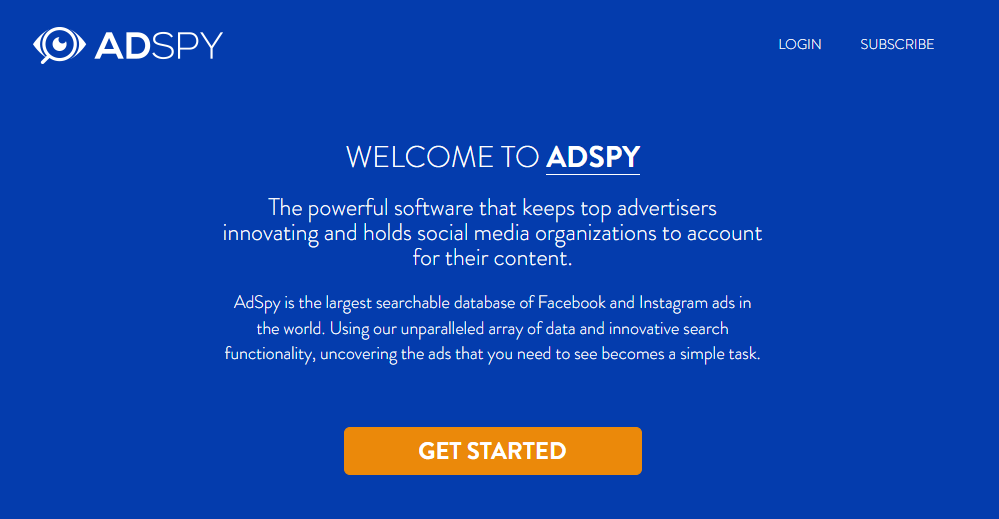
What Is AdSpy Best For?
AdSpy is best for advertisers seeking in-depth research on Facebook and Instagram ads. Its strengths are advanced filtering, extensive historical ad coverage, and landing-page research, making it useful for marketers who need to study Meta ad angles, comments, targeting signals, and funnel structure.
AdSpy remains an industry giant in terms of sheer archive depth for classic social channels. The software boasts an expansive database of over206M ads across 88 languages, including more than 100M Facebook and Instagram ads.
The core value of the software lies in its surgical search parameters. It features an expansive database with excellent filters for landing page tech, allowing you to isolate ads by backend systems such as Shopify, WooCommerce, or Magento.
Furthermore, the platform allows you to look deep into the funnel by examining competitor landing pages. Instead of just showing the front-end creative, it tracks where the target traffic lands, giving you the power to study alternative angles, evaluate pricing structures, and study landing-page structure, offers, and positioning.
Which Ad Spy Tool Is Best For Each Use Case?
The best ad spy tool depends on your workflow. Sell The Trend is strongest for all-in-one ecommerce research, Minea is strong for product discovery, BigSpy is useful for broad budget research, Pipiads is focused on TikTok, and AdSpy is strongest for deep Facebook and Instagram ad mining.
The decision matrix below outlines the ideal application for each platform based on your specific operational focus:
Use Case
Recommended Platform
Primary Benefit
Best All-in-One Research
Sell The Trend
Merges active social scouting, supplier connections, and instant store push operations inside a single dashboard.
Best for Product Discovery
Minea
High-speed algorithmic scanning across major visual streams to isolate viral items early.
Best Budget Multi-Platform
BigSpy
Offers extensive platform coverage with an accessible free starter tier.
Best Specialized TikTok Tracking
Pipiads
Deep database coverage for short-form mobile video promotions and app metrics.
Best Legacy Facebook Mining
AdSpy
Massive historical archive with surgical search criteria based on backend page builders.
If you are operating on a restricted initial budget, looking for a platform that offers a functional free plan is a smart way to learn basic data filtration without upfront overhead.
However, once your media buying volume scales, visiting a premium platform’s pricing page to unlock advanced features becomes necessary to maintain your edge.
No title
Pro Tip: Sell The Trend remains a strong fit for sellers who want a single workflow from discovery to launch, as it handles the entire discovery-to-deployment pipeline without requiring you to subscribe to multiple tools simultaneously.
How Do You Find Winning Products Using Ad Tracking?
To find winning products with ad tracking, start by filtering for recent ads, then measure engagement, review competitor landing pages, check saturation, and confirm supplier availability. The goal is not to copy one ad, but to build a repeatable validation process before spending money on tests.
Sifting through millions of data points requires a systematic approach. Professional media buyers do not browse aimlessly; they follow a strict chronological checklist to extract actionable intelligence from live campaigns.
Step 1: Finding Ads
Begin your research by setting your filters to find highly relevant promotions launched in the last 7 to 30 days. Isolating recent ads ensures you are viewing fresh trends rather than historical data that has already run its course. Many sellers use a specialized or free Chrome extension to automatically capture sponsored posts directly from their personal social media feeds while browsing.
Step 2: Measuring Engagement
Once you find an interesting creative, analyze the speed of its public reaction. Look at comment growth rates, share counts, and total video view milestones. High engagement levels indicate that the creative formatting is successfully stopping the scroll and resonating with the target market.
No title
Pro Tip: Comments matter more than likes when validating a product. Look for buying language, objections, shipping questions, and price complaints. A high-like ad with weak or negative comments is less useful than a smaller ad with clear purchase intent.
Step 3: Checking Competitors and High-Performing Pages
Never view an ad in complete isolation. Click through the promotion to inspect where the web traffic is being directed. Examine the merchant’s checkout sequence, upsell apps, and layout design. Identifying their performing pages gives you a blueprint of what a converting sales environment looks like in the current market.
Step 4: Validating Demand and Checking Saturation
Cross-reference the product across multiple distinct ad accounts. If you see dozens of independent storefronts running identical visual formats, the item may be approaching mass-market fatigue. Look for unique angles or variations that allow your brand to stand out from the crowd.
Step 5: Verifying Supplier Availability
The final operational step is ensuring you can reliably fulfill orders. Use your analysis software to link the validated product directly to reputable manufacturing partners, checking supplier availability, pricing, shipping options, wholesale pricing margins, and international shipping speeds before launching your campaigns.
No title
Pro Tip: Never treat supplier availability as a final checkbox. Compare product cost, shipping time, return risk, and margin before launching. A product can look like a winner in ads but still fail if fulfillment is slow or margins are too thin.
How Does the AVS Framework from Sell The Trend Help Validate Products?
The AVS Framework helps sellers compare products using three practical signals: ad velocity, validation signals, and saturation level. This gives product research a clearer structure, so sellers can avoid relying on a single viral ad or one competitor store before deciding what to test.
To help e-commerce operators scale predictably, Sell The Trend utilizes a unique, data-backed evaluation system known as the AVS Framework. This proprietary system goes beyond basic monitoring of Instagram ads by providing a structured way to compare product signals with prospective items.
This metric measures the speed of replication and scaling of a product’s promotions across the web. If a product moves from being featured in a single campaign to appearing across multiple ad sets within a 48-hour window, it indicates high ad velocity. This signal suggests the concept may be receiving meaningful ad spend.
V – Validation Signals
Validation signals encompass the backend ecosystem data that confirms sustained consumer interest. This includes tracking buyer sentiment in comment sections, measuring verified store transaction patterns via tracking tools, and monitoring steady increases in global search volume. Stronger validation helps separate meaningful buyer interest from weak, inflated, or short-lived engagement.
S – Saturation Level
The final pillar calculates market density to protect your testing capital. The framework scans the web to see how many active stores are attempting to sell the exact same item using identical media assets. A low saturation level paired with high velocity can create a strong testing window before the product becomes too crowded.
An ad spy tool is a specialized software platform that aggregates and indexes live marketing data from across various digital networks. It allows e-commerce operators to monitor ads, track competitors’ marketing strategies, and review well-performing ads to understand what products are currently driving real consumer engagement.
Do ad spy tools work?
Yes, they provide direct visibility into real-time market behavior. Instead of guessing which products might appeal to an audience, you can see exactly which campaigns are running over the long term. When a competitor runs an ad for weeks at a time, longer-running ads can suggest the campaign may be worth studying.
Are ad spy tools legal?
Yes. These platforms primarily compile publicly available marketing assets that businesses actively broadcast online. They structure this information into searchable databases, similar to how official tools like the Meta Ads Library or the Google Ads Transparency Center operate for public ad monitoring.
What is the best ad spy tool for Shopify?
Sell The Trend is a strong option for Shopify store owners. It provides a seamless transition from finding winning ads to launching products directly onto your Shopify store. Unlike platforms that only show ad creatives, it includes built-in supplier fulfillment connections and predictive analytics to streamline your entire operational loop.
What is the best TikTok ad spy tool?
For teams focusing entirely on short-form video traffic, platforms like Pipiads offer exceptional depth into mobile video loops. However, if you want an all-in-one platform that handles both social video and traditional feeds without paying for a separate subscription, Sell The Trend’s native TikTok Viral Ads Explorer provides useful competitive intelligence.
How do dropshippers find winning products?
Professional dropshippers isolate products by monitoring engagement, evaluating ad velocity, and performing rigorous saturation validation. They look for recent adverts that are rapidly gaining traction but have not yet been copied by hundreds of alternative stores.
What should I look for when researching competitors?
When you analyze competitors’ ads, look past the visual design. Evaluate their primary ad copy hooks, review user interaction in the comments, and study their landing pages. Dissecting their entire funnel reveals the precise operational framework they are using to convert raw traffic into paying customers.
Conclusion: What Is the Best Way to Validate Ecommerce Products in 2026?
The best way to validate ecommerce products in 2026 is to combine ad intelligence with product research, competitor analysis, supplier checks, and saturation review. Strong sellers look for multiple signals before testing, so they can avoid chasing old trends or launching products with weak margins.
Relying on a single metric to build an e-commerce business is a recipe for failure. While monitoring live ad creatives is a powerful shortcut to market discovery, ad intelligence is ultimately just one component of a complete product validation workflow.
The most successful online brands do not scale ads based on a single viral post. Instead, they systematically combine multiple validation signals, including search volume trajectories, real-time transaction data, supplier reliability, and saturation metrics, before allocating their testing capital. By treating product selection as a science rather than a guessing game, you protect your operating margins and secure a major competitive edge.
The right analysis tools help you identify high-potential opportunities well before the market hits mass-market fatigue. Instead of reacting to old trends, you can position your brand earlier in the trend cycle, allowing you to ride the wave of profitability before your competitors even realize the product exists.
Consolidating your workflow is the fastest way to save time and reduce testing costs. Rather than bouncing between disconnected scrapers, using an all-in-one platform lets you research with a clearer workflow.
Lisa is an eCommerce and digital marketing specialist with over 6 years of experience helping online businesses grow through data-driven strategy and hands-on execution.
She has worked across dropshipping and direct-to-consumer channels, focusing on product research and performance marketing. At Sell The Trend, she creates practical, research-backed content to help merchants make confident decisions.









![Discover Dropshipping TikTok Niches: Tap Into Emerging Markets [Analysis]](https://www.sellthetrend.com/wp-content/uploads/2026/10/editorial-hero-img-1791824763061-h7ghs-1.png)