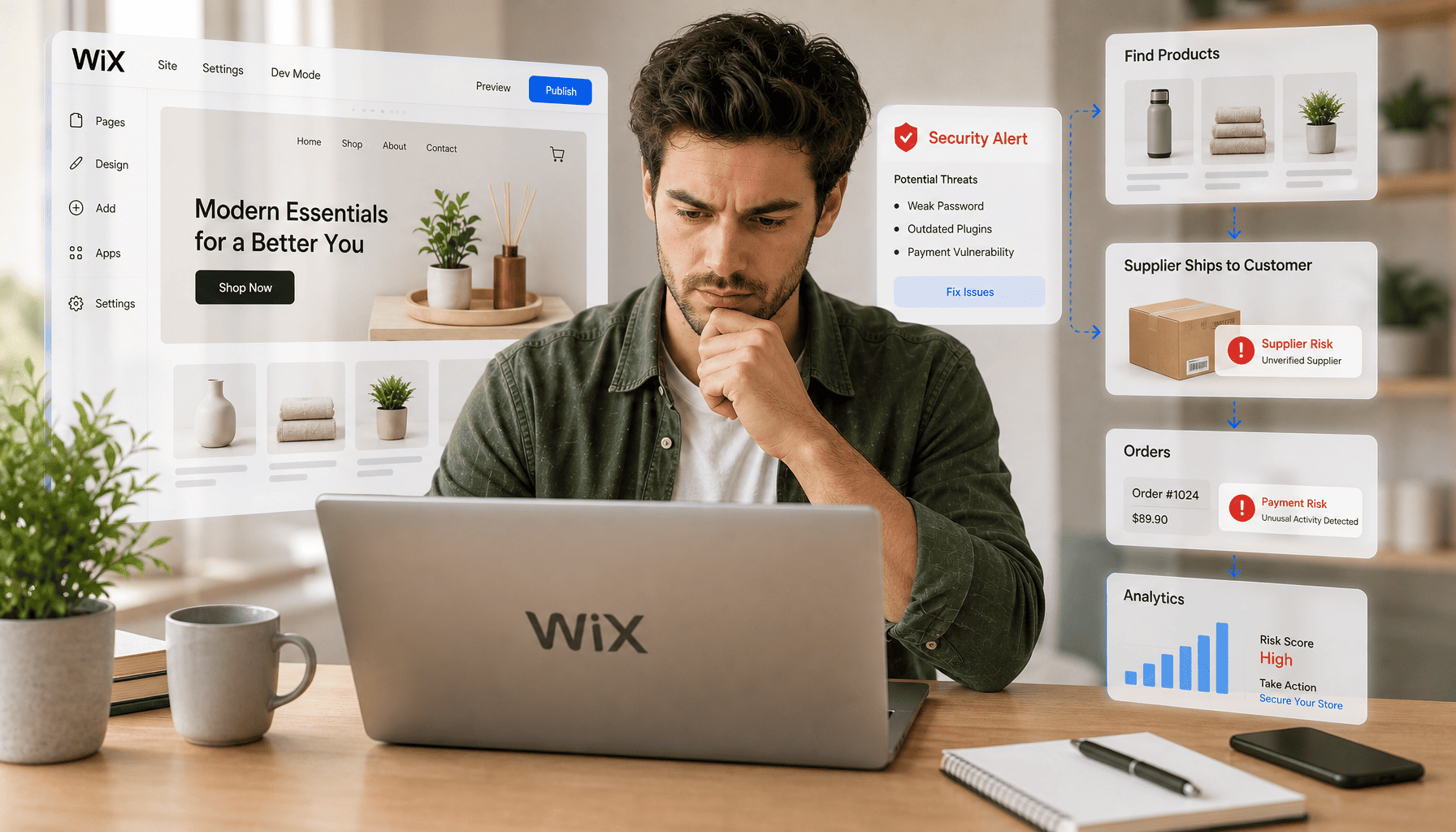
The biggest dropshipping security risks are exposed personal information, fake suppliers, stolen store access, payment fraud, and a lack of preparation for incidents. Most of them can be reduced with a few habits: keep personal and business details separate, lock down every account, vet suppliers before paying them, and plan for problems before they happen.
Dropshipping entrepreneurs invest substantial time in product research, building stores, and customer acquisition, yet often overlook critical security vulnerabilities. Ensuring the security of your dropshipping business involves more than just securing a website—it includes protecting personal data, customer information, and overall business operations. Discover how to find winning products securely with Sell The Trend and its AI dropshipping tools.
In this comprehensive guide, we will explore ten common dropshipping security risks faced by online sellers and provide actionable strategies to mitigate these threats effectively.
Key Takeaways
Comprehensive security includes both digital and operational aspects of dropshipping.
Fraudulent suppliers and phishing scams are prevalent threats.
Implementing robust security measures is essential to protect against financial and reputational damage.
Your email account can reset almost every other login, so protecting it comes first.
Separating personal and business contact details reduces the chance of identity theft.
A simple written incident plan saves time when something goes wrong.
Connect only the AI tools and apps you need, and review their permissions regularly.
Why Are Dropshipping Security Risks Easy to Overlook?
Dropshipping feels lightweight. There is no warehouse to protect and no stock to count, so security rarely makes it onto the to-do list next to product research and ads. But the model depends on trust in several places at once: customers trust you with their payment and address details, suppliers trust you with orders, and platforms trust you with an account that can be suspended if something goes wrong.
That makes security a business issue, not just a technical one. A single compromised admin login, a fake supplier, or a leaked customer list can cost more than a month of ad spend and damage a reputation that took months to build.
A useful way to think about it is in four layers:
Personal: your name, home address, phone number, and personal email.
Store: your admin logins, installed apps, and payment settings.
Customer: the names, addresses, and order details you collect.
Supplier: the people and platforms that fulfill your orders.
No title
Pro Tip: Spend 30 minutes once a month on a simple security review. Check who has access to each account, remove apps you no longer use, and confirm that your recovery email and phone number are still correct.
Risk #1: Exposing Your Personal Information Online
Many dropshippers inadvertently expose their personal information, such as phone numbers, home addresses, and email addresses, during business operations. This data can be collected by people-search websites and data broker platforms, leading to privacy breaches and potential identity theft.
To mitigate this risk, use business-specific contact information and services like ClearNym.com to track and minimize your online exposure. Consider setting up a virtual business address and dedicated phone line to maintain a professional image while safeguarding personal privacy.
Personal details commonly leak through:
Domain registration records.
Supplier and platform sign-ups.
Public business registrations.
Shipping labels and return addresses.
Social media profiles and old posts.
A quick audit helps: search for your name, phone number, and home address, and note every site where they appear.
Risk #2: Falling Victim to Fake Dropshipping Suppliers
The dropshipping industry is rife with fraudulent suppliers and fake wholesale websites. These scams can lead to payment fraud, substandard products, and damaged business reputations. To mitigate these risks, conduct thorough research on potential suppliers.
Platforms like Sell The Trend provide access to verified suppliers and product opportunities, offering peace of mind and reliable sourcing. Check for supplier reviews, verify business licenses, and start with small orders to test reliability before committing to larger transactions.
Watch for these red flags:
Prices far below every other source.
No verifiable business address or contact details.
Requests for payment through untraceable methods.
Pressure to place a large order immediately.
Reviews that look copied or cannot be found anywhere else.
Risk #3: Losing Access to Your Ecommerce Store
Losing access to an ecommerce store due to weak passwords or phishing attacks can have devastating consequences. Cybercriminals often target admin accounts to gain control over online stores, leading to data breaches and financial loss.
Enhance security by using complex passwords, enabling two-factor authentication, and educating yourself on recognizing phishing attempts. Implementing these measures will reduce the risk of unauthorized access. Sell The Trend’s dropshipping automation software can also help streamline operations while maintaining security.
Basic account protection looks like this:
Use a password manager with a unique password for every account.
Turn on two-factor authentication for your store, email, payment, and supplier accounts.
Give staff only the permissions they need.
Remove former contractors and freelancers as soon as they leave.
No title
Pro Tip: Secure your email account first. If someone controls your inbox, they can reset the password on your store, your payment accounts, and your supplier logins.
Risk #4: Customer Payment Fraud and Chargebacks
Fraudulent transactions and excessive chargebacks can severely impact profitability. These challenges not only affect cash flow but can also lead to increased scrutiny from payment processors, potentially resulting in account suspensions.
To combat this, utilize secure payment gateways and implement stringent verification processes. Monitor transactions for suspicious activity and maintain clear communication with customers to resolve disputes before they escalate into chargebacks.
Common warning signs include:
Billing and shipping addresses that are far apart.
Unusually large first orders.
Several failed payment attempts before one succeeds.
Urgent requests to change the delivery address after purchase.
Keep order records, tracking details, and customer messages. If a chargeback arrives, that evidence is what you will use to respond.
Risk #5: Exposing Sensitive Customer Information
Protecting customer data is a legal and ethical obligation for dropshipping businesses. Data breaches can result in hefty fines and loss of customer trust. Ensure that sensitive information is handled responsibly by using encrypted connections (SSL certificates) and reputable payment providers.
Implement privacy policies and educate your team on data protection best practices. Regular audits and updates to your security protocols will help maintain customer trust and compliance with data protection regulations.
Collect only the information you need, avoid storing card details yourself, and delete data you no longer require. Fewer stored records mean fewer things to lose in a breach.
Risk #6: Using Your Personal Email for Business
Mixing personal and business communications is a common mistake that can lead to privacy breaches and unprofessional interactions. By separating your emails, you minimize the risk of personal data exposure and maintain a professional image.
Set up a dedicated business email account and use it exclusively for all business-related correspondence. This not only enhances security but also streamlines communication and helps in organizing business activities effectively.
A business email on your own domain also looks more trustworthy to customers and suppliers than a free personal address. Do the same with phone numbers: a dedicated business line keeps your personal number out of supplier forms and customer messages.
Risk #7: Installing Untrustworthy Ecommerce Apps
Third-party ecommerce apps can enhance store functionality but also pose significant security risks if not vetted properly. These apps often require access to sensitive data and can introduce vulnerabilities.
Before installing any app, research its developer, read user reviews, and assess the permissions it requests. Limit app permissions to only what is necessary and regularly review installed apps to ensure they remain trustworthy and compliant with security standards.
Before you install an app, check:
The developer’s reputation and how recently the app was updated.
The permissions it asks for.
The number and quality of recent reviews.
Whether a feature you already have can do the same job.
Using a store builder with built-in features, such as SellShop, can also cut down the number of third-party apps you need to vet.
Risk #8: Falling for Phishing Emails and Fake Customer Support Messages
Phishing attacks are a prevalent threat where scammers impersonate legitimate organizations to steal sensitive information. Dropshippers are often targeted with fake emails and messages posing as payment processors, ecommerce platforms, or suppliers.
To protect your business, always verify the sender’s email address, look for inconsistencies in the message content, and avoid clicking on suspicious links. Educate your team on how to recognize phishing attempts and report any suspicious activity immediately.
Common phishing red flags:
Urgent deadlines or threats to suspend your account.
Sender domains that differ slightly from the real one.
Links that do not lead where they claim to.
Requests for passwords or verification codes.
When in doubt, open the platform directly instead of clicking the link.
No title
Pro Tip: Real platforms will never ask for your password or a verification code by email or chat. Treat any message that does as a scam.
Risk #9: Sharing Too Much Business Information Publicly
Publicly sharing business information, such as contact details and operational strategies, can make your business vulnerable to competitors and malicious actors. Over-sharing on social media and business directories can lead to targeted attacks.
Be mindful of the information you disclose publicly and limit sharing to only what is necessary for marketing and customer engagement. Implement privacy settings on social media platforms and regularly review your public profiles to ensure sensitive information is not exposed.
Review what is public at least a few times a year: business directories, domain records, social bios, and old posts. Remove contact details that are no longer needed.
Risk #10: Failing to Prepare for Security Incidents
Despite best efforts, security incidents can still occur. Being unprepared can exacerbate the impact of such events. Having a robust incident response plan is crucial to mitigate damages and restore operations swiftly.
Regularly back up your data, establish account recovery procedures, and conduct drills to prepare for potential breaches. Knowing how to respond to incidents effectively will minimize disruption and protect your business’s reputation.
A simple incident plan has five steps:
Change passwords and sign out all active sessions.
Contact your platform and payment provider support.
Pause ads and fulfillment if orders may be affected.
Notify affected customers where required.
Review what happened and close the gap.
How Is AI Changing Dropshipping Security Risks?
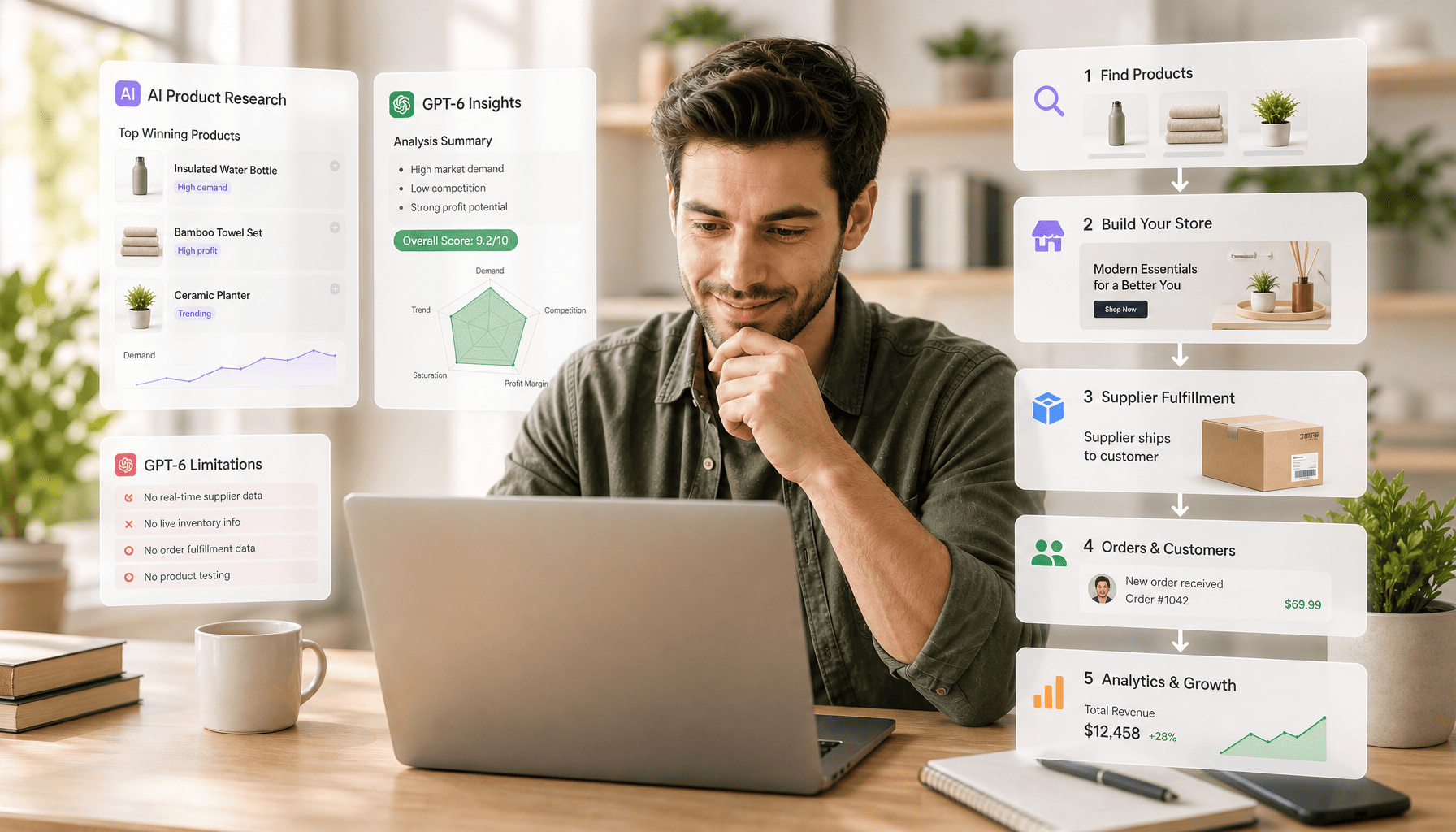
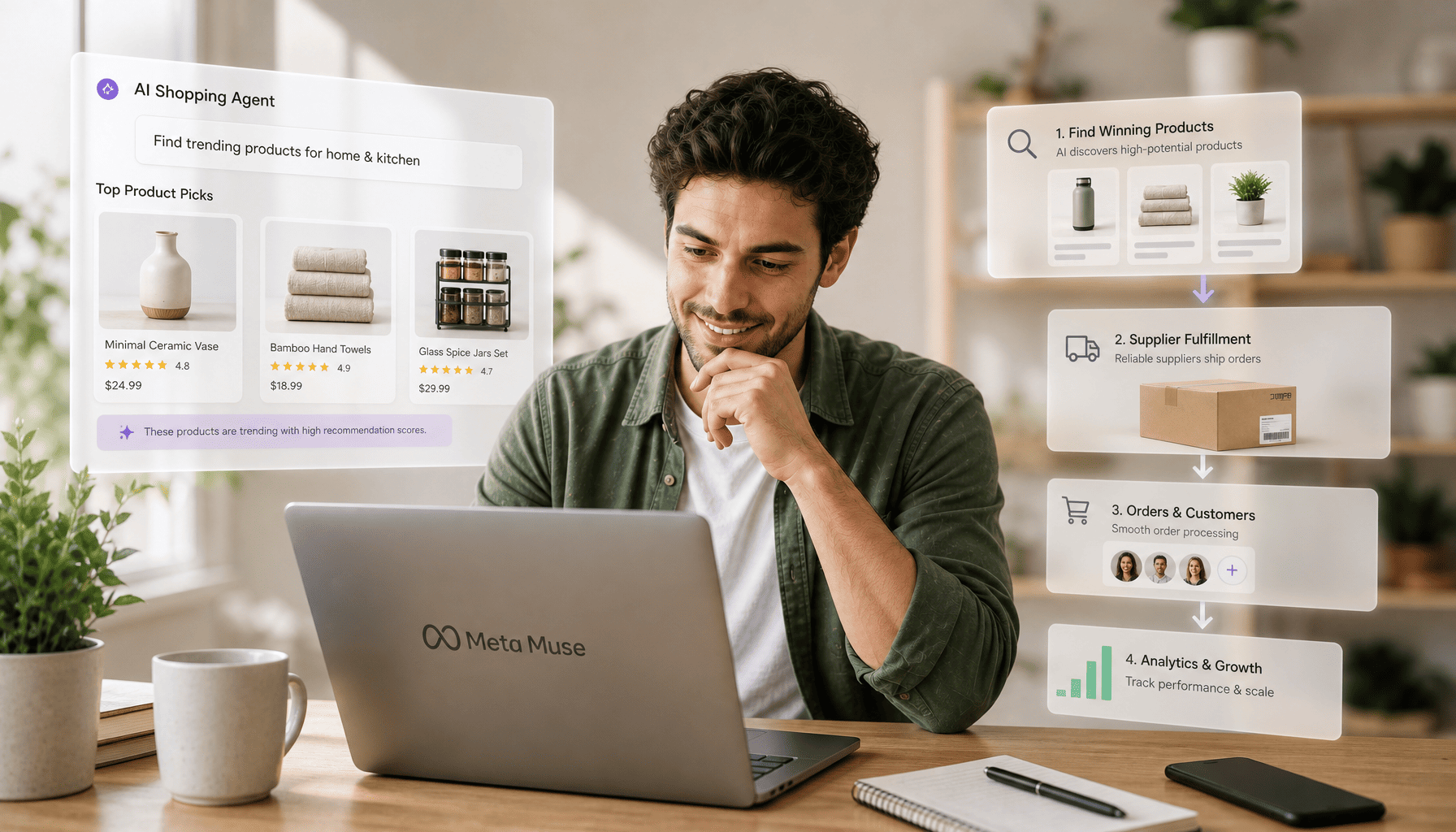
AI is changing both sides of the problem. On the positive side, AI dropshipping tools can automate research, store setup, and routine order tasks, which reduces manual errors and the number of people who need access to your accounts. On the other side, every connected tool is another login and another set of permissions to protect, and scammers can use AI to write more convincing phishing emails and fake supplier pages.
The practical response is the same as for every other risk: connect only the tools you need, give each one the minimum permissions, and review them regularly. If you are comparing options, this list of AI tools for dropshipping is a good place to check what each type of tool does before you connect it to your store.
Which Security Risks Should You Fix First?
If you cannot tackle everything at once, start with the risks that give attackers the most control for the least effort.
Risk
First fix
Effort
Weak or reused passwords
Password manager and two-factor authentication
Low
Personal details exposed
Business email, phone, and address
Medium
Fake suppliers
Test orders before committing
Low
Untrusted apps
Remove apps you do not use
Low
Phishing messages
Verify senders and open platforms directly
Low
No incident plan
Write a short recovery checklist
Medium
Frequently Asked Questions
What is the biggest security risk for a new dropshipper?
Weak account access is usually the most damaging, because a stolen admin or email login gives someone control of the store. Unique passwords and two-factor authentication close most of that gap.
Do I need a separate business email and phone number?
It is strongly recommended. Separate contact details keep your personal information out of supplier forms, customer messages, and public listings, and they make your store look more professional.
How can I tell whether a supplier is fake?
Look for verifiable business details, consistent reviews, and clear payment and return terms. Order a sample first, and be cautious of prices far below the market or pressure to pay quickly.
Is two-factor authentication really necessary?
Yes. Passwords can be guessed, reused, or stolen in phishing attacks, and a second step stops most unauthorized logins even when the password is exposed.
How often should I review installed apps?
A review every few months is a good habit. Remove anything you no longer use, and recheck the permissions of the apps you keep.
What should I do first after a suspected account breach?
Change your passwords, sign out all sessions, and contact your platform and payment provider. Then pause ads or fulfillment if orders could be affected, and review what happened.
What Is the Best Way to Reduce Dropshipping Security Risks?
To reduce dropshipping security risks, start with the layers you control directly: your personal details, your logins, and your supplier checks. Then add the habits that keep them safe, such as monthly reviews, careful app choices, and a written plan for when something goes wrong.
Securing your dropshipping business requires diligence and proactive measures to protect business accounts, customer information, and personal details. Leveraging tools like Sell The Trend can aid in maintaining a secure and profitable operation. To enhance your dropshipping business’s security and product research, start your Sell The Trend Free Trial today.
Lisa is an eCommerce and digital marketing specialist with over 6 years of experience helping online businesses grow through data-driven strategy and hands-on execution.
She has worked across dropshipping and direct-to-consumer channels, focusing on product research and performance marketing. At Sell The Trend, she creates practical, research-backed content to help merchants make confident decisions.