To calculate break-even CPA for a dropshipping product, subtract supplier cost, shipping, payment fees and a refund allowance from the sale price. The remainder is the most you can pay for one customer. Launch only if demand is proven, a sample arrives on time, and the realistic CPA in your niche is below that number.
The vast majority of product tests that fail don’t fail in Ads Manager. They fail much earlier, when a seller picks an item from a viral video and decides ”this will sell” without checking whether the price covers shipping, fees, refunds, and ads.Dropshipping product research turns that instinct into a few numbers you can verify in one afternoon, before you spend a single dollar on a Meta or TikTok campaign.
The checks below work with free tools, and platforms likeSell The Trend can speed up the first stage. ItsNexus AI engine uses predictive trend detection to score products on 26+ data signals across 11M+ products and 83 niches, so you start from a shortlist instead of a blank feed.
Key Takeaways
Break-even CPA is the first number to know: it is what is left of the sale price after supplier cost, shipping, payment fees, and a refund allowance. In the worked example, a $34.99 sale leaves $16.18, a 46.24% margin before ads.
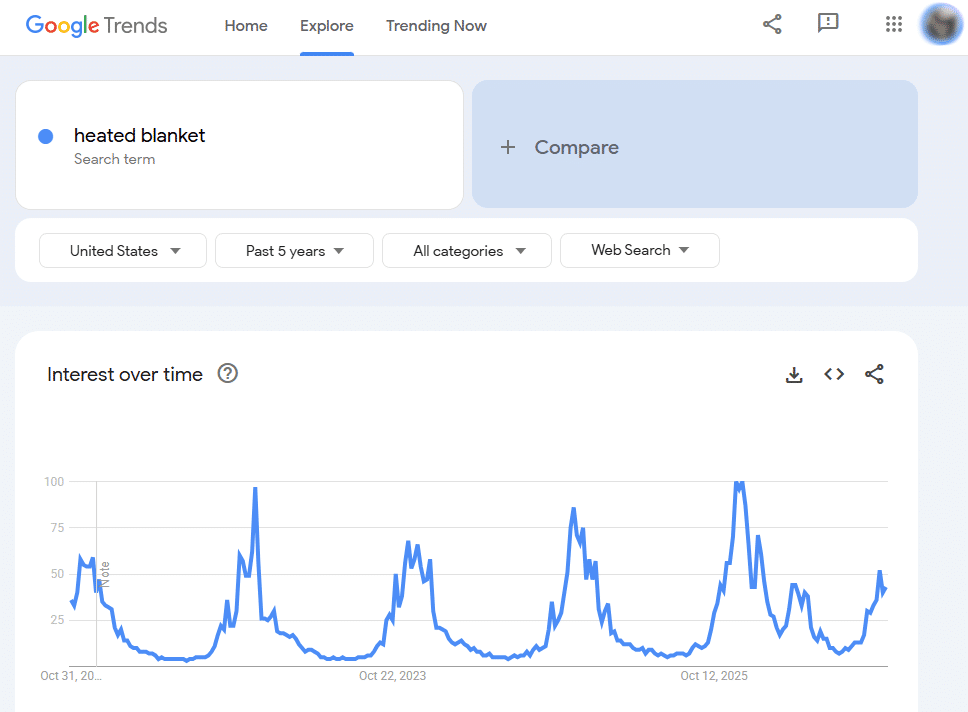
Demand is about timing: Google Trends scores go from 0 to 100 relative to the peak in your selected time period. They’re a measure of timing, not of actual search volume.
Count every fee: Shopify Payments on the Basic plan is 2.9% plus 30¢ per online card sale, so that fee has to be in every break-even calculation.
Prove demand and profit together: dropshipping product research should confirm that the buyer wants the product and that each order comes in at a profit after all the variable costs have been deducted.
Size the test to the learning phase: Meta typically needs around 50 optimization events in 7 days to exit the learning phase, which is about $809 a week at a $16.18 break-even CPA. A $20-a-day test buys 8-9 purchases, so set a kill rule at 1.5x break-even CPA (about $24.27).
Check supply and rivals before spending: order a sample, compare the stated processing time with the first tracking scan, and log competitor prices, assortment, reviews, update frequency, and ad creatives in one sheet.
Speed up the research: Sell The Trend’s Nexus AI, Store Intelligence, Facebook Ads Explorer, and free profit and CPA calculators cover product discovery, competitor analysis, and margin checks in one platform.
Launch only when demand, margin, supplier speed, and test budget all pass.
What should dropshipping product research prove before you spend money on ads?
Dropshipping product research should establish two things before you spend a single dollar. First, there is actual demand for the product in your target market, and second, each order will leave you with a margin large enough to cover the cost of acquiring the customer.
Popularity in itself proves neither of these. A viral video proves attention, not purchase intent, and a low supplier price says nothing about your cost once shipping, fees, and refunds are added. Product validation is the link between demand and unit economics.Winning products for dropshipping pass both tests, not just one.
Predictive tools help most at the top of this process. Nexus AI’s predictive trend detection is built to surface products before they go viral rather than after they saturate, which leaves more room to pass the margin test later.
How do you check demand with search trends and seasonality before testing?
Check demand by comparing Google Trends’ 5-year and 12-month views, searching the underlying problem as well as the product name, and setting the location to your shipping country. Look for steady or seasonal curves with a plateau. A single spike with no plateau is unproven demand.
Google Trends is a free Google tool that indexes search interest on a 0-100 scale (100 being the peak for the region and time period you select). It’s the timing element of your dropshipping product research. Run these four checks:
Compare the 5-year view with the 12-month view. A curve that peaks every November is clearly seasonal, and that tells you when to launch.
Search the problem as well as the name (e.g., “remove pet hair from couch”). Problem searches will show that the need is there beyond just one viral listing.
Set the location to the country you’re shipping to, as the global data can sometimes mask a completely flat local market.
Treat a single spike with no plateau as unproven demand.
Note: A score of 100 doesn’t equate to high search volume, so always combine Trends with keyword volume data (Google Keyword Planner is a free option) before you assess the size of the market.
If you are still choosing a category, browsingdropshipping niches or livetrend reports gives you candidates to run through Google Trends, instead of starting from a single viral listing on TikTok.Niche Spy adds a view of what top stores in a niche are selling, drawn from data on more than one million real stores.
No title
Pro Tip: Focus on products with consistent demand signals rather than viral spikes. Steady demand leads to more stable traffic and conversions.
How do you calculate dropshipping break-even CPA and profit margin per order?
Take all the variable costs out of what the customer pays (i.e., supplier cost, shipping, payment processing and a refund allowance). What’s left is your contribution before ads, which is your break-even CPA. If the realistic CPA in the niche is higher than that, then the product has failed (however good its engagement may appear).
Here’s a worked example of a $34.99 sale to a US buyer from a store on Shopify’s Basic plan:
Line
Amount
Basis
Customer pays
$34.99
Your retail price
Supplier cost
−$9.50
Example quote
Shipping to the US
−$4.50
Example quote
Shopify Payments (2.9% + 30¢)
−$1.31
Shopify pricing, Basic plan
Refund allowance (10%)
−$3.50
Your assumption
Contribution before ads
$16.18
Price minus variable costs
Break-even CPA
$16.18
Equals contribution before ads
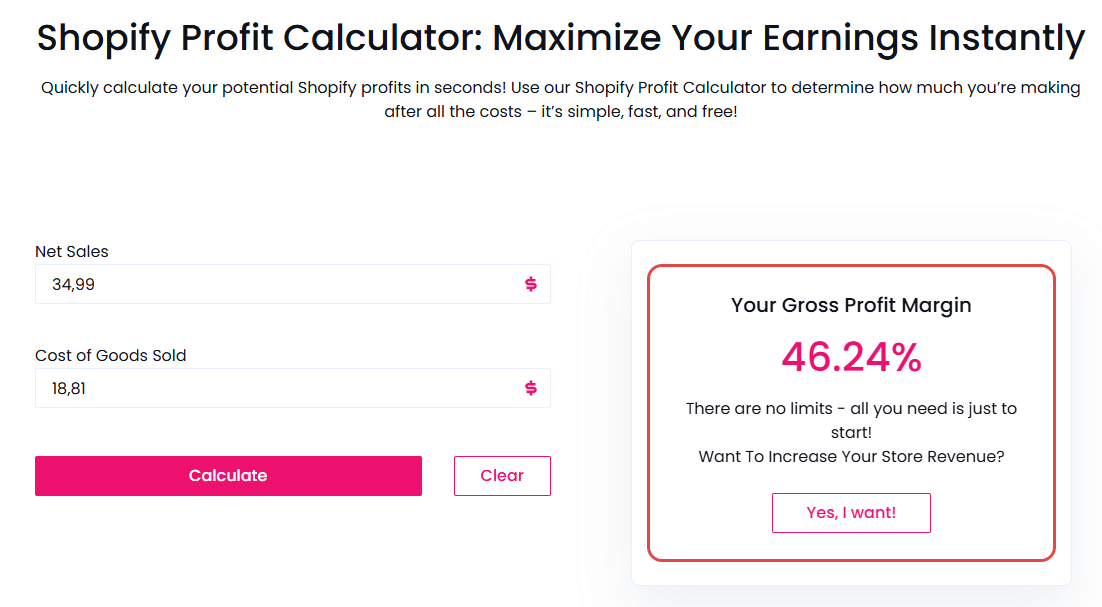
Never leave the refund line at zero. The 10% in the table is just an example, so if your category is higher, you’ll need to adjust that accordingly. Use Sell The Trend’s Shopifyprofit calculator to work out your actual profit margin, and itsCPA calculator to compare your break-even CPA with what your ads actually cost. In this case, $18.81 in variable costs on a $34.99 sale leaves a 46.24% margin before ad spend.
If you run aShopify dropshipping store, plug in your plan’s actual card rate, since processing fees change with plan and region.
How can free calculators speed up your break-even CPA math?
Sell The Trend’s freeShopify Profit Calculator turns net sales and cost of goods sold into a profit margin in seconds, and itsCPA Calculator turns ad spend and conversions into cost per acquisition. Run both before launch to compare your margin with your real CPA.
Shopify Profit Calculator: enter net sales and cost of goods sold, then compare the result with the 46.24% margin in the worked example
CPA Calculator: enter ad spend and conversions, then compare the result with your $16.18 break-even CPA
ROAS Calculator: check whether a campaign’s return on ad spend is profitable once tests are running
No title
Pro Tip: Run the margin table on your slowest-shipping, highest-refund variant first. If that version still clears break-even, the rest of the range has a safety cushion.
How do you analyze dropshipping competitors and marketplaces before launching?
Log the same five fields for every competitor in one sheet: prices and offers, product assortment, customer reviews, update frequency, and ad creatives. A consistent sheet turns each weekly price comparison into a few minutes of work and shows where rivals are weak, such as recurring review complaints you can turn into a positioning angle.
Track these fields for every competitor:
Prices and offers: base price, bundles, free-shipping thresholds, and discount codes
Product assortment: variants and add-ons placed next to the hero SKU
Customer reviews: recurring complaints you can turn into a positioning angle (Amazon and AliExpress listings count here too)
Update frequency: how often listings change, since frequent edits point to active testing
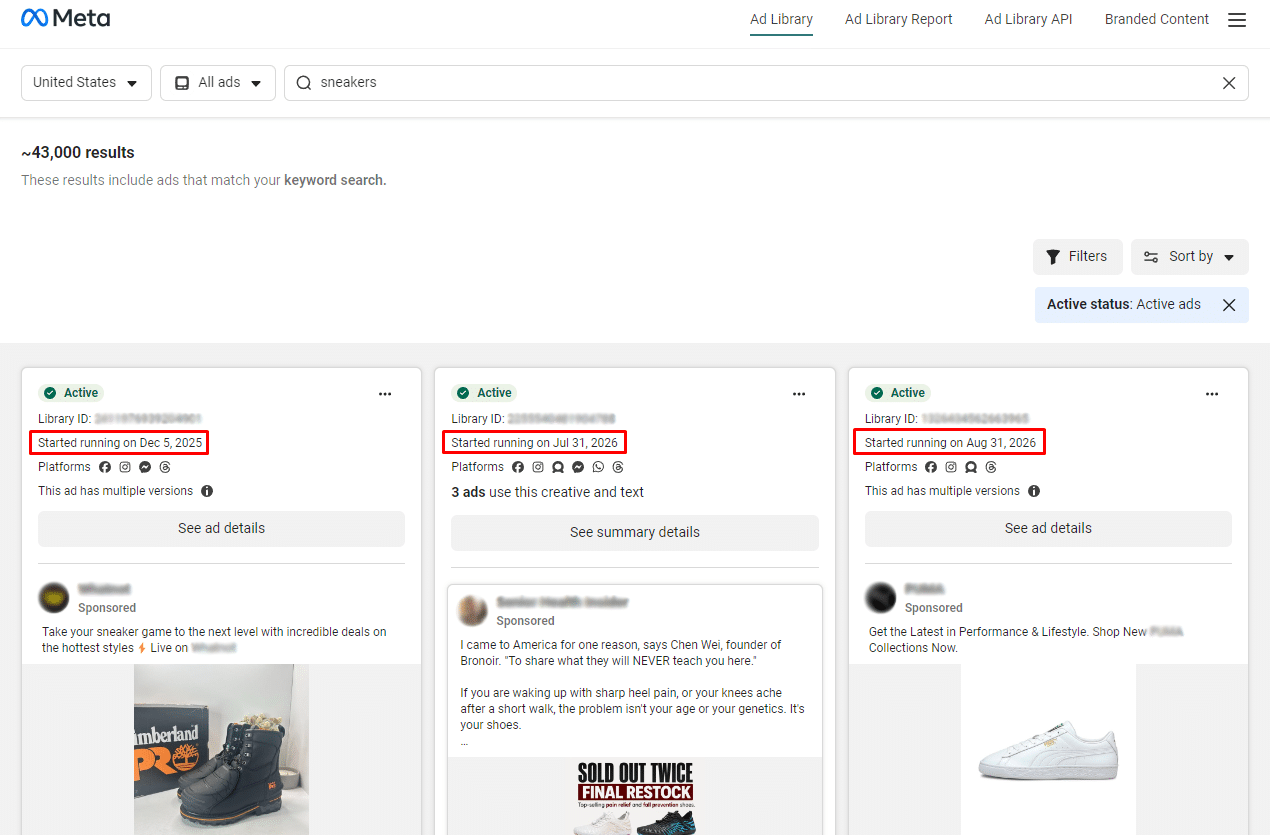
Ad creatives: hooks and start dates in the Meta Ad Library
Dedicatedad research tools extend the Meta Ad Library check across Facebook and TikTok ads, and store-level tools show what rivals actually sell. Sell The Trend covers both, as the next two sections show.
How does Store Intelligence help you analyze competitor Shopify stores?
Store Intelligence is Sell The Trend’s competitor analysis dashboard. For Shopify-based competitors it shows bestsellers, pricing, traffic sources, newly launched products, and estimated revenue in one view, so your competitor sheet fills in faster.
Bestsellers: see which products a rival store leans on most
Pricing: compare their prices and offers with your own margin table
Newly launched products: spot what competitors are testing right now
Traffic sources: see where their visitors come from
Revenue figures are modeled, so cross-check them against review counts and ad activity in the Meta Ad Library.
How does Facebook Ads Explorer help you validate a product through competitor ads?
Sell The Trend’s FacebookAds Explorer tracks active Facebook ads across niches and uses engagement data to surface products that are already selling. Filter by niche and engagement level, see how long each ad has run, and review competitor creatives and product pages before you commit budget.
Ad longevity: an ad that keeps running for weeks is a sign of sustained performance, so compare start dates with the hooks you logged from the Meta Ad Library
Creatives and product pages: review the offer and landing page, not just the product
TikTok coverage:Viral Ads Explorer covers TikTok ads, so you can check whether a product is moving on both platforms
Import: winning products can be imported into your store from the same tool
How do you keep competitor monitoring accurate when pages personalize prices?
Competitor pages can show different prices to different visitors, so load them from a clean browser profile and a standard home connection in the target country. That shows the price an ordinary customer sees rather than a version personalized to your own browsing history or location.
In January 2025, theFTC issued preliminary findings that retailers can use a person’s location and even their mouse movements to tailor prices and promotions. That is why sellers who track competitor pages regularly load them throughresidential proxies and a clean browser profile, from a standard home connection in the target country. This way, they see the version an ordinary customer sees, not one personalized to their own browsing history.
How does AI-driven product research compare with manual research?
AI-driven product research is faster and more consistent than manual browsing because it scores many products against the same data signals at once. Manual and free-tool checks still matter for the final decision, since they confirm demand in your country and margin on your supplier quote.
Approach
Result
Manual product research (scrolling TikTok and marketplaces by hand)
Slow, inconsistent
Free-tool validation (Google Trends, Meta Ad Library, a margin sheet)
Accurate, but about one afternoon per product
AI-driven product research (Nexus AI)
Faster, data-backed: 26+ data signals scored per product
Nexus AI is Sell The Trend’s predictive product research engine. It draws on 11M+ products across 83 niches, with 100,000+ new products added daily. Applied well,AI dropshipping shortens discovery but does not replace the margin and supplier checks in this guide.
Other tools cover different parts of the workflow. Minea emphasizes ad research, Spocket and Zendrop emphasize supplier catalogs and fulfillment, and AutoDS emphasizes order automation. Sell The Trend is an all-in-one dropshipping system: product discovery, a built-instore builder (SellShop), and supplier automation with real-time inventory sync.
How do you vet supplier reliability and shipping times before you launch?
Vet suppliers by ordering a sample to your target country, timing it from payment to arrival, and comparing the stated processing time with the first tracking scan. Then recheck stock on your best-selling variant and line up a backup vendor for the same SKU before you increase ad spend.
From the Baymard Institute survey: 20% of US shoppers who abandoned their cart for reasons other than just browsing cited delivery as being too slow. Dropshipping product research isn’t complete until you’ve checked supplier reliability, as customers will pick up on any gaps you’ve missed:
Order a sample to your target country and record the number of days from payment to arrival.
Compare the stated processing time with the date of the first tracking scan.
Recheck stock for your best-selling variant before you increase spend.
Line up a backup vendor for the same SKU so a stockout doesn’t force you to pause a working ad set.
Whether the listing sits on AliExpress or with a US warehouse, the same checks apply. Asupplier directory in Sell The Trend lists AliExpress, CJDropshipping, andUSA shipping options, which makes it easier to line up that backup vendor, andstore automation with real-time inventory sync flags stockouts before they interrupt a working ad set.
How does supplier automation help after you launch?
Sell The Trend’sStore Automation app handles order fulfillment and real-time inventory synchronization with suppliers, so a stockout on your best-selling variant is flagged before it interrupts a working ad set. Supplier options include AliExpress, CJDropshipping, and USA shipping, so you can compare sources before choosing a backup vendor.
Order fulfillment: 1-click order fulfillment once the test turns into steady orders
Real-time inventory sync: flags stock changes before they reach customers
1-Click Push to Store: sends a product to your store with a conversion-optimized product page
No title
Pro Tip: Treat the first tracking scan as your real processing time. A supplier who quotes 2 days but scans on day 6 has a 4-day gap your customers will feel.
How do you find winning products for dropshipping with a small test budget?
Size the test to your budget: write a kill rule before launch, optimize for add to cart if you can’t fund 50 weekly purchases, run at least two creatives per SKU, and judge results by cost per purchase. Fund two candidates properly rather than six thinly.
Meta’s Business Help Center states that an ad set typically requires around 50 optimization events in 7 days to get out of the learning phase. At the $16.18 break-even CPA from the example, a purchase-optimized ad set would need about $809 per week to achieve that. A $20 per day test budget comes to $140 per week, which at that CPA is 8-9 purchases. Dropshipping product research will have to size the tests to bridge that gap:
Write a kill rule prior to launch, e.g., pause any ad set that spends 1.5x your break-even CPA (your CPA ceiling, about $24.27 in the example) without a purchase.
If the budget isn’t big enough to fund 50 weekly purchases, then optimize for add to cart and assess the purchases separately.
Run at least two creatives per SKU so a poor hook isn’t mistaken for poor demand. Sell The Trend’sVideo Ads Creator andAI Ads Blueprint can help you produce those extra creatives.
Judge results by cost per purchase, not cost per click.
How do you produce more than one creative per test?
Produce at least two creatives per SKU by changing the hook, not the product: a new opening line, format, or video cut. Sell The Trend’s Video Ads Creator and AI Ads Blueprint can help generate those variations, and Viral Ads Explorer lets you study TikTok ads for reference before you brief them.
What is the final launch rule that protects your budget before the first ad goes live?
Close your dropshipping product research with one rule per candidate. Launch only when there’s demand in your target market during your launch window and a sample has arrived on time. The margin table must show a break-even CPA above the realistic CPA in your niche, and your daily test budget must cover at least one CPA ceiling (1.5x break-even CPA).
If an item passes on demand but fails on margin, then fix the offer first (with a bundle or a closer warehouse). Ads can’t fix unit economics that are negative before the first impression.
Once a candidate clears every check, Sell The Trend’s1-Click Push to Store sends it to your store with a conversion-optimized product page, so the test starts quickly.
Which Sell The Trend tools support each step of dropshipping product research?
Sell The Trend covers each step of this workflow: Nexus AI and Niche Spy for demand, free calculators for margin, Store Intelligence and Facebook Ads Explorer for competitors, supplier automation for fulfillment, and 1-Click Push to Store for launch. Use them to speed up the checks, then confirm the numbers yourself.
Sends a validated product to your store with a conversion-optimized product page
Frequently asked questions about dropshipping break-even CPA and product testing
These questions usually come up once the demand and margin checks are done.
How long should dropshipping product research take for one product idea?
With a margin template and a competitor sheet in place, one candidate’s desk work fits in a single session. The sample order takes longer, because you have to wait for delivery. Research the next candidates while samples are in transit, so you’re not idle waiting for one parcel.
Can I do dropshipping product research with free tools only?
Yes, on the core checks: Google Trends shows the timing of demand, and the Meta Ad Library shows which ads are live and when they went live. Free tools won’t give you speed or store-level estimates, whereas paid platforms put all of this in one dashboard. Their figures are modeled, so check them against what you see yourself.
How many items should I test at the same time in a new Shopify store?
Test only as many as your budget will properly fund. In the example above, each candidate needs several hundred dollars to produce a readable result, so $500 split across six gives none of them real data. Two properly funded tests teach you far more than six barely funded ones.
Should I avoid saturated products when choosing what to sell next?
Not automatically, since many sellers on one item suggest demand exists. What matters is whether you can win on something other than a lower price, such as faster shipping from a local warehouse or a bundle rivals don’t offer. Walk away when your only lever is a discount that drops your CPA ceiling below a realistic CPA.
What is break-even CPA in dropshipping?
Dropshipping break-even CPA is the most you can pay to acquire one customer without losing money: the sale price minus supplier cost, shipping, payment fees, and a refund allowance. In the worked example, a $34.99 sale leaves $16.18, so any CPA above that loses money on every order.
How does Sell The Trend help with dropshipping product research?
Sell The Trend’s Nexus AI scores products on 26+ data signals across 11M+ products and 83 niches to surface trends before they saturate. Store Intelligence and Facebook Ads Explorer add competitor sales and ad data, free tools like the Shopify Profit Calculator and CPA Calculator check the numbers, and built-in supplier automation with real-time inventory sync handles fulfillment after launch.
What should you do after validating a dropshipping product?
Run the one-rule launch check on each candidate, fund a small test with a written kill rule, and keep only the products whose real CPA stays below break-even. Repeat the same process every week, because demand, prices, and supplier stock all change.
As more sellers use predictive tools to spot products earlier, the edge shifts to whoever validates margin and supply fastest.
Ready to run this process on real data? Try theSell The Trend Free Trial to find products with Nexus AI, check competitors with Store Intelligence, and move validated products into your store.
Lisa is an eCommerce and digital marketing specialist with over 6 years of experience helping online businesses grow through data-driven strategy and hands-on execution.
She has worked across dropshipping and direct-to-consumer channels, focusing on product research and performance marketing. At Sell The Trend, she creates practical, research-backed content to help merchants make confident decisions.