Created: 27 August 2026 Updated: 16 September 2026
Contents
A dropshipping product can start generating sales without proving that the business behind it can handle volume. The first 100 orders expose weaknesses in supplier inventory, fulfillment, tracking, customer support, cash flow, and manual workflows that dropshipping automation software is built to catch early. Treating those orders as a stress test helps merchants fix operational bottlenecks before additional demand turns small problems into expensive failures.
Key Takeaways
The first 100 orders are an operational stress test, not just a sales milestone.
Manual workflows that work at 10 orders can create errors and support queues at 100.
Supplier stock, fulfillment accuracy, tracking, customer support, and cash flow should be monitored as volume increases.
The most valuable automation targets are repetitive tasks with predictable inputs and outputs.
Exception rates often reveal scaling problems earlier than fulfillment speed or headline revenue.
Real-time inventory sync and automated order fulfillment can reduce repeated data handling as order volume grows.
The hundredth order is a useful checkpoint for deciding whether a store is ready for more traffic.
How should you prepare a dropshipping store for its first 100 orders?
The first 100 orders should be treated as a controlled stress test of the entire dropshipping operation. Instead of measuring only sales and revenue, track supplier reliability, inventory accuracy, fulfillment exceptions, tracking delays, support contacts, refunds, and contribution per order. These signals reveal whether the store can absorb more demand without sacrificing margins or customer experience.
Early sales prove that customers are willing to buy. They do not automatically prove that the underlying operation is scalable.
Five orders can be checked manually. Fifty orders create queues, exceptions, delayed updates, and mistakes that spread faster than one person can correct them.
At 100 orders, the business has enough activity to expose patterns.
A product that converts well can still become unprofitable if:
Supplier stock disappears.
A best-selling variant becomes unavailable.
Tracking information arrives late.
Fulfillment requires repeated manual entry.
Customer support tickets multiply.
Refunds and replacements increase.
Supplier costs change after advertising has already been scaled.
This is wheredropshipping automation becomes relevant. Tools that connect product operations, supplier workflows, inventory, and fulfillment can reduce repetitive work, but automation should follow a proven process rather than replace one that has never been understood.
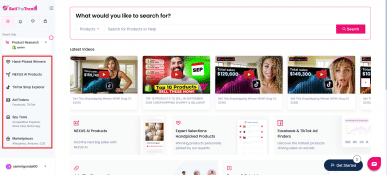
Sell The Trend approaches this problem as an all-in-one dropshipping system, combining NEXUS AI product research with supplier automation, inventory synchronization, store-building capabilities through SellShop, and order fulfillment workflows.
The objective is not to automate everything. It is to make the important workflows predictable enough that increasing order volume does not increase chaos at the same rate.
What changes between 10 and 100 dropshipping orders?
The biggest change is that attention stops being a reliable operating system. At low volume, a founder can compensate for weak processes by remembering details and manually correcting exceptions. At 100 orders, the same approach creates delays, inconsistent decisions, and preventable fulfillment errors.
At low volume, a merchant may notice an address problem, check a supplier page, send a tracking message, and answer a delivery question personally.
That works because each exception remains visible.
As volume rises, the problem changes from completing tasks to controlling flow.
Area
At Low Volume
As Orders Rise
Inventory
Manual checks may seem sufficient
Stock changes can create overselling quickly
Fulfillment
Orders can be reviewed individually
Repetitive entry increases error risk
Tracking
Updates can be sent manually
Delays create larger support queues
Customer service
One person can remember context
Tickets need categories and ownership
Cash flow
Small gaps are manageable
Supplier payments and refunds compound
A small delay can affect several orders before anyone notices.
One incorrect variant mapping can create multiple replacements. A stockout can leave paid orders waiting. A supplier processing delay can create a wave of “Where is my order?” messages.
Scale does not simply create more work. It changes the type of work.
The operator has to move from memory-based management toward documented workflows, clear ownership, measurable exceptions, and automation where the process is stable.
No title
Pro Tip: Do not use order count alone to decide whether a store is ready to scale. Compare order volume with exception rates, fulfillment delays, support contacts, refunds, and contribution per order.
How does scaling expose weak ownership in a dropshipping business?
The first 100 orders often reveal that too many responsibilities still belong to one person. Supplier messages, customer replies, refund decisions, creative work, financial tracking, product research, and fulfillment can compete for the same attention, making important exceptions easier to miss.
A useful operating model divides work into three groups:
Owner judgment: pricing decisions, supplier changes, refund exceptions, product strategy, and major customer issues.
Repeatable processes: order routing, tracking updates, inventory checks, routine customer responses, and reporting.
Specialist work: tasks that require expertise the internal team does not possess.
For example, when a store needs specialist SEO support beyond its internal capabilities,SeoProfy can serve as an external SEO agency while the merchant keeps day-to-day attention on customers, suppliers, fulfillment, and cash flow.
The principle applies beyond SEO.
Outsourcing helps only when ownership remains clear. Automation helps only when the underlying process is understood.
Someone still needs to know:
What should happen normally?
What counts as an exception?
Who owns the exception?
How quickly should it be resolved?
What happens if the same exception occurs again?
That final question is especially important.
A recurring problem should not become a permanent support task. It should become evidence that the workflow needs to change.
How does supplier inventory become a scaling risk?
Supplier stock becomes a major operating risk when order volume accelerates because the merchant can sell faster than the supplier can reliably replenish or communicate inventory changes. The safest approach is to monitor high-selling variants, maintain a backup source, and verify alternative products before the primary supplier fails.
A product test often assumes the supplier can continue fulfilling whatever the store sells.
Once orders accelerate, that assumption becomes dangerous.
A supplier may:
Run low on the best-selling color.
Remove a variant.
Change processing time.
Increase the product cost.
Temporarily stop stocking the item.
Change packaging.
Offer different shipping terms.
A merchant therefore needs a simple stock-control routine before volume climbs further:
Check the highest-selling variants more frequently than slow movers.
Record supplier stock levels when a campaign begins scaling.
Identify at least one backup source before the main source fails.
Compare backup variants, dimensions, packaging, and shipping terms.
Pause or adjust offers quickly when reliable supply becomes uncertain.
A backup supplier should not simply be an emergency name in a spreadsheet.
Compare the alternative product before it is needed.
Differences in material, size, packaging, shipping speed, or product quality can turn an inventory problem into a customer-experience problem.
Real-time inventory synchronization can reduce one important failure point by keeping store availability closer to supplier availability. Sell The Trend describes its automation workflow as including real-time supplier inventory synchronization and automated order fulfillment, which are particularly relevant when manual inventory checks become difficult to maintain.
Why do fulfillment errors multiply faster than order volume?
Fulfillment becomes fragile when every order requires manually copying names, addresses, variants, and shipping information between systems. A two-minute manual process consumes more than three hours across 100 orders, while also creating 100 opportunities for repeated human error.
The issue is not that two minutes sounds long.
The issue is repetition.
Every manual step introduces another chance for:
Incorrect customer information.
Wrong product variants.
Duplicate orders.
Missing shipping information.
Supplier selection mistakes.
Tracking delays.
Fulfillment failures.
What should a dropshipping store measure besides fulfillment speed?
Exception rate is often a more useful early warning signal than fulfillment speed alone. A store should know how many orders require manual correction, what caused those corrections, and whether the same problem is recurring.
Common exception categories include:
Invalid or incomplete addresses
Unavailable variants
Duplicate orders
Supplier price changes
Failed payment or fulfillment requests
Split shipments
Missing tracking information
Once exceptions are categorized, repeated problems become easier to fix at the source.
For example:
Exception Signal
Likely Cause
First Response
More unfulfilled orders
Supplier or workflow delay
Find the shared bottleneck
Tracking arrives late
Supplier processing lag
Check dispatch timing
Wrong variants increase
Mapping or manual-entry issue
Audit product options
Support tickets rise
Status is unclear to buyers
Improve proactive updates
Refunds rise
Delivery promise is diverging from reality
Review product and shipping claims
If address errors appear frequently, checkout instructions may need attention.
If variant mismatches repeat, product mapping needs correction.
If one supplier creates most delays, the supplier—not necessarily the workflow—may be the bottleneck.
How can order status reduce customer support problems?
Order status should remain visible from payment through shipment because uncertainty creates avoidable support work. When customers can see that an order has been received, fulfilled, and shipped—and can access tracking information—fewer routine questions need to be handled manually.
Shopify’sorder management and fulfillment guidance explains that merchants can manage incoming orders, capture payments, prepare orders, fulfill them through different methods, and provide tracking information.
The operational lesson is simple: fulfillment and tracking should function as one connected workflow.
A customer who receives a confirmation but no useful update may contact support.
A customer who receives timely tracking information can often resolve the uncertainty independently.
No title
Pro Tip: Track the time between payment, fulfillment, dispatch, and tracking availability. A store can have fast fulfillment but still create unnecessary support tickets if tracking information reaches customers too late.
Can customer support grow faster than dropshipping sales?
Yes. Support volume can grow faster than order volume because one delayed shipment, unclear delivery estimate, or defective product can trigger multiple customer contacts. The first 100 orders should therefore be used to identify recurring questions and turn them into reusable support processes.
A product page with vague sizing information can generate questions before delivery and return requests afterward.
A delayed shipment can produce:
A tracking question.
A second follow-up.
A cancellation request.
A refund request.
For that reason, build a small support knowledge base around four categories:
Order status and tracking
Address changes and cancellations
Damaged, incorrect, or missing items
Refunds, replacements, and delivery disputes
Then measure both ticket volume and ticket cause.
A growing queue is not always a staffing problem.
It may indicate that the product page, delivery estimate, confirmation email, supplier, or fulfillment process is creating confusion upstream.
The best scaling strategy is often to remove the reason customers need to contact support in the first place.
How can revenue growth create cash-flow problems?
Revenue growth can hide cash pressure because a dropshipping merchant still pays suppliers, advertising costs, software bills, refunds, and replacements even without purchasing inventory in advance. Rapid order growth can therefore create a timing gap between cash leaving the business and customer payments becoming available for reuse.
Before increasing advertising spend, track:
Cash available for supplier payments
Expected payouts over the next several days
Pending refunds and disputed payments
Advertising commitments already incurred
Software and contractor costs
A reserve for replacements and unexpected supplier changes
This is why contribution per order matters more than headline revenue.
A product with a healthy selling price can still create financial pressure if:
Shipping costs rise.
Refunds increase.
Replacement orders become common.
Supplier pricing changes.
Advertising costs increase.
Delivery delays create cancellations.
A growing sales graph does not automatically mean the operation is becoming healthier.
The objective is profitable, repeatable order volume.
No title
Pro Tip: Before scaling advertising, calculate what one additional order contributes after product cost, shipping, payment costs, advertising, refunds, and expected replacements—not simply the selling price minus supplier cost.
Which dropshipping tasks should be automated first?
The best automation candidates are repetitive actions with clear inputs and predictable outputs. Inventory updates, order routing, repetitive fulfillment, and tracking communication are strong candidates once the merchant has documented the correct workflow and identified its exceptions.
Not every task should be automated immediately.
A useful rule is:
Understand the workflow → document the workflow → measure the workflow → automate the stable parts.
This approach prevents automation from simply making a bad process happen faster.
What does dropshipping automation look like at the first 100 orders?
A mature automation workflow can connect product data, supplier information, inventory, order fulfillment, and tracking so the merchant does not repeatedly move the same information between systems.
Sell The Trend positions this as an all-in-one dropshipping workflow, with NEXUS AI for product research and predictive trend signals, supplier automation, real-time inventory synchronization, store-building tools through SellShop, and automated order fulfillment.
Its automated fulfillment workflow is particularly relevant to the original problem: repeated order data handling can be reduced while tracking information continues through the fulfillment process.Automated order fulfillment can therefore become one part of a broader dropshipping automation system rather than an isolated tool.
Automation should still leave room for exceptions.
A failed address, unavailable variant, unexpected supplier change, or unusual customer request needs human review.
The goal is to reserve human attention for situations where judgment actually matters.
How should you build an exception playbook before scaling?
An exceptional playbook gives the team a consistent response to problems that cannot safely be automated. For the first 100 orders, it can be simple: define what proceeds automatically, identify manual-review triggers, assign ownership, set response deadlines, and record the cause of each significant failure.
A basic playbook can contain five steps:
Define when an order can proceed automatically.
Flag conditions that require manual review.
Assign one owner to each exception type.
Set a response deadline for supplier and customer issues.
Record the final cause so repeated failures can be corrected.
This creates a feedback loop.
Every exception becomes information about where the store needs:
A stronger rule
A clearer customer promise
A better supplier
Better product mapping
More reliable automation
Better internal ownership
The objective is not zero exceptions.
The objective is to prevent the same exception from repeatedly consuming human attention.
What should you check at the hundredth order?
The hundredth order is not a magic threshold, but it is a useful checkpoint for comparing assumptions with real operating data. By this point, a store should have enough activity to identify its main operational bottlenecks and determine whether more demand will improve the business or magnify existing weaknesses.
Before pushing volume higher, ask:
Can the primary supplier support the current order pace?
Is inventory data staying accurate?
How many orders require manual correction?
Which exception occurs most frequently?
What is driving customer support contacts?
Are tracking updates arriving quickly enough?
Are refunds or replacements increasing?
Has contribution per order changed?
How much cash is available for supplier payments?
Which workflow is consuming the most manual time?
The answers should determine the next step.
A store with dependable supply, low exception rates, accurate inventory, manageable support volume, and healthy contribution per order may be ready for more demand.
A store that constantly rescues orders manually probably needs process improvements before it needs more traffic.
What does a scalable dropshipping operation look like after 100 orders?
A scalable dropshipping operation is not one that has eliminated all manual work. It is one where routine work follows predictable processes, exceptions have clear owners, supplier risks are monitored, customer communication is visible, and the economics remain healthy as order volume increases.
The first 100 orders should expose weak links while the business is still small enough to correct them quickly.
The most important transition is from heroic manual effort to repeatable operating systems.
That means:
Inventory is monitored rather than assumed.
Suppliers are evaluated rather than blindly trusted.
Fulfillment is measured by exceptions as well as speed.
Tracking is treated as part of fulfillment.
Customer support is analyzed for root causes.
Cash flow is monitored alongside revenue.
Stable repetitive tasks are automated.
Human attention is reserved for exceptions and decisions.
Scaling is safest when growth makes the system more visible rather than more chaotic.
The first 100 orders are valuable precisely because they show where the business breaks before the business becomes too large to fix those weaknesses cheaply.
FAQs
Is 100 orders a good milestone for a dropshipping store?
Yes. One hundred orders is a useful operational checkpoint because it provides enough activity to identify recurring fulfillment, inventory, support, supplier, and cash-flow problems. It is not a universal threshold, so merchants should use the data rather than the number itself to decide whether to scale.
What is the biggest problem when a dropshipping store starts scaling?
The biggest problem is usually the transition from manual attention to repeatable processes. Tasks such as fulfillment, inventory checks, tracking, supplier communication, and customer support can become bottlenecks when every order requires individual handling.
How can dropshipping automation help with scaling?
Dropshipping automation can reduce repetitive work across product management, inventory synchronization, order fulfillment, and tracking. The most effective approach is to automate stable workflows while keeping human review for addresses, unavailable variants, supplier changes, refunds, and other exceptions.
Why is supplier inventory important when scaling a dropshipping product?
Supplier inventory becomes more important as sales accelerate because stockouts can affect multiple paid orders before the merchant notices. Monitoring high-selling variants, maintaining backup suppliers, and using inventory synchronization can reduce the risk of overselling unavailable products.
How should a dropshipping store measure fulfillment performance?
Fulfillment should be measured using more than processing speed. Useful indicators include manual correction rate, unavailable variants, duplicate orders, missing tracking, split shipments, supplier delays, refunds, and customer support contacts related to delivery.
When should a dropshipping store automate its operations?
A store should automate repetitive tasks after the underlying workflow is understood and documented. Automation is most useful when the inputs and outputs are predictable, while unusual orders and exceptions still have a defined human-review process.
Conclusion: How do you scale a dropshipping product without breaking the operation?
The first 100 orders should be treated as a stress test rather than simply a revenue milestone. They reveal whether supplier inventory, fulfillment, tracking, support, cash flow, and automation workflows can withstand increased demand.
A product that sells is only the beginning.
The next question is whether the business can deliver those orders accurately, profitably, and repeatedly.
When the answer is yes, scaling becomes a process of increasing demand. When the answer is no, the first 100 orders have done their job: they have shown exactly what needs to be fixed before the next 1,000.
If repetitive fulfillment, inventory management, and supplier coordination are becoming the bottleneck, you can testSell The Trend Free Trial to explore a more automated dropshipping workflow.
Lisa is an eCommerce and digital marketing specialist with over 6 years of experience helping online businesses grow through data-driven strategy and hands-on execution.
She has worked across dropshipping and direct-to-consumer channels, focusing on product research and performance marketing. At Sell The Trend, she creates practical, research-backed content to help merchants make confident decisions.