Many e-commerce brands don’t think much about their authority. And it’s understandable. A typical store owner is much more concerned about revenue growth, conversions, upsells, returning customers, etc. But achieving all of these is much harder when your authority is weak.
E-commerce authority-building strategies aren’t just a nice-to-have addition to your marketing. They’re a must for sustainable growth that doesn’t depend entirely on paid ads. So, in this guide, let’s look at what e-commerce authority consists of and how your online store can build it from scratch.
What Digital Authority Really Is for E-commerce Stores
E-commerce authority essentially refers to how trustworthy your online store is. It is a broad concept that includes several components:
The overall digital visibility of your brand,
Clear messaging and positioning,
Good online reviews and customer trust,
Organic brand mentions across channels,
SEO visibility and search demand,
AI visibility and citations in LLMs,
Strong reputation and industry leadership,
Authority signals that come from multiple credible sources.
This is exactly why building authority requires time. You have to take care of everything, from your own content ecosystem and reputation management to digital PR and high-quality link-building campaigns.
Note: If you have a lot of SEO experience, you probably associate authority with DA and DR. But today, we’re talking about a much broader concept where SEO authority is only one part of the story.
Why Does It Even Matter?
One of the most popular promotional tactics for e-commerce brands is PPC. It’s an effective strategy that can deliver relatively quick results. Yet, there is an issue: while you get attention and traffic, ads alone do nearly nothing for customer trust and digital reputation.
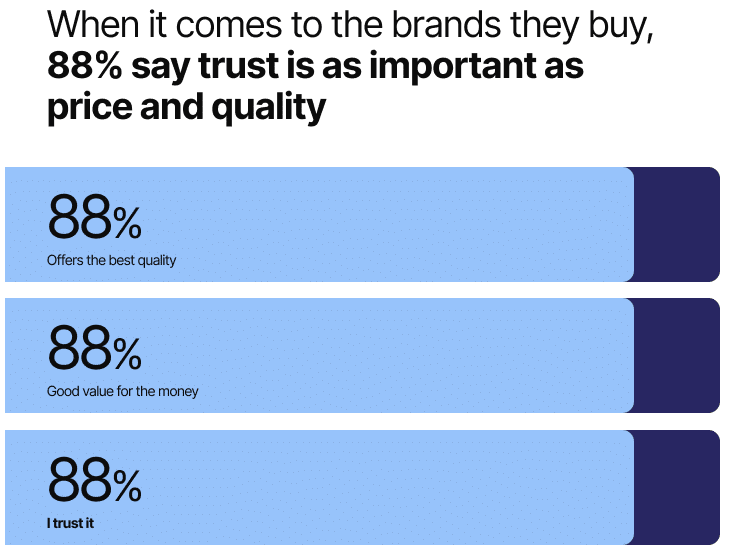
To understand why this is a problem, let’s think about the factors that influence buying decisions. Some of the most obvious things that come to mind are quality and good value for money, right? They’re really important. True.
But what if we told you that for your customers, trust is as important as quality and price?
So, while it might seem like digital reputation and brand equity are secondary priorities, they help you build customer trust. And your sales depend on it.
How E-commerce Brands Can Build Authority in 6 Steps
Now, let’s see how you can practically build an e-commerce marketing strategy that’s focused on authority.
Step 1: Check Your Current Authority Across Channels
As with many things, you have to understand your Point A first. Depending on your business structure, your team might already have all the information needed. If that’s the case, just put it all together.
But if you’re a small store with limited resources, you might have to run a serious audit from scratch. These are the things that are worth checking to understand how your digital authority is doing:
SEO and AI visibility: Use any SEO tool to check your DA/DR, AI visibility score, traffic, keyword rankings, number of referring domains and backlinks, etc. This is a good starting point to understand whether your online shop is even visible in search.
Social media: Another important channel is social platforms. Review your profiles and pay attention to mentions, engagement, etc. Besides, use social listening tools to find any relevant brand mentions that you may not be aware of.
Forums: If your brand gets any mentions on Reddit or other forums, check what people are saying. Often, this is really valuable feedback that can help you improve your product and customer service. People might even mention what seems off about your brand and prevents them from fully trusting it.
Review platforms: If you take a look at any e-commerce statistics, you’ll see that most people check reviews before buying anything. That’s why it’s important to have a clear picture of what your customers are saying about your products and the overall experience.
Customer support: Talk to your CS team to see whether they have any insights you’ve been missing. Sometimes, your customer support agents can pretty accurately estimate how people are feeling about your brand.
Once you have all this data, try to find some patterns. Your objective is to understand whether people see you, whether they talk about you, and if they do, what they’re saying. If you have way too much information, you can upload it to any LLM and ask AI to give you an overview of your current situation. Just make sure there is no sensitive information.
After you’re done with your analysis, set clear goals. It could be anything, from becoming more visible than an X competitor to improving your reputation. You can adjust it later on, but starting with a clear purpose will help you stay more focused.
Step 2: Do Everything to Build Trust
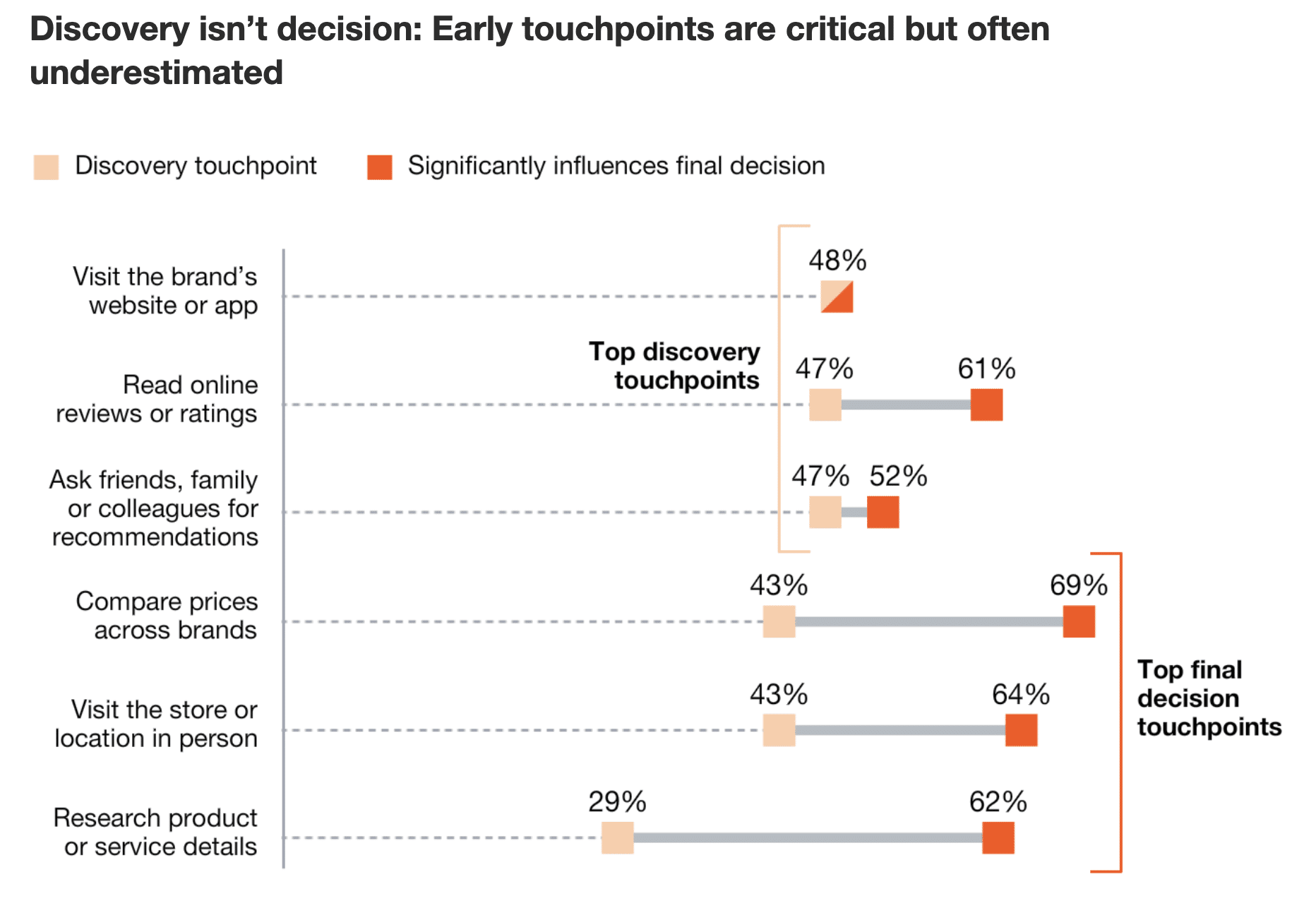
Customer trust is one of the most important elements of your long-term success. But it’s also one of the hardest things to achieve because your entire online presence has to feel credible. This includes your website, reviews, customer experience, product descriptions, and so on.
If you take a look at the infographic below, you’ll see that everything we’ve just mentioned plays a huge role in both discovery and decision. That’s why you can’t only focus on your website. You have to make sure your brand feels right across channels.
So, how do you make your store more credible? First of all, make sure that you have all the basics covered. This includes secure checkout, good product pictures and descriptions, a fast website, active social media accounts, etc.
Your entire brand has to look reassuring, not weird or fishy. And if you want to take it one step further, try experiential marketing. It will help people bond with your store even more, making your brand feel like a “safe choice.”
In addition to this, build e-commerce trust signals:
As seen on badges: If you get published in some well-known media outlets, add their logos to your website.
Reviews: This is a really important element to build initial trust, especially if you add video reviews, as they’re harder to fake.
Numbers: Things like “x years in business,” “x happy customers,” etc., may seem tiny, but they can serve as additional proof.
Guarantees: These can be anything, from free returns to money-back guarantees.
Step 3: Build SEO authority and visibility
While there is nothing wrong with using dropshipping ads, you still need other, more sustainable visibility channels. That’s where SEO fits in perfectly. SEO authority, essentially, comes down to two main components:
Writing optimized thought leadership content,
And doing white-hat e-commerce link building.
These two will help you establish a certain image online (i.e., a strong association with a particular niche) and spread the word about it. As a result, you’ll get more visibility and trust in both traditional search engines and AI systems.
We’ll talk more about content in the next step. So, let’s first focus on backlinks. The main idea is to get external mentions from relevant and credible sources. How can you do that? For e-commerce brands, you can try:
Running viral campaigns that attract media attention,
Distributing press releases on PR sites,
Getting featured in the lists of the best/top products in your category,
Showing up in more video reviews (including short-form UGC content).
All these things might sound overwhelming and nearly impossible for some stores. But if you build a smart outreach strategy and do it consistently, it’ll be much easier than it seems. Many brands also choose to work with experienced link building agency to secure high-quality backlinks, digital PR placements, and authoritative mentions that strengthen their SEO presence over time
Step 4: Create Content That Your Audience Is Actually Looking For
It’s hard to build authority without initial visibility. That’s why it’s so important to have traffic, whether it’s paid or organic. Again, PPC is a great way to get more clicks to your site, but you can also boost e-commerce store traffic without buying ads. One of the best ways to do that is by using e-commerce content marketing.
Many online stores don’t publish much content. And those who do often stick to classic SEO-friendly blog posts.
But we encourage you to think broader than just keyword optimization. Get into your customers’ shoes for a moment and think about their worries, doubts, aspirations, and so on. These should be the foundation of your content.
Of course, it has to be optimized for search and AI visibility. Still, your main intention should be to actually help your customers, not write another GPT-like blog post.
When building your e-commerce content strategy, also try different formats. Apart from the usual guides, how-tos, and tips, you can also experiment with:
Product testing (you can even take it to extremes and run a crash test),
Different ways people can use your product,
Interesting behind-the-scenes content that features your team,
Selections of TikTok trends related to your product and/or niches, etc.
Step 5: Brainstorm Retention Strategies
E-commerce growth strategy isn’t just about attracting new people to your store. It’s also about retaining the ones who already know about you.
After all, you don’t want to be a one-time thing in people’s lives. That’s not authority. The whole idea of building it comes down to having a loyal audience and a solid brand name in your industry.
So, it’s important to think about how you can turn each transaction into a lasting relationship. Some of the best strategies are:
Email marketing for e-commerce. This can vary a lot, from offering lead magnets and then moving people down the funnel to having a valuable newsletter.
Loyalty marketing. Loyalty programs might not be the primary reason why buyers choose you over competitors, but they’re a great addition.
Referral and affiliate programs. Word of mouth is still one of the most effective promotional channels. So, encouraging your customers to recommend you to their friends or followers is an effective tactic for many online stores.
Community building. This might not be for everyone. But if your product unites people around it, you’ll get an unfair advantage (literally).
Retention is another task that might feel overwhelming. That’s why it makes sense to optimize some processes. You could, for example, try email automation strategies, find referral marketing tools that simplify your campaigns, and so on.
Step 6: Manage Your Online Reputation
E-commerce reputation management is a major one. No matter how hard you’re working on your SEO or email marketing, if your digital reputation isn’t good, your results won’t be great either. So, it’s absolutely crucial to monitor your digital store’s image.
It isn’t that hard to keep an eye on this. Simply do these little checks regularly:
Track your reviews on your own website, marketplaces (if relevant), and review platforms.
Check who’s tagging you online and whether there are any negative opinions.
Use a social listening tool that can send you alerts when anyone mentions your brand.
Ask your customer support to inform you when there are too many complaints, especially after new product launches or any major changes.
These aren’t complex, but they can really save your brand if anything bad happens. If you notice something going south, react as fast as you can. Mitigating any issue is easier when you catch it early on.
Final Words: Long-Term Growth Starts With Authority
E-commerce authority might sound like another fancy marketing term that has nothing to do with actual growth. But in reality, authority is what helps your brand stand out from competitors and get chosen again and again. As a result, increasing revenue, strengthening customer loyalty, and growing your business become much easier.
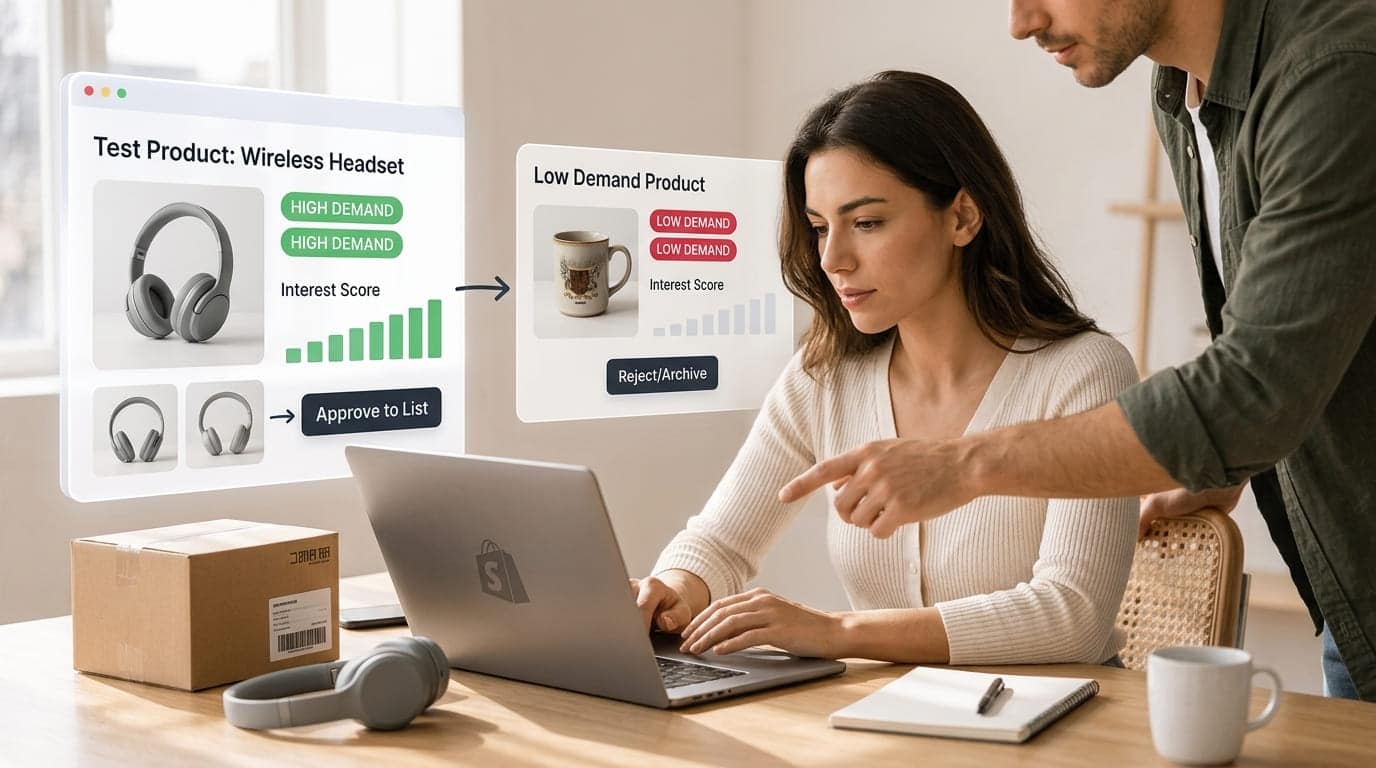
Still, of course, all this is only possible when you have the products that your audience wants and know how to promote them effectively. This is where Sell The Trend can help. This platform can help you with anything, from analyzing demand to reviewing competitors’ ads.
Lisa is an eCommerce and digital marketing specialist with over 6 years of experience helping online businesses grow through data-driven strategy and hands-on execution.
She has worked across dropshipping and direct-to-consumer channels, focusing on product research and performance marketing. At Sell The Trend, she creates practical, research-backed content to help merchants make confident decisions.