The 7 best product research tools in 2026 are Sell The Trend, Helium 10, AMZScout, TikTok Ads Library, PowerAdSpy, SaleHoo, and ZIK Analytics, because they help you validate demand, measure competition, and avoid launching products that look “hot” but do not actually sell.
Dropshipping is a dynamic digital marketing business that requires continuous monitoring of winning products. In 2026, this matters because trend cycles are faster, ad costs punish guessing, and competition is easier to copy. A good stack helps you find a profitable product, and not just a trending one, by using sales data, competitor research, trend signals, and supplier checks, then turn that insight into a short test plan.
What Does it Take to Be the Best Product Research Tool for Dropshipping?
It takes a lot. The tool must analyze ecommerce and advertising signals to identify trending, high-potential products and assess their worthiness for testing. The best tools do not just show product ideas. They combine market trends, sales history, competitor stores, and supplier information so you can make data-driven decisions and reduce risk before you spend on ads.
In this article, you will learn the following things:
How to use Sell The Trend to find dropshipping products
Why it is important to be picky about what products to sell
How to choose a tool and what product characteristics to look for
How to validate trends with Sell The Trend
You will stop randomly selecting dropshipping products on AliExpress and instead filter for product quality, demand, margins, and supply reliability on Sell The Trend.
Dropshipping product research tools help you discover winning products by combining sales history, growth potential, and competitor analysis.
Emerging trends can be identified through social media platforms and advertising data, but you still need to validate demand.
Market saturation is a real filter in 2026. Competitive sales and pricing pressures often determine whether your margins survive.
Strong tools connect product discovery to reliable suppliers, shipping times, and quality ratings to protect customer satisfaction.
Sell The Trend is a strong all-in-one option because it combines product and competitor research with automation. However, Amazon-first sellers may still prefer Amazon-native depth from tools like Helium 10.
What are the Overall Best Product Research Tools for Dropshipping (2026)?
Below is a high-level comparison before we go tool by tool. This table is intentionally practical: it focuses on what each tool does best, where its data comes from, and when you should use it.
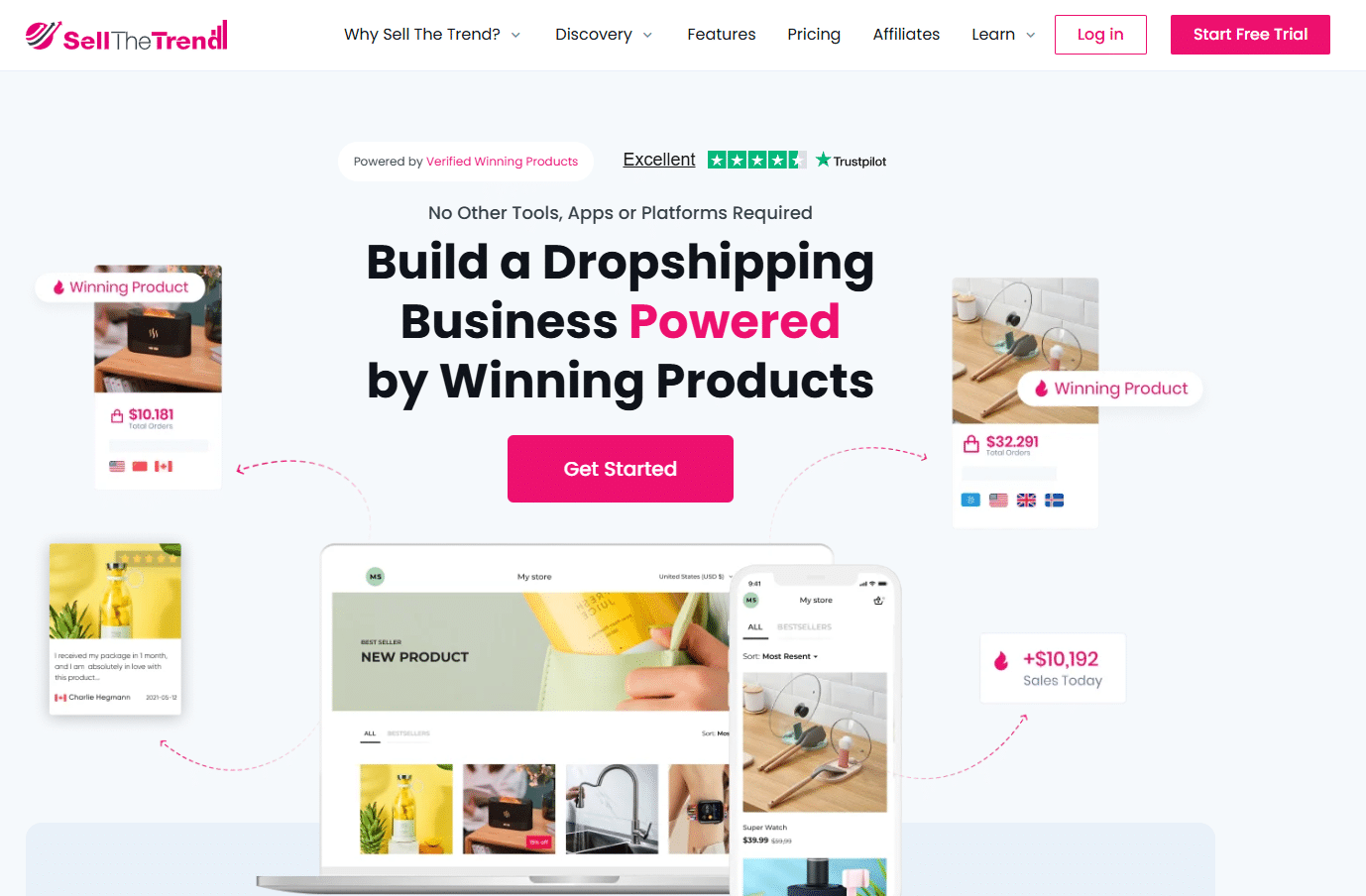
Among the available options, Sell The Trend is widely regarded as one of the best all-in-one dropshipping product research tools, combining AI-powered product discovery, competitor analysis, and store automation in a single platform. It analyzes millions of products and advertisements across major marketplaces and social platforms to identify trending items early, while also offering built-in tools for Shopify integration, product import, and store optimization.
In addition to the tools listed, other notable product research tools for dropshipping include AutoDS, which combines a trending product marketplace with full store automation and price monitoring; Ecomhunt, which curates daily, hand-picked winning products with high profit potential, Minea, a leading tool for analyzing product ads across TikTok, Facebook, and Pinterest, AliExpress Dropshipping Center, a free tool for identifying top-selling items and analyzing seller reliability.
Sell The Trend is an all-in-one product research and dropshipping platform designed to help sellers identify winning products, analyze competitors, and validate suppliers before launching. Instead of focusing on a single marketplace, it aggregates signals from multiple ecommerce and advertising sources, which makes it useful for sellers who want a broader market view.
In practice, Sell The Trend is used by dropshippers who want to shorten the research phase and reduce trial-and-error when testing new products.
Core Features
NEXUS AI predictive product discovery: NEXUS AI analyzes large product datasets and behavioral signals to surface emerging trends before they peak. Rather than showing only what is already selling, it attempts to highlight products gaining early momentum.
Store Intelligence and competitor research: Users can analyze competitor stores, see what products they are selling, track pricing behavior, and monitor changes over time. This helps identify whether a product is being actively scaled or simply tested.
Product research database: The platform provides access to millions of products across multiple niches, with filters for pricing, engagement, shipping origin, and competition level.
Supplier directory and verification: Supplier information is connected to products, helping users evaluate shipping times, quality indicators, and sourcing reliability before importing items.
Automation and workflow tools: Sell The Trend includes features for product import, order automation, and ad preparation, which can reduce manual work once a product passes validation.
No title
Pro Tip: Use Store Intelligence to confirm whether multiple independent stores are scaling the same product. If only one store is pushing it aggressively, demand may be narrower than it looks.
Pricing and Trial (Verified)
Free trial: 14 days
Entry pricing: Public listings show plans starting at $29.97/month, with higher tiers offering larger product limits and expanded features
Pricing and limits can change, so sellers should always confirm current plans directly on the Sell The Trend website or Shopify App Store listing.
Pros
Broad data coverage across products, competitors, and suppliers
AI-assisted discovery to identify early-stage trends
Useful for sellers running Shopify stores who want an integrated workflow
Cons
Product import and feature limits depend on plan level
Not as deep as Amazon-native tools for Amazon-only sellers
Helium 10 is a product research and optimization platform built primarily for Amazon sellers. It focuses on sales estimation, keyword research, listing optimization, and PPC management within the Amazon ecosystem.
For dropshippers operating on Amazon or using Amazon data as a demand signal, Helium 10 remains one of the most detailed tools available.
Key Capabilities
Amazon product research with estimated monthly sales and revenue
Keyword research tools to understand buyer intent
Listing optimization features to improve product visibility
Helium 10 also offers a Chrome extension, allowing users to view product metrics directly on Amazon product pages.
No title
Pro Tip: Even if you sell primarily on Shopify, Amazon sales data can help validate whether a product has consistent purchase behavior rather than short-lived hype.
Strengths
Deep Amazon data and analytics
Strong keyword and listing tools
Useful for PPC-driven Amazon strategies
Limitations
Focused almost entirely on Amazon
No built-in supplier or Shopify store intelligence
3. AMZScout
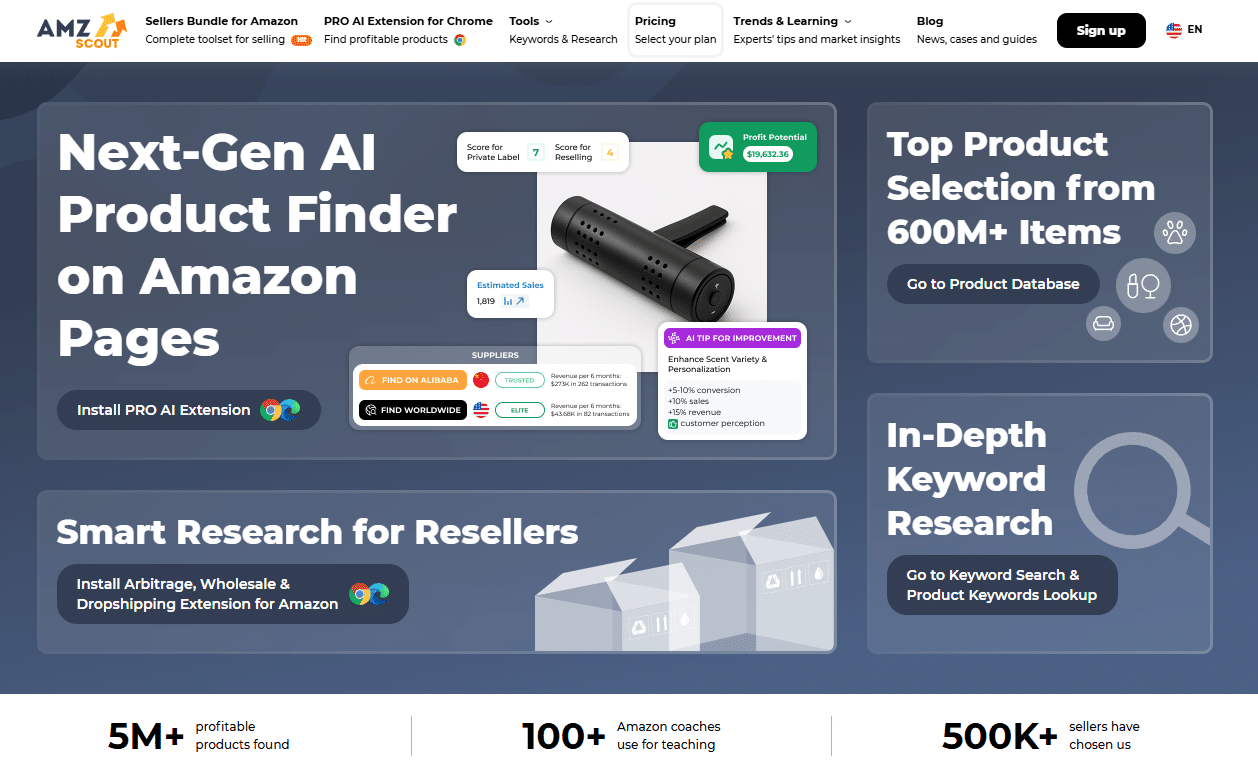
AMZScout is another Amazon-focused research tool, often positioned as a simpler alternative to Helium 10. It provides a product database, keyword research, and basic competitive insights for Amazon sellers.
When AMZScout Makes Sense
Beginners who want a straightforward Amazon research workflow
Sellers who value educational resources and tutorials
AMZScout also offers browser extensions that display product metrics while browsing Amazon.
Limitations to Note
Limited coverage outside Amazon
Less depth compared to enterprise-level Amazon tools
No title
Pro Tip: Use AMZScout’s sales estimates as a validation layer rather than a final decision point. Cross-check promising products against recent review velocity and competing listings to confirm that demand is current and not the result of past performance.
4. TikTok Ads Library
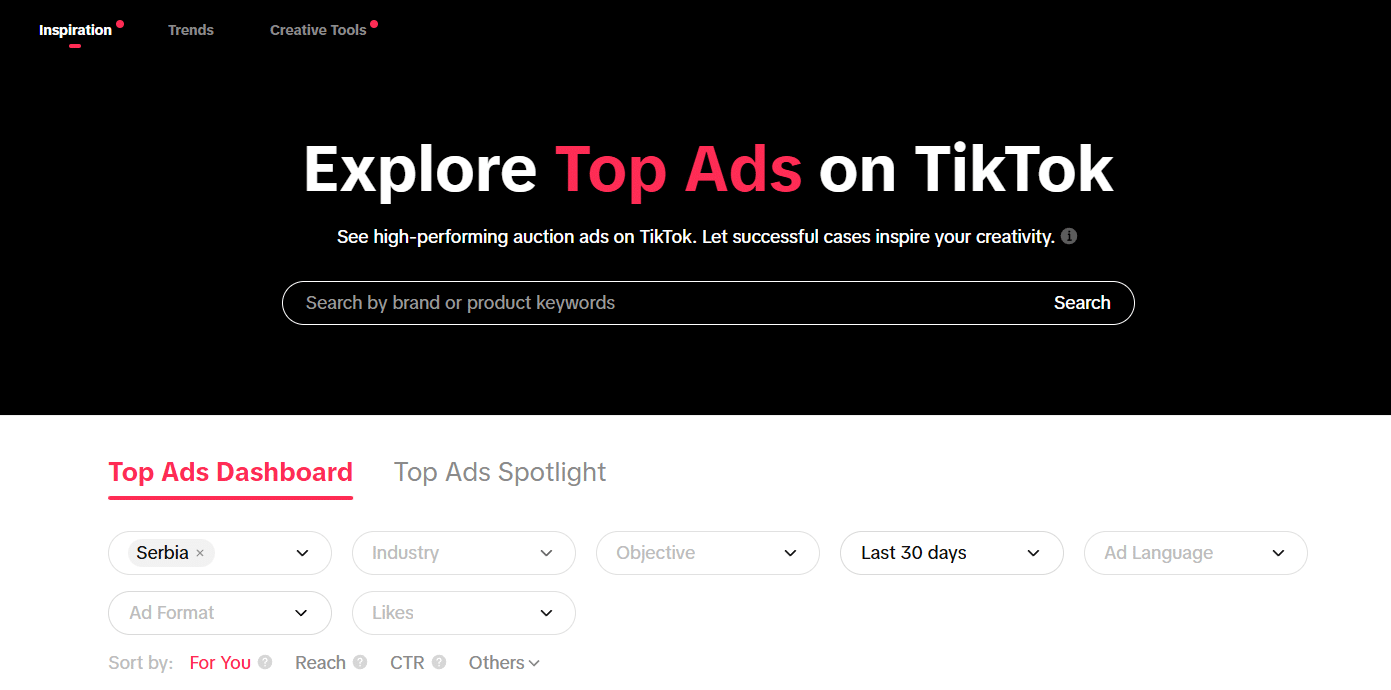
TikTok Ads Library is a free research resource that allows users to view active and historical ads on TikTok. While it does not provide direct sales data, it is widely used to identify emerging trends driven by short-form video.
How Dropshippers Use TikTok Ads Library
Identify products receiving high engagement
Analyze ad creatives, hooks, and angles
Track how long ads have been running
This tool is especially useful for spotting products early in the trend cycle.
Limitations
No verified revenue or conversion data
Engagement does not always translate into purchases
No title
Pro Tip: A high number of similar creatives running over several weeks often signals that advertisers are seeing profitable results.
5. PowerAdSpy
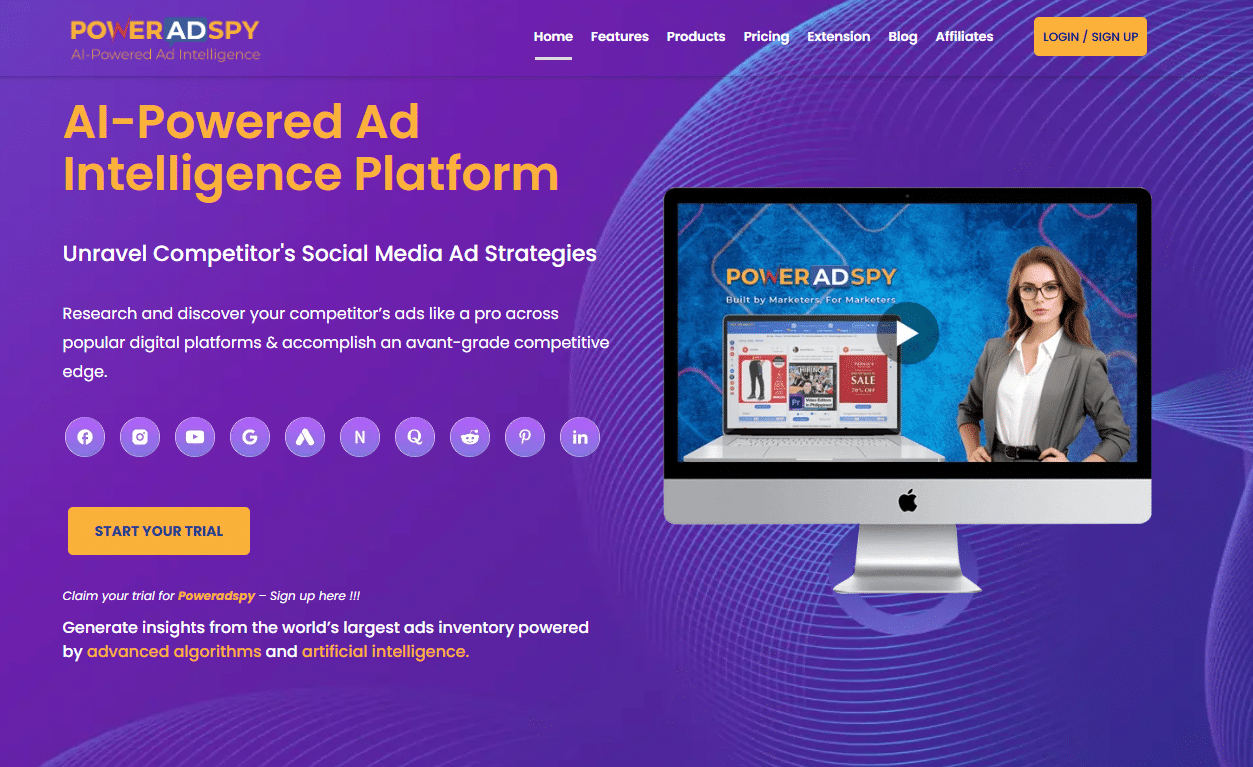
PowerAdSpy is an advertising intelligence platform that aggregates ads from multiple networks, including Facebook, Instagram, Google, YouTube, Pinterest, and others.
Why Sellers Use PowerAdSpy
To analyze ad creatives across platforms
To see what competitors are promoting
To identify patterns in offers and messaging
PowerAdSpy includes filters for geography, ad type, call-to-action, and industry, which help narrow research.
Trade-Offs
Strong ad visibility but no direct sales metrics
Best used alongside other demand-validation tools
No title
Pro Tip: Focus on recurring ad patterns instead of one-off campaigns. When multiple advertisers promote similar products using comparable offers and creatives across different networks, it often signals market-tested demand rather than experimental ad spend.
6. SaleHoo
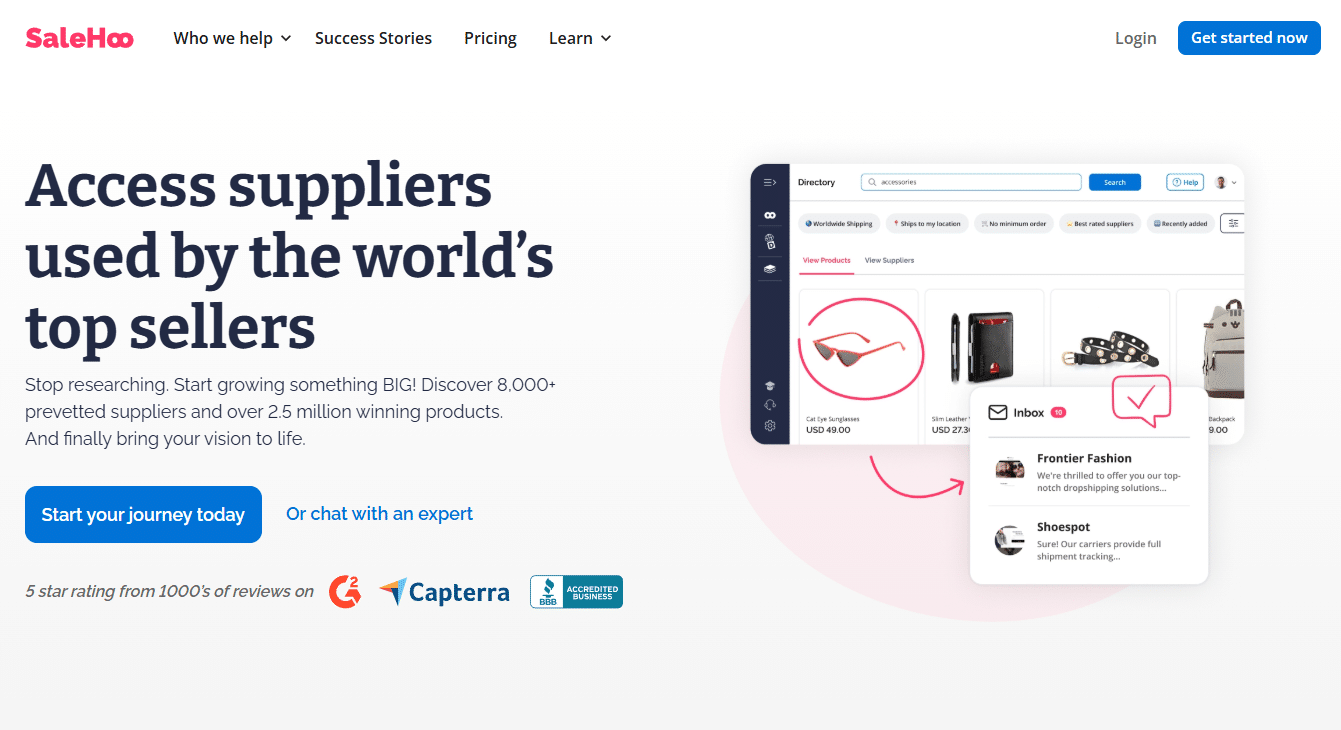
SaleHoo is primarily a supplier directory with an integrated product research component. Unlike pure research tools, SaleHoo emphasizes supplier vetting and long-term reliability.
Core Strengths
Access to thousands of vetted suppliers
Market Research Labs showing pricing and margin estimates
One-time payment options for directory access
SaleHoo is often used by sellers who prioritize supplier trust and consistent fulfillment over fast trend chasing.
Limitations
Limited competitor store analysis
Less visibility into advertising and social trends
No title
Pro Tip: Use supplier vetting as a long-term filter, not just a launch checklist. Products sourced from consistently rated suppliers tend to scale more smoothly because fulfillment issues and quality disputes are less likely to interrupt growth.
7. ZIK Analytics
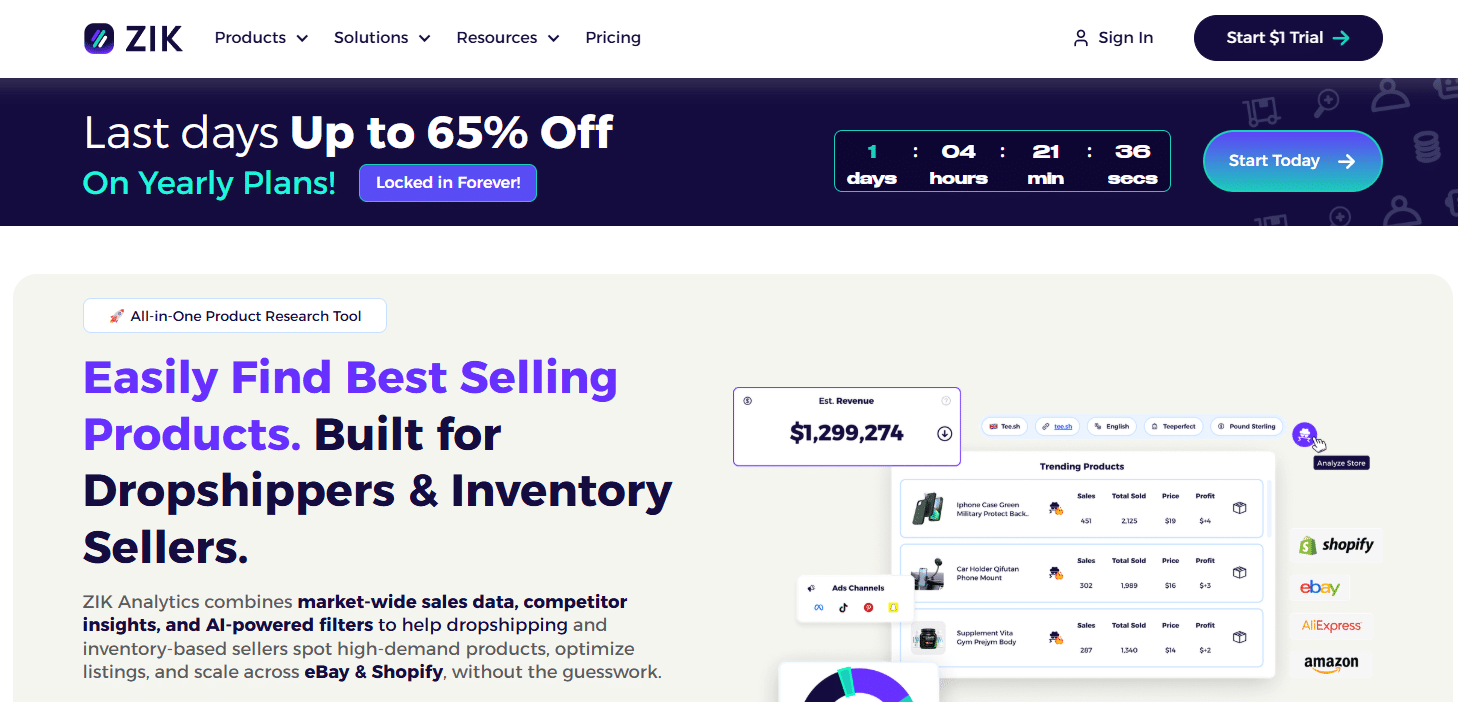
ZIK Analytics is designed mainly for eBay and Shopify sellers. It combines product discovery, competitor analysis, and sales tracking, with a strong emphasis on eBay data.
Key Use Cases
Identifying best-selling items on eBay
Analyzing competitor listings and pricing strategies
Finding products that already perform in dropshipping product models
ZIK Analytics is particularly useful for sellers who rely on eBay’s marketplace signals rather than social-driven trends.
Limitations
Product import workflows can be limited
Less emphasis on social ad trends
No title
Pro Tip: Look beyond top-selling listings and analyze pricing stability over time. Products with consistent pricing and repeat sales on eBay often indicate steady demand, while frequent price drops can signal aggressive competition or shrinking margins.
What is the Importance of Dropshipping Product Research in 2026?
There are millions of products you can sell, but most do not have sustainable demand. Product research is how you avoid “false winners” that look good in a video, but collapse when you run ads or when a competitor undercuts you.
Most dropshipping product research tools provide insights into sales history and growth potential. That matters because you are not just picking a product, you are picking a market timing window.
1. Competition and Market Saturation
Competitor analysis is essential for understanding pricing strategies and product offerings in the dropshipping market. In practical terms, you want to know:
How many competitor stores are already selling the product
Whether competitors are discounting or bundling to maintain conversion
Whether the category is already saturated, meaning you will fight for thin margins
Tracking competitor sales and product performance helps dropshippers refine their own strategies and identify profitable niches. Understanding market saturation is crucial for identifying profitable opportunities in dropshipping, especially when “viral” products spread in days.
Pro Tip: If you see 20 nearly identical Shopify stores running the same creative and pricing within a short period, treat it as a saturation warning. You may still win, but you need differentiation, better offer design, or a faster angle.
2. Trend Advantage and Timing
Market trends in dropshipping can be identified by analyzing sales data and competitor performance, but trend timing is where most sellers lose. Many dropshippers spot trends only after they peak. They start selling when CPMs rise, and customers have already seen the product everywhere.
Analyzing seasonal trends can help dropshippers time their product launches effectively to maximize sales. This is where tools like Google Trends help validate long-term demand and identify seasonal spikes, especially for products with repeat interest patterns.
No title
Pro Tip: Do not judge a trend by visibility alone. Compare how quickly competitors are launching new creatives and offers over time. If you see consistent iteration rather than one-off ads, it usually indicates sustained demand rather than a short-lived spike.
3. Risk Mitigation and Demand Proof
Risk mitigation involves research that reveals the intensity of competition and genuine demand. In 2026, demand proof usually comes from at least one of these:
Competitor store momentum (new creatives, scaling signals, multiple stores testing)
Advertising velocity (ad library frequency and engagement patterns)
Amazon Best Sellers provides real-time, frequently updated views of top-selling items across categories, which can be useful as a quick demand signal, especially when a product is not only “viral” but also purchased consistently.
No title
Pro Tip: Never rely on a single data source to confirm demand. Cross-check product performance using at least two signals, such as competitor store activity and marketplace sales trends, before committing ad budget or scaling inventory.
How to Use Sell The Trend for Product Research (Step-by-Step)
Enter a product keyword or niche into the dashboard
Apply filters such as shipping origin, price range, and competition level
Review sales signals, trend direction, and competitor stores
Check supplier information, shipping times, and quality indicators
Decide whether to test, wait, or discard the product
No title
Pro Tip: Always validate a product across at least two data sources. For example, combine Sell The Trend insights with Google Trends or Amazon Best Sellers to confirm demand stability.
Dropshipping Product Research Tools: What are the Things to Look for in a Product?
You need to pay attention to a lot of things. These types of products are meant to attract you. Just because these products fit your niche does not mean you should import them into your Shopify store. A good dropshipping product is profitable, has clear demand, offers workable margins, and maintains supply stability.
Using a product research tool for dropshipping to monitor sales is essential for identifying which products are truly profitable and for optimizing your dropshipping strategy.
1. Product Quality
Quality is not optional. Low product quality leads to refunds, chargebacks, and negative reviews, making your next product harder to sell.
How to spot product quality fast:
Look for strong rating averages and enough review volume to be meaningful
Read negative reviews for recurring failure patterns
Check for “expectation gap” issues (size, materials, durability, packaging)
No title
Pro Tip: If a product needs heavy “trust building” just to explain what it does or why it is safe, it will usually struggle in paid traffic unless you have exceptional creative and support.
To find dropshipping products, analyze sales data, trends, and competitor stores. Demand proof should not rely on one platform. Cross-check:
Marketplace signals (Amazon, eBay, TikTok Shop, depending on category)
Shopify competitor activity
Social proof signals from ads
A simple demand rule for beginners: if you cannot find evidence that real people are purchasing the product at scale, do not test it with paid ads.
No title
Pro Tip: Look for consistency, not just volume. A product with steady sales over several weeks is usually a safer bet than one showing a sudden spike, especially if competitor pricing and ad activity remain stable during that period.
3. Profitability and Profit Margins
Profit margins matter more than “product price.” In 2026, ad platforms are less forgiving. If your margins are thin, small CPM changes can erase profit.
A practical starting framework:
Aim for enough margin to cover product cost, shipping, transaction fees, returns, and ads
Avoid products where shipping makes the landed cost unpredictable
Check competitor pricing to see if your “room” to price is real
No title
Pro Tip: Calculate margins using realistic ad costs, not best-case scenarios. If a product is only profitable at unusually low CPMs or high conversion rates, it is unlikely to scale once competition increases.
Shipping costs directly affect conversion. Many buyers expect free shipping, so you need either:
A product with a low shipping cost that you can absorb, or
A pricing strategy that includes shipping in the total offer without scaring buyers
Supplier information matters here. Tools that show sourcing location and shipping estimates reduce surprises.
No title
Pro Tip: Check total landed cost before testing a product, not just supplier pricing. Products with low base costs but unpredictable shipping fees or long delivery times often fail once refund requests and chargebacks are factored in.
Dropshipping Product Research: What are the Things to Look for in a Tool?
Many dropshipping tools offer features for competitor analysis to help refine pricing strategies, but not all tools are built the same, and so, in 2026, a good product research tool should provide real-time data, and it should support its insights with verified sources where possible. Some tools also offer free dropshipping resources for product research, supplier analysis, and marketplace insights, making them accessible for those starting.
Use this checklist when comparing tools:
Tools that incorporate Facebook Ads data are especially valuable, as they allow you to spy on successful stores, validate product demand, and track marketing strategies to find winning dropshipping products.
1. Data Coverage
Data-driven insights are vital for making informed decisions about product selection and marketing strategies in dropshipping. Coverage matters because a tool that only watches one marketplace can miss trends that start on social.
Look for tools that incorporate:
Marketplace data
Social and ad signals
Competitor store tracking
2. Search, Filters, and Workflow Speed
A strong product research tool delivers product data and insights in seconds that would otherwise take hours to collect manually. Filters should let you narrow by category, price range, shipping origin, engagement signals, and competition level.
3. Competitor Research Depth
Analyzing competitors can provide valuable insights into successful product offerings and strategies. The best tools help you:
Identify what top stores are launching
See how product positioning changes over time
Spot patterns that suggest scaling versus random testing
4. Supplier Verification and Reliability
Successful dropshipping requires proper research and a trustworthy supplier to ensure product quality and reliability. If a tool connects you to supplier ratings, shipping times, and reliability signals, it reduces avoidable failure.
Can You Identify Product Validation Signals Fast in 2026?
Yes, you can, if you follow this table.
Signal
Where to check?
What does it tell you?
Ad velocity
TikTok Ads Library, Meta ads databases
Whether marketers are actively testing or scaling
Marketplace traction
Amazon Best Sellers, category pages
Whether the product is purchased consistently
Trend stability
Google Trends
Whether demand is seasonal, rising, or fading
Competitor scaling
Shopify remember-lists, store tracking tools
Whether stores are adding variants, bundles, or new creatives
Supplier stability
Supplier directories, ratings
Whether quality and shipping are predictable
How to Create a Successful Shopify Store for Dropshipping?
Building a successful Shopify store for dropshipping starts with strategic planning and the right use of data-driven tools. The first step is choosing a niche that aligns with current trends and has proven demand. This is where a dropshipping product research tool becomes invaluable. By leveraging dropshipping product research, you can identify profitable products and spot emerging trends before they saturate the market.
Once you’ve selected your niche, choose a Shopify theme that matches your brand and provides a smooth customer experience. A clean, mobile-friendly design helps convert visitors into buyers and supports customer satisfaction. Next, set up payment gateways and shipping options that are transparent and reliable, ensuring a seamless checkout process.
Throughout this process, a research tool can help you refine your product selection, monitor competitor offerings, and validate supplier reliability. By using product research tools to analyze sales data and customer reviews, you can curate a store with high-quality, in-demand products that meet customer expectations.
What are the Types of Dropshipping Product Research Tools Explained?
Not all research tools operate the same way. Understanding tool categories helps you build a balanced stack.
Common Tool Types
Directories
Focus on suppliers, pricing, and availability, often with limited analytics.
Advertising research tools
Highlight what products are being promoted and how users engage with ads.
Spy tools
Analyze competitor stores, sales behavior, and product launches.
Aggregators
Combine multiple data sources into a single decision framework.
Sell The Trend fits into the aggregator category, blending elements of all three.
How Do Dropshipping Product Research Tools Identify Winning Products in 2026?
Product research tools identify winning products by combining historical sales data, competitor performance, advertising activity, and market trends into a single evaluation framework. Instead of relying on isolated signals, modern tools cross-reference multiple data points to reduce false positives.
In practical terms, this means analyzing:
Sales velocity rather than total sales alone
Competitor behavior instead of surface-level popularity
Advertising consistency instead of one-off viral spikes
Advanced tools now leverage AI to process these signals faster, helping sellers focus on products with both short-term traction and long-term viability.
What Is the Best Way to Find a Winning Product on TikTok?
The best way to find a winning product on TikTok is to combine ad engagement data with external demand validation. TikTok Ads Library reveals which products advertisers are actively promoting, but it does not confirm sales.
To reduce risk:
Identify winning products with sustained ad activity over multiple weeks
Analyze creative variation to see if advertisers are scaling or experimenting
Validate demand using Google Trends, Amazon Best Sellers, or competitor Shopify stores
Emerging trends can be identified through social media platforms and advertising data, but winning products usually show confirmation beyond a single channel.
No title
Pro Tip: If TikTok engagement is high but Google Trends shows no sustained interest, the product may be novelty-driven rather than demand-driven.
How Long Does Shipping Take for Dropshipping Products in 2026?
Shipping times depend on supplier location, fulfillment method, and destination market. In 2026, most successful dropshippers aim for delivery windows that customers already expect from ecommerce.
General benchmarks:
Domestic fulfillment: 3–7 business days
International fulfillment: 7–15 business days
Express options: 2–5 business days at a higher cost
Supplier verification connects users with pre-vetted suppliers and provides data on shipping times and quality ratings. Tools that surface shipping origin and fulfillment reliability help sellers avoid poor customer experiences.
How Do Dropshippers Validate Market Demand Before Launching?
Dropshippers validate market demand by cross-checking sales data, trend stability, and competitor activity before investing in advertising. This process reduces wasted ad spend and prevents launching winning products with inflated hype.
Effective validation includes:
Reviewing sales history and growth potential
Checking competitor pricing and offer structure
Analyzing seasonal trends to time launches correctly
Using research tools helps validate trends, performance history, and customer satisfaction before launching products, especially in competitive niches.
How Is AI Changing Dropshipping Product Research?
Advanced 2026 tools leverage AI to predict which products will trend before they peak. Instead of reacting to viral content, AI models analyze early behavioral signals such as engagement velocity, pricing shifts, and product clustering across stores.
The best approach combines:
AI-based product research
Niche exploration and trend analysis
Social media monitoring and competitor research
This layered approach helps dropshippers move faster while maintaining discipline in product selection.
How to Scale Your Dropshipping Business with Product Research Tools?
Scaling your dropshipping business goes beyond launching a few products. It requires ongoing analysis of market trends, product performance, and supplier reliability. Product research tools are essential for this growth phase, enabling you to identify emerging trends, tap into profitable niches, and connect with reliable suppliers who can support increased order volume.
To stay ahead in the competitive dropshipping landscape, use product research tools to monitor market trends and track product performance in real time. Tools like Google Trends, sales trackers, and comprehensive product libraries provide valuable insights into what customers are searching for and which products are gaining traction. This data-driven approach allows you to make informed decisions about inventory, marketing, and expansion into new niches.
Why Do Many Dropshippers Still Fail Despite Good Tools?
Many dropshippers fail due to poor product research, lack of differentiation, weak branding, and ineffective marketing. Tools reduce friction, but they do not replace execution.
Common failure points include:
Testing products without validating demand
Competing on price in saturated markets
Ignoring supplier quality and shipping reliability
Scaling ads before confirming conversion stability
Dropshipping product research tools save time, but success still depends on how insights are applied.
FAQ:
How to research a product for dropshipping?
Dropshipping product research tools are used for analyzing demand, competition, pricing, supplier reliability, and shipping feasibility. Sellers typically use product research tools to review sales data, competitor stores, and advertising trends before testing a product.
Which tool is used as a dropshipping product research tool?
Dropshippers use different tools depending on their platform focus. Sell The Trend is commonly used for all-in-one research. Helium 10 and AMZScout focus on Amazon, ZIK Analytics supports eBay and Shopify sellers, and TikTok Ads Library helps identify emerging ad-driven trends.
What is the best dropshipping product research tool?
The best one in 2026 is Sell The Trend for sellers who want broad data coverage, competitor research, and workflow integration. Amazon-first sellers may still prefer Helium 10 for deeper marketplace analytics.
How to check if a product is good for dropshipping?
A good dropshipping product shows consistent demand, manageable competition, reliable suppliers, reasonable shipping times, and profit margins that support advertising costs. Product research tools help confirm these factors before launch.
Summary: How to Choose the Right Product Research Tool in 2026?
Dropshipping products in 2026 is a data-driven business. Product research tools help sellers discover winning products, understand niche markets, and reduce risk by validating demand before launch. The strongest tools provide real-time data, competitor insights, and supplier verification to support smarter decisions.
While no single platform fits every seller, tools that combine product discovery, competitor research, and trend analysis offer the most flexibility. Sell The Trend stands out as a comprehensive option for Shopify-based dropshippers who want an integrated workflow, while specialized tools remain valuable for platform-specific strategies.
The most effective approach is not choosing one tool blindly, but understanding how each fits into your research process and using data, not intuition, to guide product decisions.
Matt is an experienced eCommerce professional with a deep background in building, optimizing, and scaling online stores.
He has worked across product selection, store strategy, conversion optimization, and operational workflows, helping eCommerce brands improve performance and profitability.
At Sell The Trend, Matt shares practical insights drawn from hands-on experience, focusing on what actually drives results for modern online sellers.