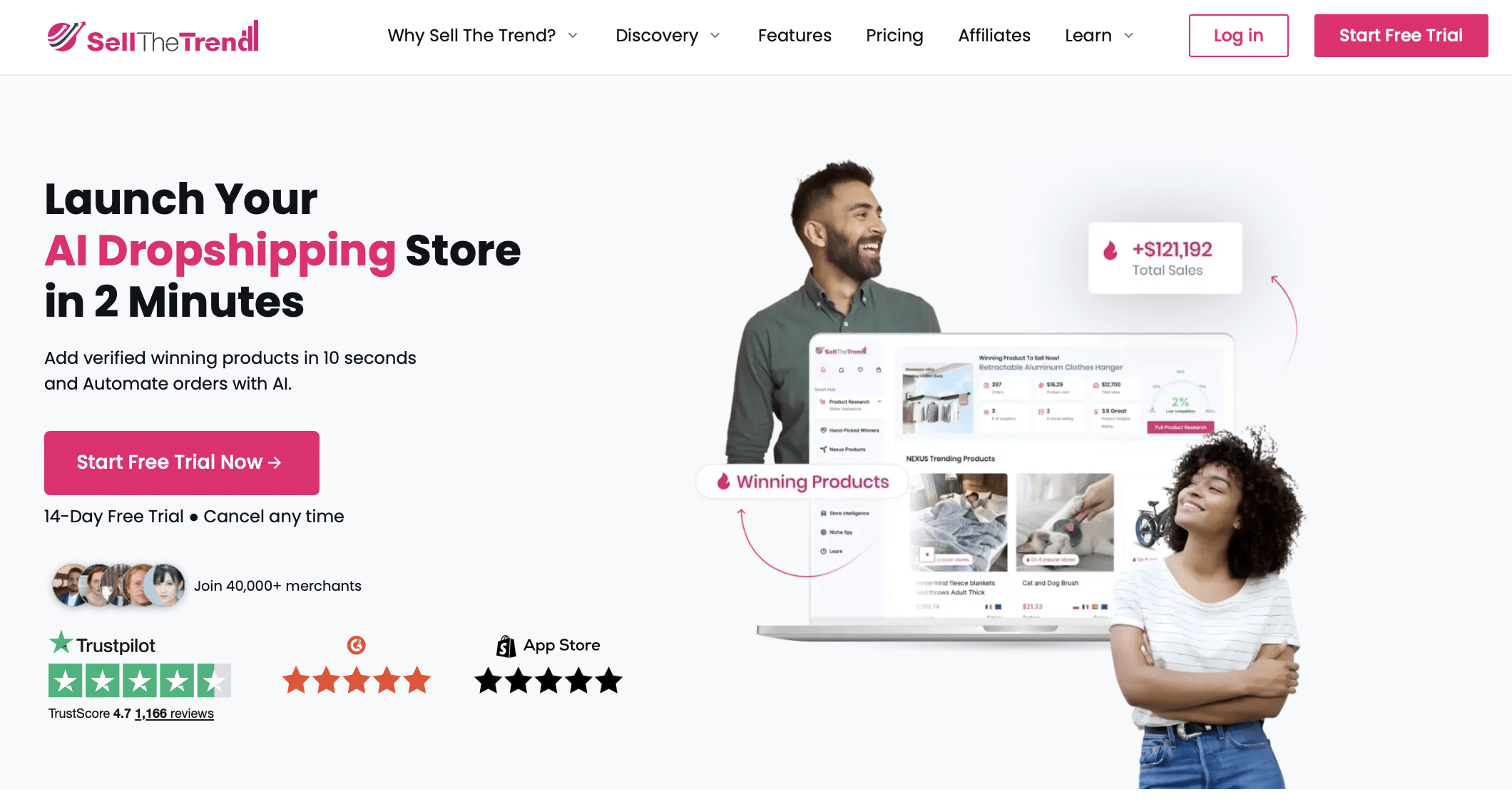
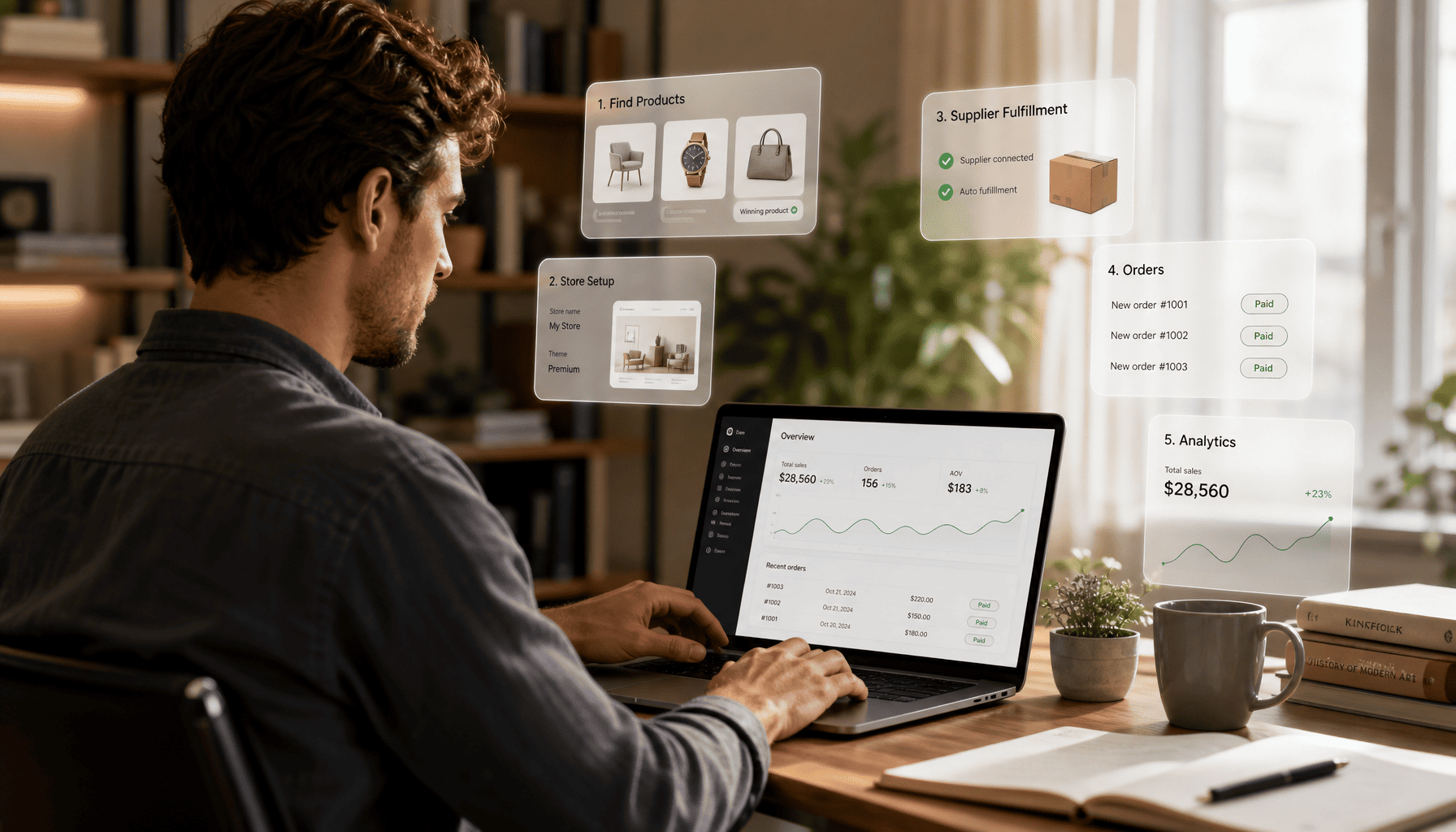
AI dropshipping is a business model that uses AI tools to automate product research, supplier analysis, store creation, marketing content, and order fulfillment. Instead of manually searching for products and managing repetitive tasks, sellers use AI Dropshipping Platform like Sell The Trend to identify trending products, compare suppliers, generate product pages and ads, and streamline ecommerce operations faster.
Traditional dropshipping often relies on manual product research, supplier comparisons, spreadsheet tracking, and repetitive store setup tasks. AI dropshipping platforms like Sell The Trend streamline this process by combining predictive product research, supplier filtering, competitor analysis, AI generated store content, and fulfillment automation into one connected workflow.
In this complete guide, we’ll explain what AI dropshipping means in 2026, how it works, which tools matter most, whether it is still profitable, and how to use AI to launch a store with less guesswork. Most of the comparisons ahead will circle back to one question worth asking upfront: how does Sell The Trend’s AI dropshipping platform actually stack up once you move past the marketing and into daily use.
Key Takeaways
AI dropshipping helps sellers find products, compare suppliers, create store content, and automate repetitive tasks faster than manual dropshipping.
Sell The Trend brings product research, NEXUS AI, Store Intelligence, supplier tools, and fulfillment features into one connected workflow.
AI can speed up store creation, product descriptions, ad copy, and creative testing, but profitable selling still depends on product demand, margins, shipping, and customer trust.
The best 2026 workflow starts with product validation first, then store building, supplier sourcing, ad creation, and small scale testing.
Beginners can use AI to reduce guesswork, but they should still review product quality, supplier reliability, shipping times, and ad claims before scaling.
AI dropshipping is a dropshipping business model where AI helps sellers find products, compare suppliers, build stores, write product copy, create ads, and automate routine tasks. The seller still controls the business, but AI helps reduce manual research, setup time, and repeated daily work.
The main difference is speed and data. Traditional dropshipping relies more on manual product research and manual execution. AI dropshipping uses product data, automation, and content generation to help sellers make faster decisions before they spend money on ads or inventory related costs.
The 2026 Dropshipping Blueprint: How It Works
Dropshipping is one of the simplest ways to start an ecommerce business in 2026 because you can sell products online without buying inventory upfront or managing a warehouse. Instead, suppliers handle storage and fulfillment while you focus on branding, product selection, and marketing.
Modern platforms like Sell The Trend make the process even faster by combining AI-powered product research, supplier sourcing, store automation, and fulfillment tools into one workflow.
The Three-Part Chain
Every dropshipping business relies on three core players working together:
Supplier
The supplier manufactures, stores, packs, and ships the product directly to your customer. Reliable suppliers are critical because they control fulfillment speed, product quality, tracking updates, and returns.
Many dropshippers use suppliers from platforms like AliExpress, CJ Dropshipping, and U.S.-based warehouses to improve delivery times.
Seller (You)
You are responsible for building the brand, running the store, setting prices, marketing products, and handling customer service.
This is where most of the real business value is created. Successful dropshippers are not just “middlemen” — they build trusted ecommerce brands with strong product positioning, good content, and effective advertising.
Tools like Sell The Trend help sellers automate repetitive tasks like:
Instead of juggling multiple tools for product research, fulfillment, store building, and marketing, platforms like Sell The Trend combine everything into one AI-powered workflow. Sellers can discover products with NEXUS AI, import them into the built in SellShop, sync inventory automatically, and fulfill orders with one click.
Customer
The customer purchases products through your online store, social media shop, or ecommerce platform. They never interact directly with the supplier — their relationship is with your brand.
That means your reputation depends heavily on:
shipping speed
communication
product quality
customer support
Pro Tip: Customers care more about the overall buying experience than where the product ships from. Fast responses and accurate tracking updates build long-term trust.
The Profit Equation
Dropshipping profits come from the difference between your selling price and your total business costs.
In 2026, most profitable dropshipping stores target margins between 20% and 40% after advertising and transaction fees.
This is why product selection matters so much. A product may look “viral,” but if shipping costs are too high or advertising becomes expensive, the margins disappear quickly.
Platforms like Sell The Trend’s NEXUS AI help sellers analyze:
average selling prices
supplier costs
shipping times
competition levels
estimated profit margins
before launching products.
How Does AI Dropshipping Work in 2026?
AI dropshipping works by using AI tools to support the main steps of running an online store: finding products, checking demand, comparing suppliers, creating product pages, writing ads, processing orders, and tracking performance. The seller still controls the brand, pricing, suppliers, and customer experience.
In simple terms, AI helps sellers:
Discover high demand products faster
Compare product data, supplier options, and delivery times
Create product titles, descriptions, and ad copy
Import products into a dropshipping store
Track product prices, inventory levels, sales, and reviews
Automate order fulfillment and reduce manual work
This makes the dropshipping business easier to manage, especially when sellers are testing multiple products or building a larger ecommerce store.
Why Dropshipping in 2026?
Dropshipping remains popular in 2026 because it offers one of the lowest-risk ways to launch an online business.
Unlike traditional retail, you do not need to:
buy inventory upfront
rent warehouse space
manage packaging operations
handle bulk shipping logistics
Instead, you can focus on testing products, building a brand, and scaling winning offers.
Here are the biggest advantages of dropshipping in 2026:
Low Startup Costs
You can launch a store with minimal upfront investment because inventory is only purchased after a customer places an order.
Location Flexibility
Dropshipping businesses can be run from anywhere with an internet connection. Many entrepreneurs manage stores remotely using laptops, tablets, or smartphones.
Product Testing Without Inventory Risk
One of the biggest advantages of dropshipping is the ability to test products quickly without committing to large inventory purchases.
This allows sellers to:
experiment with niches
test advertising angles
identify winning products faster
pivot quickly when trends change
How Does Sell The Trend Speed Up the AI Dropshipping Workflow?
Sell The Trend speeds up AI dropshipping by bringing product research, competitor analysis, supplier access, store creation, product imports, and fulfillment tools into one connected platform. Instead of using separate tools for each step, sellers can move from product discovery to store setup and order processing in a more organized workflow.
Step
What Sellers Need to Do
How Sell The Trend Helps
Product research
Find products with strong demand and sales potential
NEXUS AI and product research tools help discover winning products
Competitor research
See what other stores are selling and how they price products
Store Intelligence shows competitor stores, ads, price points, and best sellers
Supplier sourcing
Compare suppliers, product costs, shipping options, and delivery times
Supplier database and filters help check supplier access before importing products
Store setup
Build product pages and prepare the store for launch
Add products to a Shopify store or ecommerce store
One click imports help reduce manual product setup
Fulfillment
Process orders and manage customer purchases
Fulfillment tools help automate order processing
Optimization
Track stock, pricing, reviews, and sales signals
Price monitoring, stock monitoring, and performance data help guide improvements
This does not mean Sell The Trend replaces every tool a business may ever need. A growing store may still add email marketing, customer support, analytics, or creative tools later. But for the core AI dropshipping process, Sell The Trend gives sellers a cleaner starting point with fewer disconnected apps.
Want to keep product research, supplier checks, product imports, and fulfillment in one workflow? Start your Sell The Trend free trial and build your AI dropshipping process with fewer disconnected tools.
Traditional vs AI Dropshipping: What Changes in 2026?
Traditional dropshipping depends on manual research, supplier checks, product uploads, content writing, and order processing. AI dropshipping speeds up these tasks with tools that help find products, compare suppliers, import listings, write product copy, track inventory, and fulfill orders faster.
Task
Traditional Dropshipping
AI Dropshipping
Finding products
Manual marketplace and competitor research
AI detects demand, sales signals, and product momentum
Checking suppliers
Manually compare ratings, prices, and shipping
AI supplier tools compare reliability, shipping speed, cost, and location
Adding products
Copy images, titles, variants, and prices manually
Product imports add listings faster with fewer manual steps
Writing descriptions
Write titles, descriptions, and benefits from scratch
AI creates SEO focused product titles, descriptions, and ad copy
Fulfilling orders
Copy order details to suppliers manually
One click fulfillment sends order details faster
Tracking stock
Check supplier inventory manually
Inventory sync helps reduce overselling
Adding reviews
Manually collect and place reviews
Review tools help display social proof on product pages
Testing ads
Create a few angles manually
AI helps generate more TikTok, Facebook, and Instagram ad variations
Sell The Trend supports this AI workflow through product research, supplier access, product imports, pricing tools, inventory updates, and fulfillment features.
Its AliExpress dropshipping tools include 1 click order fulfillment, Push to Store for importing product images, descriptions, and variants, and supplier checks based on rating, order volume, shipping origin, processing time, and delivery reliability. Explore Sell The Trend’s AI Supplier Finder and AliExpress dropshipping tools.
Pro Tip: AI can speed up the process, but supplier validation still matters. Check supplier rating, delivery times, product cost, shipping origin, and refund risk before importing a product
Want to move from manual dropshipping to a faster AI powered workflow? Try Sell The Trend free and use product research, supplier tools, imports, and fulfillment features from one platform.
Foundational Business Setup
AI can help automate product research, fulfillment, and marketing, but the legal and financial side of your business still requires human decisions. Setting up the right foundation early makes scaling much easier later.
Choosing Your Business Structure
Most beginners start as either a Sole Proprietorship or an LLC.
Sole Proprietorship
This is the simplest structure because it requires minimal paperwork and lower startup costs. Many first-time entrepreneurs use this setup while testing products and learning ecommerce basics.
However, there is no legal separation between you and the business.
LLC (Limited Liability Company)
An LLC provides legal protection by separating personal assets from business liabilities.
As your store grows, an LLC can help:
improve credibility
simplify tax management
reduce personal liability
create a more professional business presence
Many experienced dropshippers eventually transition to an LLC once they begin scaling consistently.
Pro Tip: If you plan to build a long-term ecommerce brand instead of casually testing products, creating an LLC early can make payment processors and supplier relationships easier to manage.
Payments & Taxes
Before launching your store, set up a dedicated business bank account to separate personal and business finances.
This helps with:
bookkeeping
tax reporting
expense tracking
advertising management
supplier payments
You will also need payment processors like:
Shopify Payments
PayPal
Stripe
depending on the platform you use.
Handling Sales Tax & VAT
Taxes are one of the most overlooked parts of dropshipping.
Depending on where you sell products, you may need to:
collect sales tax
register for VAT
comply with regional ecommerce rules
This becomes especially important when selling internationally across:
the United States
the European Union
the United Kingdom
Canada
Australia
As your business grows, working with an ecommerce accountant becomes highly recommended.
Branding Your Entity
In 2026, branding matters more than ever because thousands of stores can sell similar products. Strong branding is often what separates profitable stores from forgettable ones.
Your branding includes:
logo design
colors
fonts
product presentation
tone of voice
website layout
customer experience
The goal is to make your store feel like a real ecommerce brand rather than a generic dropshipping website.
Strong branding improves:
trust
conversion rates
repeat purchases
ad performance
Modern tools like SellShop and AI Brand Builder help new sellers create professional-looking stores and marketing content much faster than traditional website builders.
No title
Pro Tip: Stores that look clean, focused, and niche-specific usually outperform “general stores” that try to sell everything to everyone.
Niche Selection Strategy: Passion vs. Profit
Choosing the right niche is one of the most important decisions in dropshipping because it influences your products, branding, audience targeting, and long-term growth potential.
The best niches usually combine:
stable demand
emotional buying behavior
strong profit margins
good advertising potential
The 5 Evergreen Categories
Some niches consistently perform well because they solve ongoing consumer needs and maintain year-round demand.
The most reliable evergreen categories include:
Niche
Why It Performs Well
Pets
Emotion-driven purchases and repeat buyers
Home & Garden
Constant demand for organization and decor
Fitness & Wellness
Strong impulse buying and trend potential
Beauty & Personal Care
High customer loyalty and repeat orders
Electronics Accessories
Lightweight, affordable, and high search volume
These categories also work well with AI-driven product discovery tools because they generate large amounts of trend and engagement data.
Platforms like Sell The Trend’s Niche Explorer helps identify which products inside these niches are gaining traction before they become saturated. Start your Sell The Trend free trial and find the most profitable niches.
Problem-Solving vs. Impulse Buy
The best dropshipping products usually fall into one of two categories:
Problem-Solving Products
These products address a clear frustration or inconvenience.
Examples:
posture correctors
pet hair removers
storage organizers
portable blenders
Products that solve obvious problems often convert well because customers instantly understand the benefit.
These products usually perform well on social media platforms like TikTok, Instagram, and Facebook Ads.
A strong “wow factor” is often the difference between a product that gets ignored and one that goes viral.
No title
Pro Tip: If a product immediately makes you say, “That’s actually pretty cool,” it often has stronger viral potential than ordinary products.
Validating with Google Trends
Even with AI-powered research tools, manual validation is still important.
Google Trends helps sellers:
identify seasonal spikes
compare search interest
confirm growing demand
avoid declining product categories
For example:
fitness products often spike in January
outdoor products trend in spring and summer
giftable items surge during Q4 holidays
Combining Google Trends with tools like:
NEXUS Product Research
TikTok Ads Explorer
Store Intelligence
gives sellers a much clearer view of real market demand.
The Supplier Vetting Checklist
Your supplier can make or break your dropshipping business. Even great products fail when suppliers ship slowly, communicate poorly, or provide inconsistent quality.
This is why supplier vetting is critical before scaling any product.
Shipping & Tracking Standards
Fast and reliable shipping is now expected by online shoppers.
In 2026, strong suppliers should offer:
accurate delivery estimates
tracking numbers
consistent fulfillment times
responsive order updates
For U.S. and EU markets, many successful dropshippers target:
3–7 day domestic shipping
under 14-day international delivery
Tracking numbers are non-negotiable because customers expect visibility into their orders.
Poor tracking often leads to:
chargebacks
refund requests
account restrictions
negative reviews
Platforms like Sell The Trend help sellers filter suppliers by:
shipping speed
warehouse location
supplier ratings
fulfillment reliability
Communication Audit
Before listing products, test the supplier’s responsiveness.
Good suppliers should:
answer questions quickly
provide accurate shipping details
communicate inventory changes
resolve issues professionally
One of the simplest ways to test this is by messaging the supplier directly before selling their products.
Ask questions like:
“How quickly do you fulfill orders?”
“Do you support branded packaging?”
“What happens if inventory runs out?”
“Can you provide updated tracking quickly?”
If communication is slow before you start working together, it usually gets worse once real customer issues appear.
No title
Pro Tip: Sell The Trend helps sellers vet suppliers using built-in supplier ratings for shipping speed, communication quality, product reliability, and fulfillment performance. This removes the need for a lot of manual supplier vetting.
Returns and shipping delays are part of ecommerce, so having clear policies early protects both your customers and your business.
Your return policy should clearly explain:
who pays return shipping
refund timeframes
damaged product procedures
lost package handling
cancellation windows
You should also establish expectations with suppliers regarding:
defective products
missing items
shipping errors
delayed deliveries
A slow or confusing return process can quickly damage customer trust.
The best dropshipping stores treat customer service as a long-term brand investment rather than a short-term expense.
Sell The Trend’s automation tools help reduce fulfillment errors by syncing inventory in real time and automatically sending tracking information to customers.
How Does NEXUS AI Help With Automated Product Research?
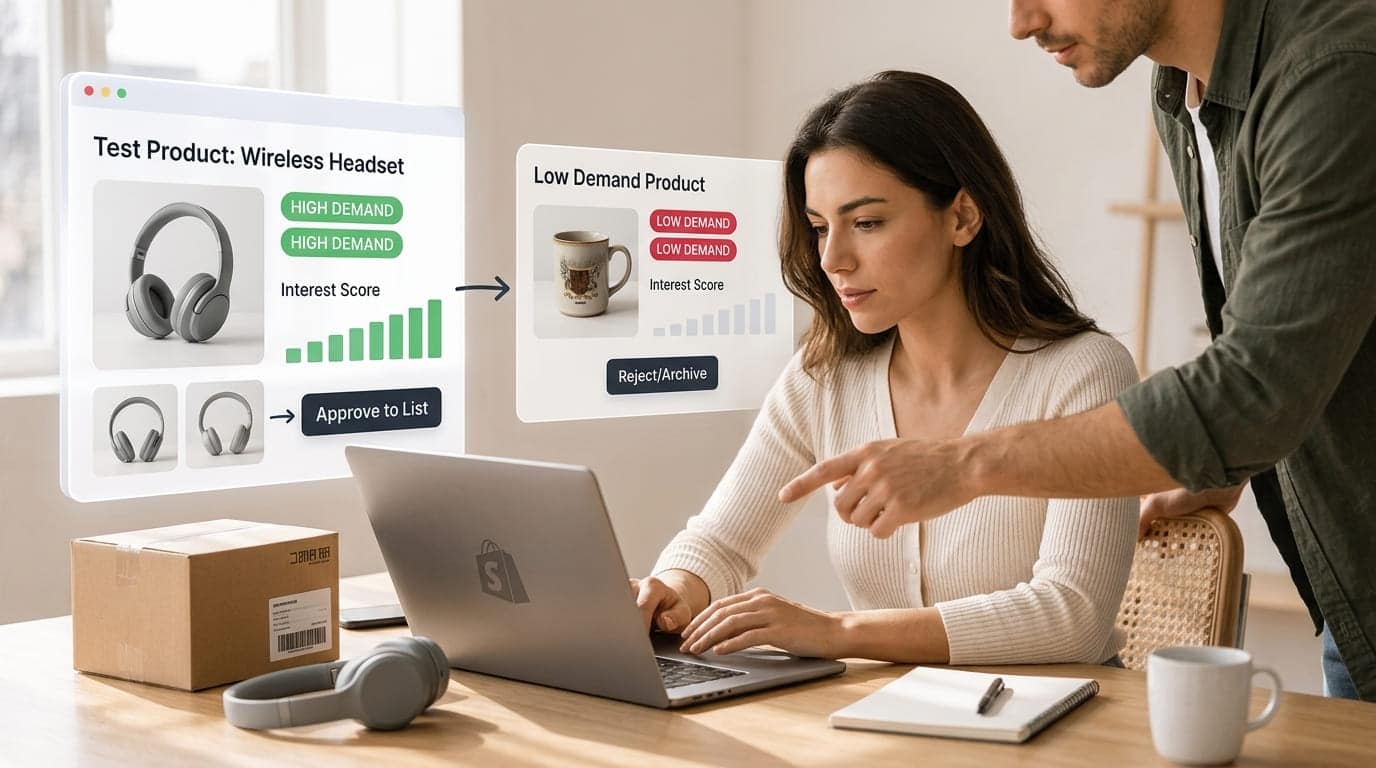
NEXUS AI helps sellers find potential winning dropshipping products by analyzing 27 product data points, including demand signals, sales activity, competition, supplier options, product prices, and market trends. Instead of guessing from social trends alone, sellers can use Sell The Trend to review product data before deciding what to test.
Good product research is the difference between launching a random product and building a profitable dropshipping business. AI dropshipping tools use machine learning to analyze real time market data, consumer trends, and social media engagement to identify products with high demand and lower competition.
NEXUS AI is useful because it helps answer the questions that matter before you add a product to your ecommerce store:
Is this product already getting sales?
Is demand rising or fading?
Are competitors actively selling it?
Are there reliable dropshipping suppliers?
Does the product have enough margin after ads and shipping?
Can it be positioned with a clear offer?
Sell The Trend’s product research workflow also helps sellers look beyond surface level trends. A product may look popular, but the real decision comes from product data, supplier access, delivery times, product prices, and competition.
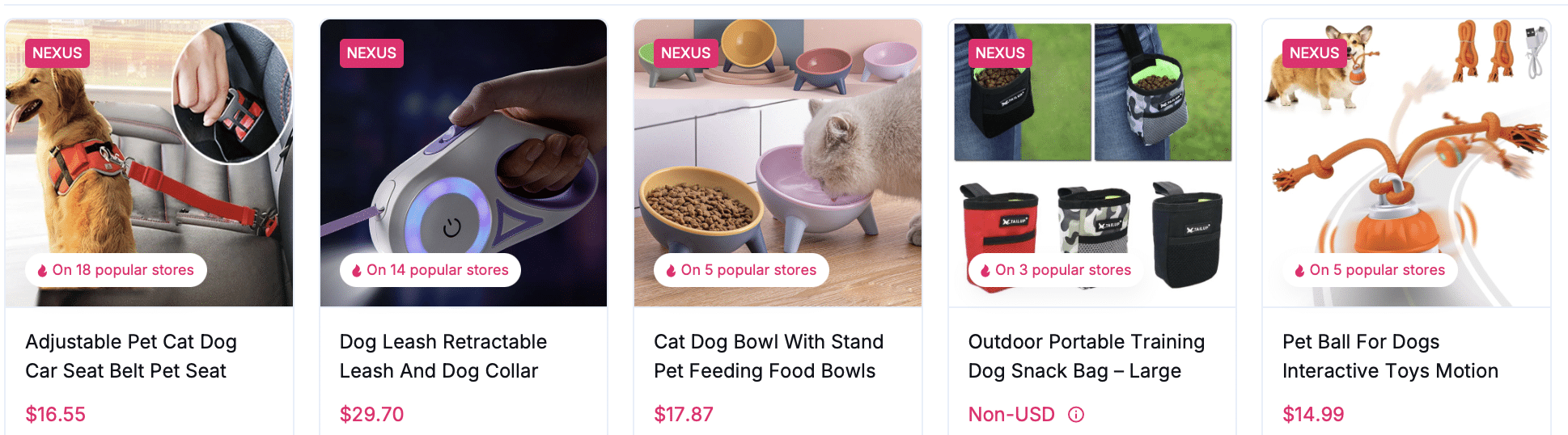
For example, if you are researching pet products, NEXUS AI can help narrow the search to items with stronger demand signals instead of forcing you to scan hundreds of random product listings. See below:
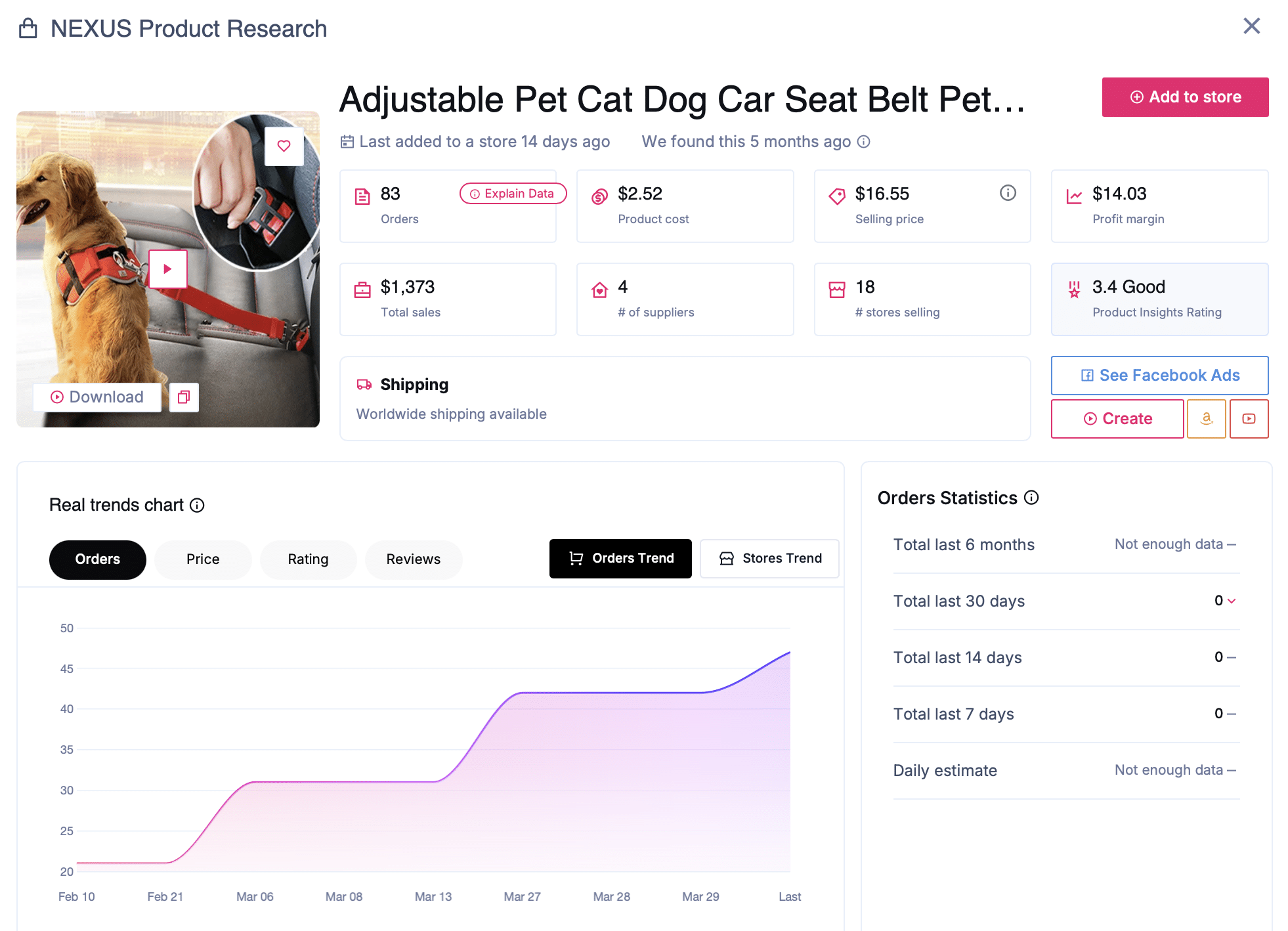
From there, you can compare suppliers, review price points, and decide whether the product fits your store. We clicked on one product and this is what we got:
Because AI makes product sourcing easier, popular AI discovered products can become saturated quickly. That is why sellers should not copy every trending product blindly. Use NEXUS AI to find opportunities early, then check the market, improve the offer, and move before the product becomes too crowded.
Want to find products with real demand instead of guessing? Start your Sell The Trend free trial and use NEXUS AI to discover winning products before your competitors do.
How Can AI Help Build a Dropshipping Store?
AI can help build a dropshipping store by creating product pages, writing product descriptions, organizing product listings, and preparing a store for launch faster. Sellers can use SellShop, Shopify store creation options, or MakeMyStore.ai to move from product research to a live ecommerce store with less manual setup.
Once you find a product, the next step is turning it into a store page that looks trustworthy and clear. This is where AI powered tools can save time.
AI can help with:
Product titles
Product descriptions
Product page sections
Benefit focused bullet points
Basic brand messaging
Homepage copy
Product imports
Store layout ideas
FAQs
Ad ready product angles
For Sell The Trend users, SellShop is useful because it keeps store creation close to the product research workflow. Instead of finding a product in one tool, copying it into another platform, and then rewriting the listing manually, sellers can move faster from research to setup.
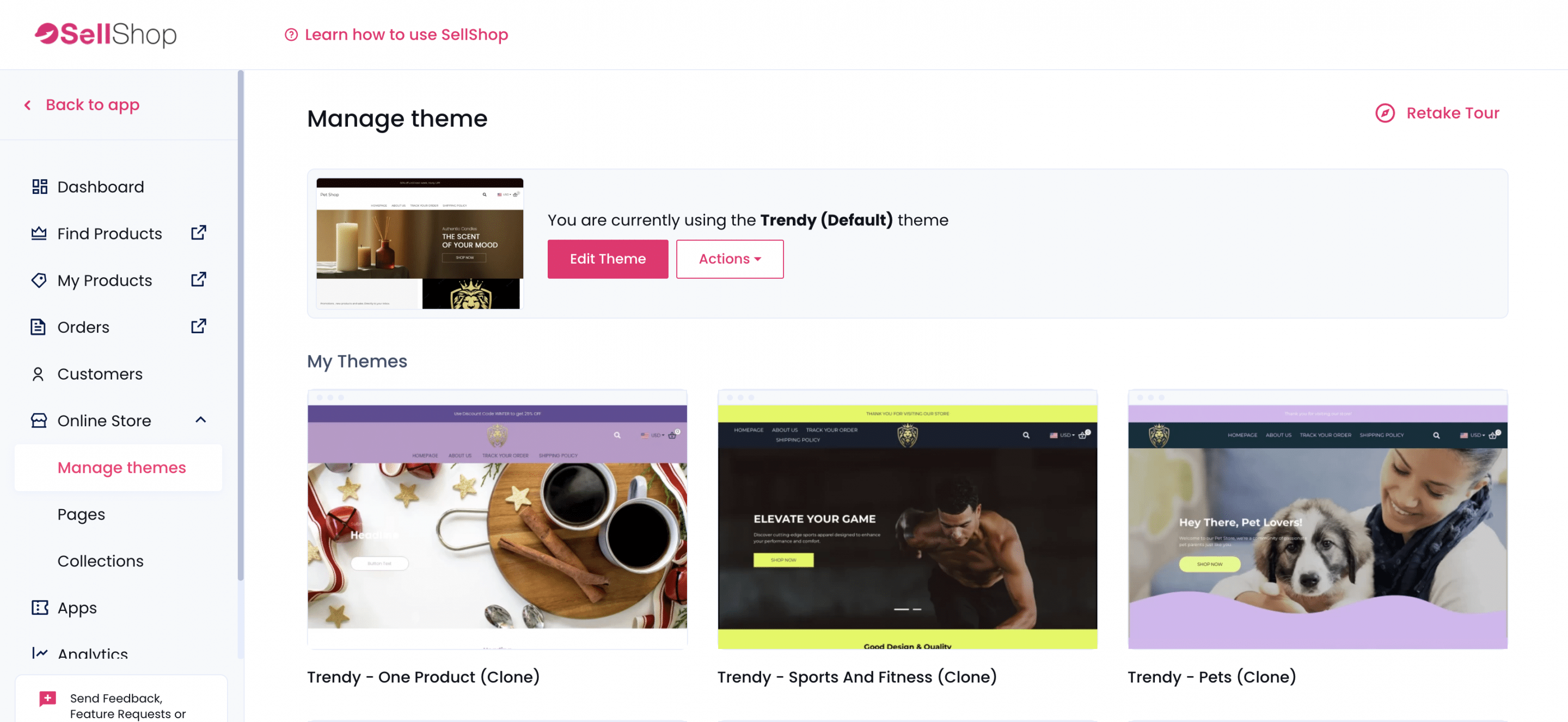
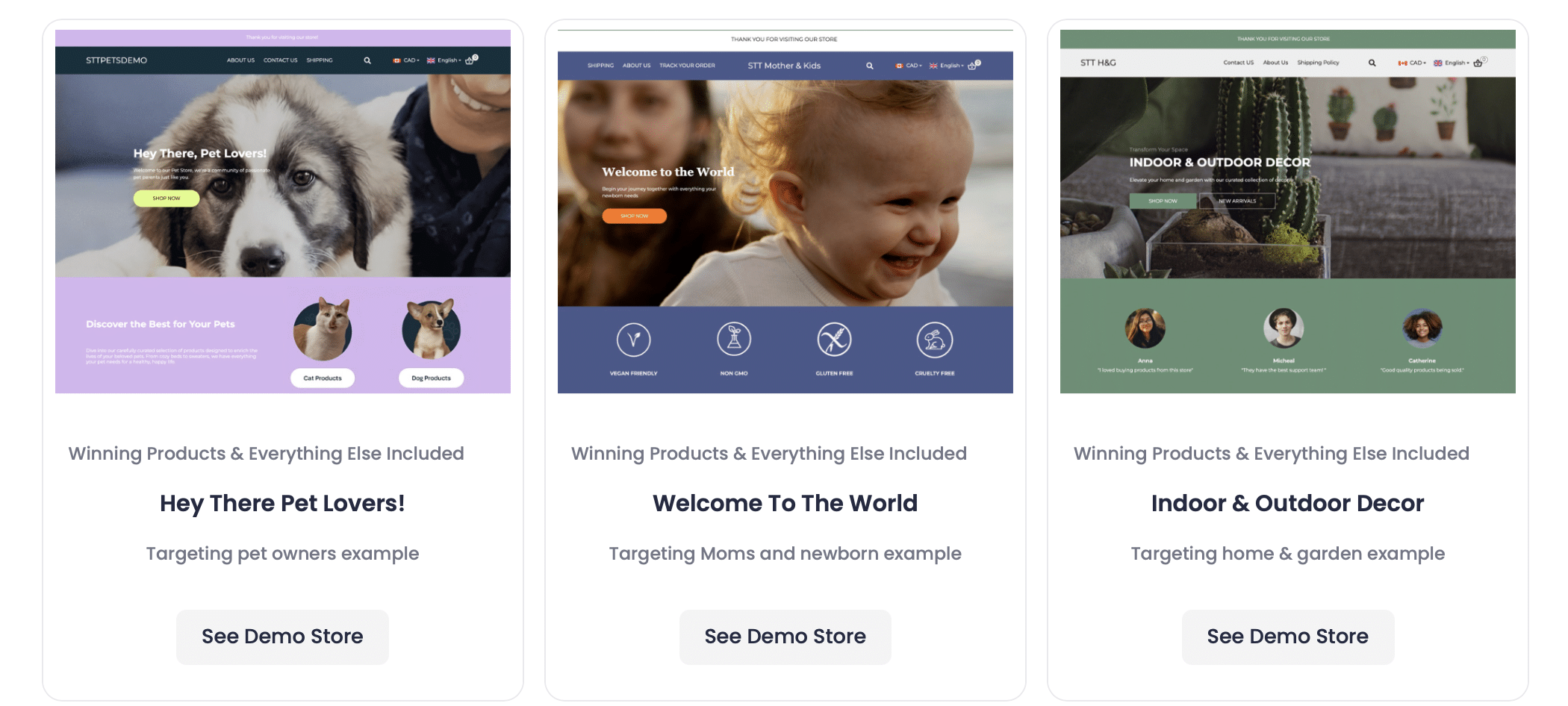
In addition, each store on SellShop is fully customizable without any technical knowledge required. Here are some store examples:
Shopify store owners can also use AI store creation options to speed up page building and content creation. For beginners who are starting without Sell The Trend, MakeMyStore.ai can be mentioned as a standalone option for AI assisted Shopify store creation.
It helps users create a Shopify store faster by generating the basic store structure, product focused pages, and starter content, so they can move from setup to product testing with less manual work.
AI can help you start selling faster, but it should not create a generic store. Over reliance on AI can make marketing feel bland, which may hurt brand image and trust. The best approach is to use AI for structure and speed, then add human judgment for brand voice, niche positioning, offer strength, and customer experience.
Found a product worth testing? Start your Sell The Trend free trial and use SellShop to turn product research into a launch ready dropshipping store faster.
How Can AI Create Product Descriptions and Ads?
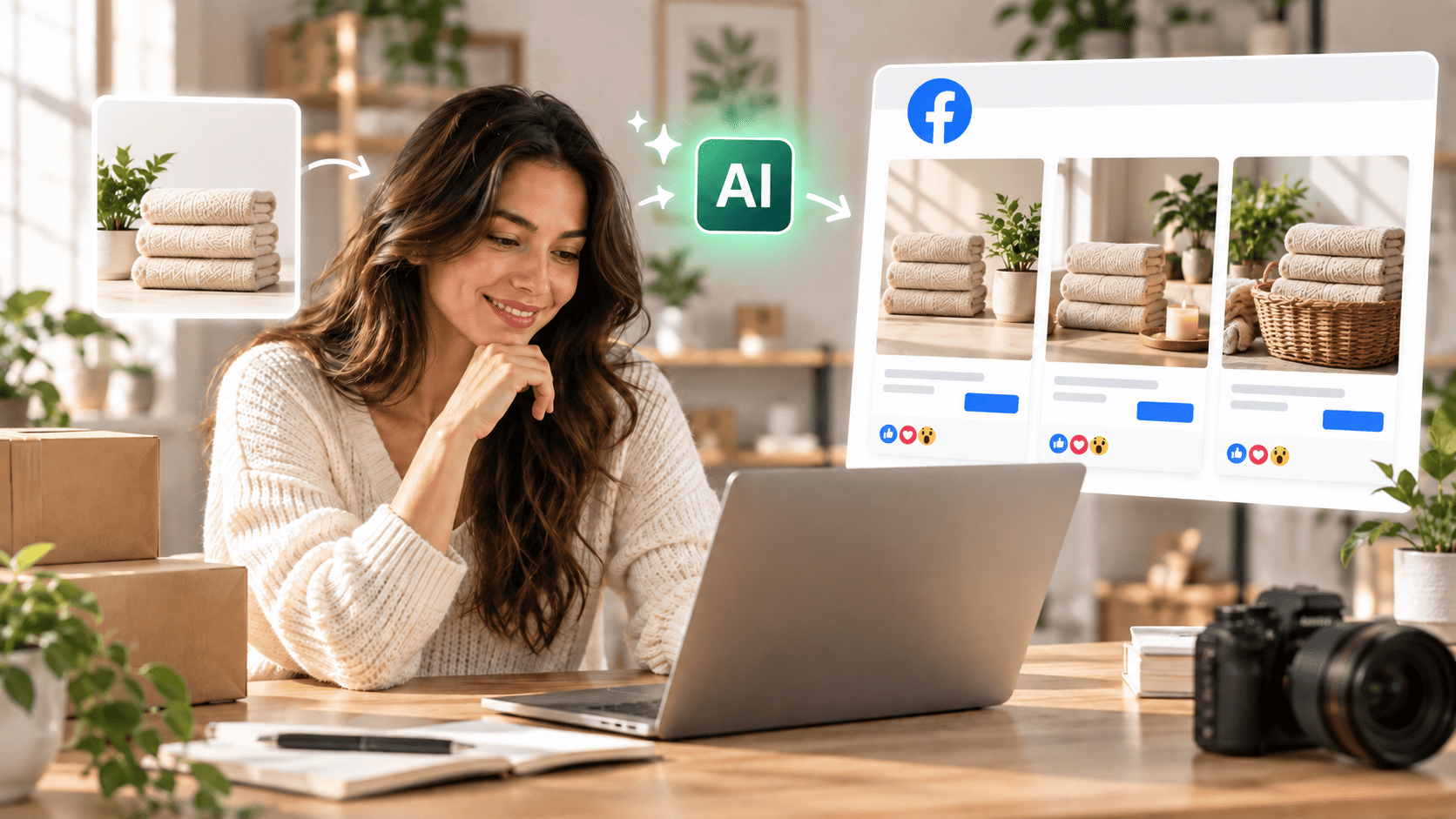
AI can create product descriptions, product titles, Facebook ad copy, TikTok hooks, Instagram ads, email content, and product page sections from a few product details. This helps sellers save time, test more angles, and improve their ecommerce content without writing every line from scratch.
Strong content matters because customers do not buy from product listings that feel unclear or generic. They need to understand what the product does, why it matters, how fast it ships, and why your offer is worth trusting.
Generative AI tools can help write:
SEO focused product titles
Product descriptions
Benefit focused bullet points
Facebook ad copy
TikTok ad scripts
Instagram ads
Email subject lines
Abandoned cart messages
Product FAQs
Brand voice variations
Sell The Trend’s AI Brand Builder helps sellers create SEO optimized product descriptions, Facebook ad copy, TikTok ad copy, feature lists, benefit highlights, and multilingual content. After finding a product through NEXUS AI, sellers can use it to prepare product pages and ad angles faster, then edit the final copy for brand voice and accuracy.
AI tools can also generate multiple ad variations and help sellers compare different angles, such as problem solving, impulse buy, giftable product, seasonal demand, or social proof. This is useful because one product can perform very differently depending on the hook, audience, and offer.
Some sellers also pair Sell The Trend generated copy with creative tools like Nano Banana 2 for image ads and Veo 3 for UGC style videos. This can speed up creative testing, especially when launching new product angles across TikTok, Facebook, and Instagram. For a practical walkthrough, watch this example on using Nano Banana 2 and Veo 3 for ad creative.
Want faster product copy and ad ideas after finding a winning product? Start your Sell The Trend free trial and turn product research into launch ready content.
How Does AI Help With Supplier Sourcing and Inventory?
AI helps with supplier sourcing by comparing product availability, supplier location, shipping options, delivery times, product prices, and inventory levels. This helps sellers avoid weak dropshipping suppliers and choose products that can support fast delivery, healthy profit margins, and better customer satisfaction.
A product can look like a winner in research, but the supplier decides whether the customer experience holds up. Slow shipping, unstable stock, or sudden price changes can turn a strong product into a refund problem.
AI powered supplier tools can help sellers check:
Supplier location
Product cost
Shipping options
Delivery times
Stock availability
Product variations
Supplier reliability
Price changes
Fulfillment options
Sell The Trend supports this part of the workflow by giving sellers supplier access and filtering options inside the same dropshipping platform they use for product research. That matters because sellers can review products and suppliers together before adding anything to their dropshipping store.
For example, if two suppliers offer the same product, the cheapest option is not always the best choice. One supplier may offer better delivery times, clearer product data, or more stable inventory levels. Another may have a lower price but slower shipping and weaker customer satisfaction.
AI can also help with larger catalogs. As a store grows, it becomes harder to manage product prices, stock changes, and supplier updates manually. Automation helps sellers track inventory and adjust pricing strategy without adding more daily work.
Want to find products and check supplier options in one place? Start your Sell The Trend free trial and compare supplier access before importing products to your store.
How Can AI Improve Customer Sentiment and Social Proof?
AI can improve customer sentiment by analyzing reviews, support questions, buying behavior, and product feedback. This helps sellers understand what customers like, what causes complaints, and which trust signals should be added to product pages, ads, FAQs, and customer support workflows.
Social proof matters because customers want proof before they buy from a new dropshipping store. Strong reviews, clear product benefits, realistic delivery expectations, and helpful answers can improve customer satisfaction and conversion rates.
AI tools can help sellers identify:
Common customer objections
Positive review patterns
Repeated complaints
Product quality concerns
Shipping related concerns
Questions customers ask before buying
Features buyers mention most often
Trust signals that should appear on the product page
SellShop and review tools like Viva Reviews, which is directly integrated with Sell The Trend, can support this process by helping sellers display reviews and strengthen trust around product listings. This is especially useful when launching new products, because early social proof can reduce hesitation and help customers feel more confident before buying.
AI can also personalize the shopping journey by recommending products based on user behavior. For an ecommerce store, this can increase engagement, help customers find relevant products faster, and support higher conversion rates.
Still, customer trust should stay real. Fake reviews, exaggerated claims, and copied product feedback can hurt the brand. AI should help organize and understand customer sentiment, not replace honest proof.
Want to launch with stronger trust signals? Use Sell The Trend to validate products, check suppliers, and build a better store foundation before sending traffic to your product pages.
Is AI Dropshipping Profitable in 2026?
AI dropshipping can be profitable in 2026, but profit is never automatic. AI can help sellers find high demand products, compare suppliers, create ads, and track performance data, but real profit still depends on product demand, profit margins, delivery times, ad costs, pricing strategy, and customer satisfaction.
AI improves the process because it reduces the time spent on manual research. Instead of guessing which products to test, sellers can use AI powered tools to review product data, competitor activity, product prices, and supplier options before launching.
A profitable dropshipping business usually comes down to four numbers:
Profit Factor
Why It Matters
Product cost
Sets your minimum selling price
Selling price
Decides your revenue per order
Ad cost
Affects how much you spend to get each sale
Refund rate
Shows whether customers are satisfied after buying
Sell The Trend helps sellers review these factors before they import products into a store. With NEXUS AI, Store Intelligence, supplier tools, and price monitoring, sellers can check whether a product has demand, whether competitors are selling it, and whether the margins make sense before spending money on ads.
AI also helps with scaling. Automation can support larger catalogs, more product imports, more ad variations, and more complex pricing strategies without adding the same amount of manual work. That makes it easier to test, improve, and manage products as sales grow.
But there are risks. Because AI makes product sourcing easier, popular AI discovered products can become saturated quickly. Over reliance on AI can also make product pages and ads feel generic, which may weaken brand trust.
Want to check demand, competition, supplier access, and margins before spending on ads? Start your Sell The Trend free trial and test product ideas with better data.
What Are the Best AI Dropshipping Tools in 2026?
The best AI dropshipping tools in 2026 depend on what you need help with: product research, supplier sourcing, fulfillment, store building, content creation, or ad creative. Sell The Trend is best for an all in one workflow, while other tools can support specific tasks like supplier management, video editing, or AI ad design.
Category
Tools
Best For
All in one AI dropshipping platforms
Sell The Trend
Product research, NEXUS AI, Store Intelligence, supplier access, product imports, SellShop store builder and fulfillment tools
Supplier and fulfillment tools
DSers, Spocket, Zendrop
Supplier sourcing, AliExpress fulfillment, US and EU suppliers, product imports, and delivery options
Store setup, Shopify page creation, product pages, store copy, and faster launch preparation
Category 1: All in One AI Dropshipping Platforms
Sell The Trend is the strongest fit for sellers who want one connected dropshipping platform instead of several separate tools. It brings product research, NEXUS AI, Store Intelligence, supplier access, product imports, store creation, and fulfillment features into one workflow.
This is useful for beginners because they can find products, check suppliers, import listings, and prepare for sales without building a complicated tool stack from day one.
Want product research, supplier access, product imports, store tools, and fulfillment in one place? Start your Sell The Trend free trial and test the workflow before adding more tools.
Category 2: Supplier and Fulfillment Tools
DSers, Spocket, and Zendrop are useful when supplier sourcing and fulfillment are the main priority.
DSers is commonly used for AliExpress based product imports and order management. Spocket is useful for sellers who want access to US and EU suppliers with faster delivery options. Zendrop can help with product sourcing, fulfillment support, and delivery management for selected products.
These tools can work well for sellers who already have product research handled and mainly need fulfillment support.
Category 3: AI Content and Creative Tools
Canva AI, MakeUGC, ChatGPT, CapCut AI, and AdCreative.ai can help sellers create product content and ad creative faster.
ChatGPT can help with product descriptions, product titles, ad hooks, FAQs, email copy, and customer support scripts. Canva AI and AdCreative.ai can help create image ads and social media assets. CapCut AI can speed up short video editing. MakeUGC can help sellers create UGC style video content for TikTok, Facebook, and Instagram campaigns.
These tools are helpful after a product has already been validated. Creative tools work best when the product, supplier, price, and offer are already clear.
Category 4: AI Store Builders
MakeMyStore.ai, SellShop, and Shopify Magic help sellers create stores and product pages faster.
SellShop fits well for Sell The Trend users who want store creation close to the product research workflow. MakeMyStore.ai is useful for beginners who want AI assisted Shopify store creation. Shopify Magic can help existing Shopify store owners write product content, page copy, and other store text.
The best choice depends on where the seller is starting. A beginner may want MakeMyStore.ai or SellShop for faster setup. A current Shopify user may use Shopify Magic to improve existing pages and product content.
Pro Tip: Choose tools by workflow, not popularity. Start with product research and supplier validation first, then add creative, store building, or fulfillment tools when they solve a clear problem.
How Do You Start AI Dropshipping Step by Step?
To start AI dropshipping, choose a niche, find high demand products, compare dropshipping suppliers, build a store, import products, create product listings, test ads, and automate order fulfillment. AI tools can save time, but human judgment is still needed for product quality, branding, supplier checks, and pricing.
1. Choose a niche with clear buying intent
Start with a niche where customers already buy online, such as pet products, home tools, beauty accessories, fitness items, baby products, or car accessories.
Avoid choosing a niche only because it looks trendy. Look for repeat buying potential, clear customer problems, and products with enough margin after shipping and ad costs.
2. Use AI to discover winning products
Use Sell The Trend’s NEXUS AI to review product data, demand signals, competitor activity, and supplier options. The goal is not to find random products. The goal is to find winning dropshipping products with high demand, strong margins, and reliable fulfillment options.
AI tools can scan social media, competitor ads, and sales trends to identify high potential products. This helps sellers move faster than manual research.
3. Compare suppliers before importing products
Before adding products to your dropshipping store, check supplier location, product cost, inventory levels, delivery times, and return risk.
Fast shipping and stable stock matter because they directly affect customer satisfaction. A product with strong demand but poor fulfillment can hurt your store after the first sale.
4. Build your ecommerce store
Create a clean Shopify store, SellShop store, or AI generated store through MakeMyStore.ai. Keep the layout simple. Focus on the product, offer, benefits, shipping details, reviews, and clear calls to action.
Do not overload the store with too many products at the start. A focused store is easier to test and improve.
5. Import products and improve the listings
Use one click imports where possible to add products faster, but edit every listing before publishing. Improve product titles, descriptions, images, FAQs, price points, and shipping details.
AI can write the first draft, but your final product page should sound specific, trustworthy, and useful.
6. Create and test ads
Use AI to create multiple ad angles for TikTok, Facebook, and Instagram ads. Test hooks based on different customer motivations, such as problem solving, gifting, convenience, price, or social proof.
Start with small tests. Watch performance data before increasing the budget.
7. Process orders and improve the store
Once sales start, use automation to process orders, monitor product prices, track inventory levels, and manage fulfillment. AI can help with daily operations, but keep reviewing supplier performance, customer support questions, and refund reasons.
Ready to start dropshipping with product research, supplier access, store tools, and fulfillment in one place? Start your Sell The Trend free trial and build your workflow before spending money on ads.
How Much Does AI Dropshipping Cost in 2026?
AI dropshipping can start at $49.97 per month with Sell The Trend’s Essential plan, pluss your domain, ad budget and product costs. The main cost advantage is that Sell The Trend includes ecom platform, product research, supplier access, product imports, stock monitoring, pricing tools, and order fulfillment in one plan.
If you build the same workflow with separate tools, the cost can rise quickly. You may need one tool for product research, another for supplier sourcing, another for order fulfillment, another for store creation, and another for creative testing.
Here is a simple comparison:
Feature or Use
Separate Tool Example
Typical Cost
Sell The Trend Essential
Product research
Minea
Starts around $49 per month for product and ad research
Included through NEXUS AI and product research tools
Order fulfillment
DSers
Paid plans start at about ~$19 per month
Included with automated order fulfillment
Product imports
AutoDS
Import plans start around $26.90 per month
Included, up to 500 imported products
Supplier access
Spocket or other supplier platforms
Usually a separate monthly tool cost
Included through supplier database access
Competitor research
Store spy or ad spy tool
Usually a separate monthly subscription
Included through Store Intelligence and product research tools
Price and stock monitoring
Inventory monitoring app
Often an added monthly app cost
Included with price and stock monitoring
Store creation support
Store builder or AI setup tool
Often a separate tool or platform cost like Shopify or Wix
Included through SellShop
Sell The Trend’s Essential plan is listed at $49.97 per month and includes SellShop, NEXUS AI Product Discovery, a daily handpicked winner, Facebook Winning Ads Finder, one connected store, automated order fulfillment, and up to 500 product imports.
DSers lists its Advanced plan at $19.90 per month, while AutoDS lists an import plan from $26.90 per month. Minea’s own pricing page shows paid plans for product and ad research, and third party pricing coverage lists its Starter plan at $49 per month.
This does not mean every seller only needs one tool forever. A growing store may still add specialist tools for email, reviews, customer support, analytics, or advanced creative production. But for the core AI dropshipping workflow, Sell The Trend Essential can reduce the need to pay for several separate tools before the store has steady sales.
Want to keep product research, supplier access, imports, stock monitoring, and fulfillment under one plan? Start your Sell The Trend free trial and test the Essential workflow before paying for multiple separate tools.
Frequently Asked Questions
What is the difference between traditional dropshipping and AI dropshipping?
Traditional dropshipping depends on manual research, supplier checks, product uploads, and ad creation. AI dropshipping uses artificial intelligence to speed up research, content, product imports, and daily store tasks.
How does AI improve product research in 2026?
AI improves product research by analyzing demand signals, competitor ads, social trends, and supplier data. Sell The Trend’s NEXUS AI and magic ai search can help sellers find top selling products faster.
Can AI build a full ecommerce store automatically?
Yes, AI can help build an e commerce store by creating layouts, product pages, product titles, descriptions, and ad copy. SellShop and MakeMyStore.ai can speed up setup, but sellers should still edit the store for branding and trust.
Why is real time data visibility so important for dropshipping now?
Real time data helps sellers track product prices, stock levels, delivery times, ads, and supplier changes. Without it, a store may keep selling products that are out of stock, overpriced, or no longer profitable.
What AI tools are essential for a professional dropshipping stack in 2026?
A strong stack should include product research, supplier sourcing, store creation, product imports, ad copy, price monitoring, stock tracking, fulfillment, and customer support. Sell The Trend brings all the tools for the core workflow into one platform.
Is AI dropshipping saturated in 2026?
AI dropshipping is competitive, but not dead. The risk is copying the same AI discovered products as everyone else. Real dropshipping success comes from better data, trusted suppliers, clear branding, strong ads, and fast delivery.
Final Thoughts: Is AI Dropshipping Worth It in 2026?
AI dropshipping is worth it if you want to save time, reduce guesswork, and make better product decisions before spending on ads. An AI agent can help with research, content, and support, but sellers still need to review products, suppliers, pricing, and claims.
Instead of paying for too many dropshipping apps and multiple tools, start with one connected workflow.
Sell The Trend gives you product research, NEXUS AI, Store Intelligence, supplier access, product imports, store tools, and fulfillment features in one platform. Start your Sell The Trend free trial today and launch with better data, not guesswork.
Maria is a marketing specialist with hands-on experience in digital growth strategies and eCommerce.
As part of the Sell The Trend team, she has developed deep expertise in dropshipping through close work with product research, trend analysis, and go-to-market strategies used by successful online sellers.
Her content focuses on practical marketing insights, audience behavior, and data-driven decision-making to help merchants launch and scale with confidence.