Sell on Temu with Strategy – Tips from Top Sellers

17 November 2025

Contents

Are you asking yourself: Is dropshipping worth it in 2026? The answer is yes. The dropshipping business model is among the most profitable in 2026, with the global dropshipping market projected to surpass $1 trillion by the end of the decade. Success today requires moving beyond basic reselling to focus on high-quality dropshipping suppliers, brand identity, and leveraging an advanced dropshipping platform to automate inventory management.
Again, the answer is a resounding yes, and these key takeaways prove it!
Starting a dropshipping business in 2026 is no longer about “getting rich quick” through random AliExpress imports. Instead, it has evolved into a solid ecommerce business model that rewards entrepreneurs who treat their dropshipping store like a traditional retail business. While dropshipping still offers a low-risk business model compared to other business models, the competition is higher than ever. To stand out, store owners must prioritize customer satisfaction, product quality, and data-backed marketing strategies.
Many beginners ask if the dropshipping model is too saturated. However, market research data indicates that shopping online is constantly growing in popularity. In 2023, the global ecommerce transaction value reached $6.03 trillion, and digital commerce is projected to hit $9.04 trillion by 2027. This growth creates massive opportunities for a successful business that can adapt to changing customer demand.
Modern dropshipping success relies on using an all-in-one platform like Sell The Trend, which combines predictive product research (Nexus AI), built-in store creation (SellShop), supplier automation, and 1-click order fulfillment into a single workflow.
Pro Tip: Don’t just look for products that are “cool.” Use a dropshipping platform like Sell The Trend to analyze NEXUS AI data and TikTok viral trends to find items with proven customer loyalty before you spend money on ads.
🔗Start your 14-day free trial of Sell The Trend today!

The first thing you need to understand is that the dropshipping model has evolved significantly over the last few years. At its core, it remains a retail fulfillment method where a dropshipping store does not keep the products it sells in stock. Instead, when a customer places an order, the merchant purchases the item from a third-party supplier who then ships it directly to the consumer. This business model allows entrepreneurs to eliminate risk and simplify their operations by not being tethered to physical inventory or long-term warehouse leases.
In the modern dropshipping model, entrepreneurs are responsible only for marketing, sales, and customer support. This lean structure is what makes it such an attractive business model for those looking to enter the ecommerce space with low upfront investment. By outsourcing product fulfillment, you can focus entirely on the front end of your ecommerce store. Many tasks in this type of business can now be automated through a specialized dropshipping platform, streamlining operations and saving valuable time for entrepreneurs.
Despite common misconceptions, dropshipping is a legitimate ecommerce business model utilized by major retailers worldwide. In fact, research shows that more than 30% of eCommerce stores use dropshipping to fulfill at least a portion of their orders. It provides access to a global market, allowing sellers to reach customers worldwide without the logistical nightmare of international warehousing. This business approach allows for a wide selection of products without the risk of overstocking or being stuck with unsold inventory.
The primary difference between a dropshipping business and a traditional retail business is the requirement for capital and storage. A traditional model requires you to purchase inventory upfront, which often leads to high overhead costs and the risk of dead stock. Conversely, the dropshipping model requires a minimal upfront investment, allowing entrepreneurs to launch quickly without significant financial exposure. Furthermore, dropshipping offers the benefit of low overhead costs since there is no need for physical storefronts or expensive warehousing.
Here’s an easy comparison table for your reference.
| Feature | Dropshipping Business | Traditional Retail |
| Inventory Management | No inventory held; fulfilled by a third-party supplier | Must purchase inventory upfront and store it |
| Initial Startup Costs | Very low (often under $200 for software and ads) | High (requires capital for stock, warehouse, and staff) |
| Financial Risk | Low; you only pay for a product after a customer buys it | High risk of being stuck with unsold or dead stock |
| Location Flexibility | Can be managed from anywhere with an internet connection | Often tied to a physical location or warehouse |
| Product Variety | Easy to pivot and add new products instantly | Limited by physical space and available capital |
| Margins | Typically 20% to 30% (lower due to outsourcing) | Typically higher (buying in bulk reduces unit cost) |
| Shipping & Logistics | Managed entirely by reliable suppliers | Managed by the business owner or a local team |
Pro Tip: While the barrier to entry is low, do not treat your online store like a hobby. Successful store owners in 2026 use professional tools like the Sell The Trend Supplier Finder to ensure they are working with reliable suppliers who guarantee high product quality.

The answer is a bit nuanced. One of the most common concerns for beginners is whether the dropshipping industry has become too crowded. While it is true that competition is high due to the low barrier to entry, the market is expanding at a rate that continues to outpace the number of new sellers.
The dropshipping market is expected to grow significantly, with projections reaching over $1 trillion by the end of the decade. The industry is currently projected to grow at a 24.39% average annual growth rate from 2020 to 2026. Experts predict that as shopping on the web continues to become the primary method of consumption, the total value will only climb. In 2024, the global dropshipping market was already valued at $351.8 billion, proving that there is plenty of room for a profitable dropshipping business to thrive.
According to Grand View Research, dropshipping is rising in popularity due to consumers’ deep-seated preference for online shopping. This shift creates constant gaps in the market that a nimble dropshipping store can fill. Modern online shoppers are looking for niche items that solve specific problems, rather than generic products found in big box stores. Dropshipping enables entrepreneurs to pivot quickly by adapting their product offerings based on real-time market trends and customer demand.
Again, this is a complex question that requires a nuanced answer. In the past, you could find success by simply listing any product and running basic ads. Today, the focus has shifted toward customer loyalty and customer satisfaction. The dropshipping still works, but only if you provide a professional experience. The number of people searching for the term “dropshipping” has increased exponentially from 2004 through 2024, signaling that while more people are aware of the model, those who use advanced tools to perform thorough market research are the ones who ultimately find success.
Pro Tip: Instead of guessing what is saturated, use NEXUS AI by Sell The Trend. This predictive engine identifies products before they hit peak saturation, giving you a massive competitive advantage.
🔗You can see how it works with a 14-day free trial.

The answer depends on the type of store, but a major reason entrepreneurs ask “Is dropshipping worth it in 2026?” is the promise of low startup costs. Unlike traditional retail, where the average eCommerce entrepreneur spends $40,000 in their first year, a dropshipping venture allows you to launch with a fraction of that capital. Research indicates that low costs are a significant advantage, often requiring less than $200 to get started. This makes starting a dropshipping business one of the most accessible paths to entrepreneurship today.
It’s somewhat straightforward. When you start a dropshipping business, you primarily spend money on three things: your ecommerce platform subscription, a domain name, and your initial marketing budget. Because you do not need to get inventory upfront, your financial risk is significantly lower than with other models. Many beginners use free tools to identify rising interests before they even pick a niche, ensuring they don’t waste funds on a dying market.
Here’s a table showcasing the estimated 2026 startup costs (from the initial setup to scaling).
| Expense Category | Estimated Cost (Monthly) | Purpose |
| Ecommerce Platform | $20 – $40 | Professional storefront (e.g., SellShop or Shopify) |
| Product Research Tool | $19.97 – $29 | Using Sell The Trend to find quality products |
| Domain Name | $1 – $2 | Brand identity and professional URL |
| Initial Ad Spend | $200 – $350 | Testing your first marketing strategy on social media |
| Total Startup Capital | Approx. $240 – $420 | Launching a professional online store |
While starting a dropshipping business is affordable, how you allocate your budget determines whether your business remains viable. It is easy to overspend on fancy logos or unnecessary dropshipping apps. Instead, focus your capital on thorough market research and testing different potential customers.
Are you still asking yourself: “Is dropshipping still profitable in 2026?”
Well, the answer lies in your ability to optimize your ad spend. By using a specialized dropshipping platform, you can automate much of the workflow, which keeps your overhead low and your profitable business model healthy.
Pro Tip: You can drastically reduce your initial testing costs by using Sell The Trend’s NEXUS AI. Instead of spending hundreds on trial-and-error ads, the AI shows you what is already selling.
🔗You can start exploring these winning products for free with a 14-day trial.

To determine dropshipping’s worth, or rather, if it is worth the effort, you must understand the numbers behind the sales. Many people ask how much profit they can realistically expect. In 2026, the average dropshipping profitable margin generally ranges from 20% to 30%. While this is lower than some other models, the lack of inventory costs and warehouse fees makes it a highly viable business model.
A successful dropshipping business is not just about high revenue; it is about what you keep after all expenses. The average dropshipper makes between 10% and 30% profit on sales after accounting for ad costs and supplier fees. When comparing the dropshipping worth to the landscape in 2024, the market has become more efficient. Store owners are now focusing on “high-ticket” items to increase their per-sale profit margin, which is a key strategy for maintaining profit margins in a competitive environment.
Here’s another table that shows a margin comparison between low-, mid-, and high-ticket items.
| Product Type | Sale Price | COGS + Shipping | Ad Spend/Fees | Real Profit Margin |
| Low Ticket (e.g., Gadgets) | $25 | $8 | $10 | 28% ($7) |
| Mid-Tier (e.g., Home Decor) | $75 | $30 | $20 | 33% ($25) |
| High Ticket (e.g., Furniture) | $450 | $220 | $80 | 33% ($150) |
Several variables can eat into your gains. Shipping delays and product quality issues can lead to refunds, which directly hurt your bottom line. Furthermore, in a crowded dropshipping market, price wars can lead to low profit margins if you are selling the exact same thing as everyone else. To make dropshipping profitable, you must find unique dropshipping niches and build a brand that justifies a premium price.

Your choice of a dropshipping supplier is the foundation of your entire business. If your dropshipping store relies on slow or dishonest partners, you will face endless customer inquiries and poor customer feedback. In 2026, supplier reliability is the #1 factor in dropshipping success.
High satisfaction rates lead to customer loyalty, which is essential for long-term growth. When you use multiple suppliers, you must ensure that each one meets strict standards for shipping times and product quality. Reliable partners help you provide excellent customer service by ensuring that customer orders arrive on time and in perfect condition.
Searching for the best dropshipping suppliers manually can take weeks. Sell The Trend simplifies this by offering a vetted list of dropshipping suppliers who are used to working with high-volume dropshipping businesses. Whether you are looking for local shipping in the US or global fulfillment, the platform connects you with partners that help you avoid the common pitfalls of the industry.
🔗Start your 14-day free trial of Sell The Trend today!

If you are still wondering this: “Is dropshipping worth it?” even after seeing the competition, the secret lies in product selection. While many beginners failed because they stuck with what was worth it in 2024, successful sellers have pivoted to high-demand, high-utility niches. By using NEXUS AI to track real-time consumer shifts, we have identified the five categories currently dominating the dropshipping market.
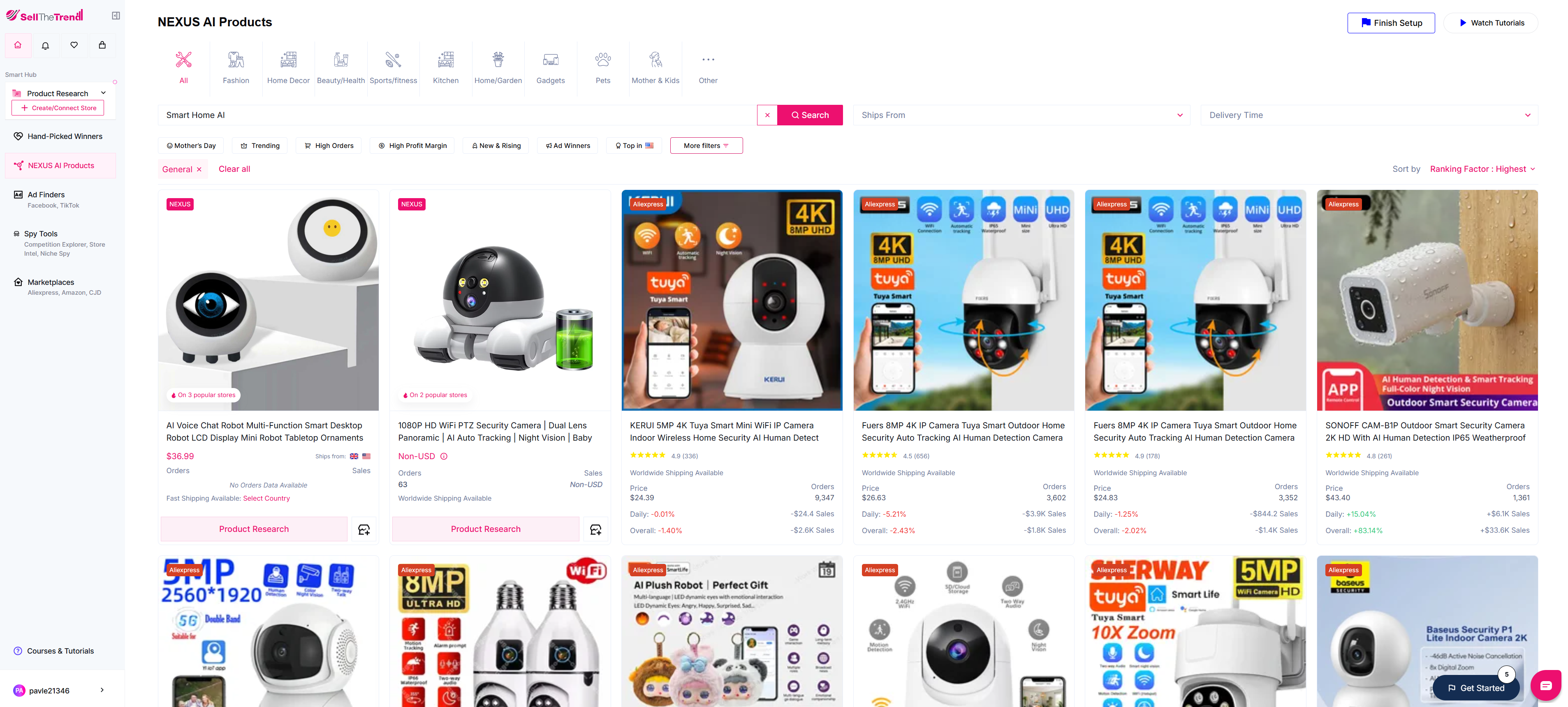
As AI becomes central to daily life, consumers are looking for hardware that bridges the gap between their digital assistants and their physical homes. Items like AI-powered security cameras, smart lighting that syncs with circadian rhythms, and voice-activated kitchen tools are seeing massive growth. These products are often seen as a viable business model because they command higher price points and offer better margins. When you sell products in this niche, you are tapping into a tech-savvy audience that prioritizes convenience over price.
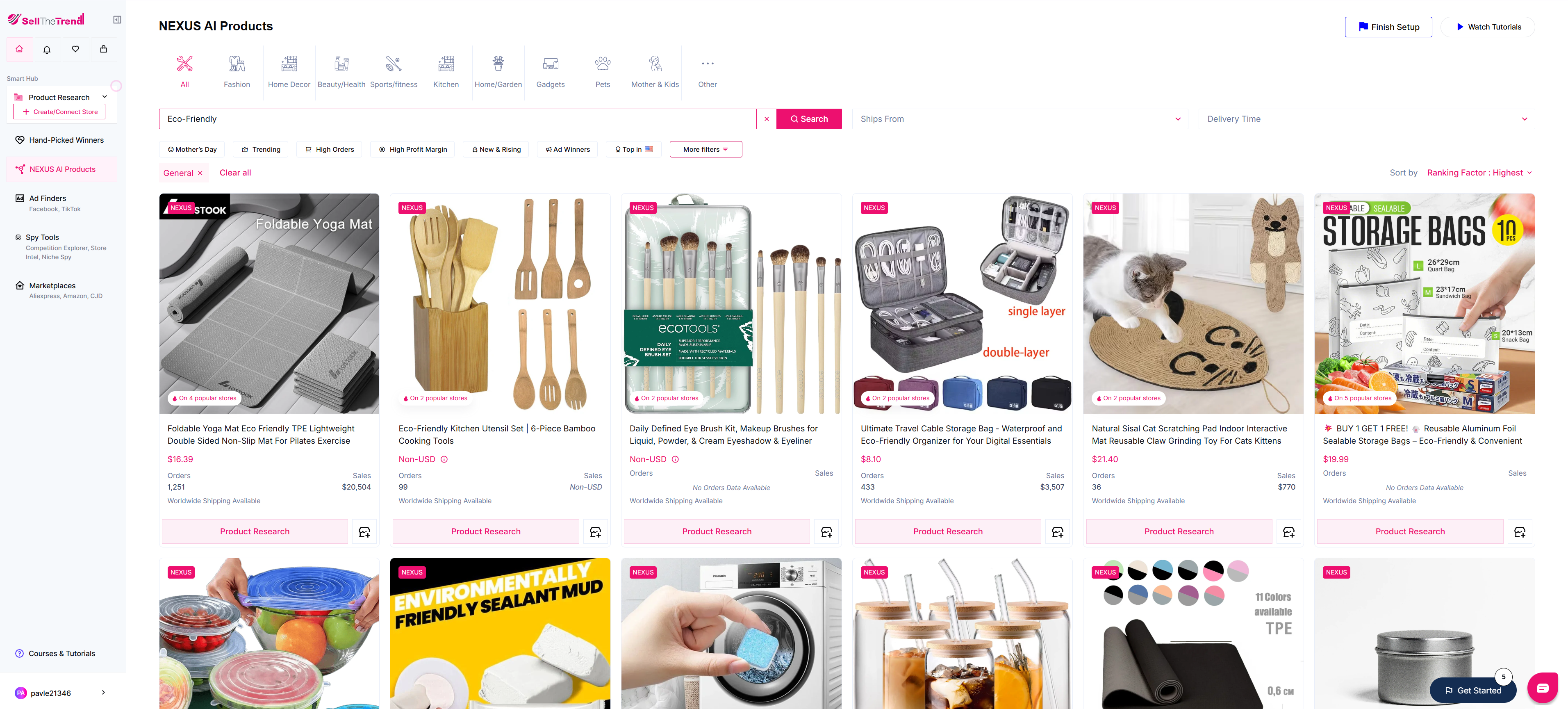
The shift toward sustainability has moved from a trend to a requirement for many online shoppers. Zero-waste personal care kits, biodegradable home office supplies, and solar-powered portable chargers are leading the way. Because these items often require specific manufacturing standards, finding reliable suppliers who can prove their eco-credentials is key to maintaining consumer satisfaction. This category is particularly effective for building loyalty because shoppers feel good about their purchases.
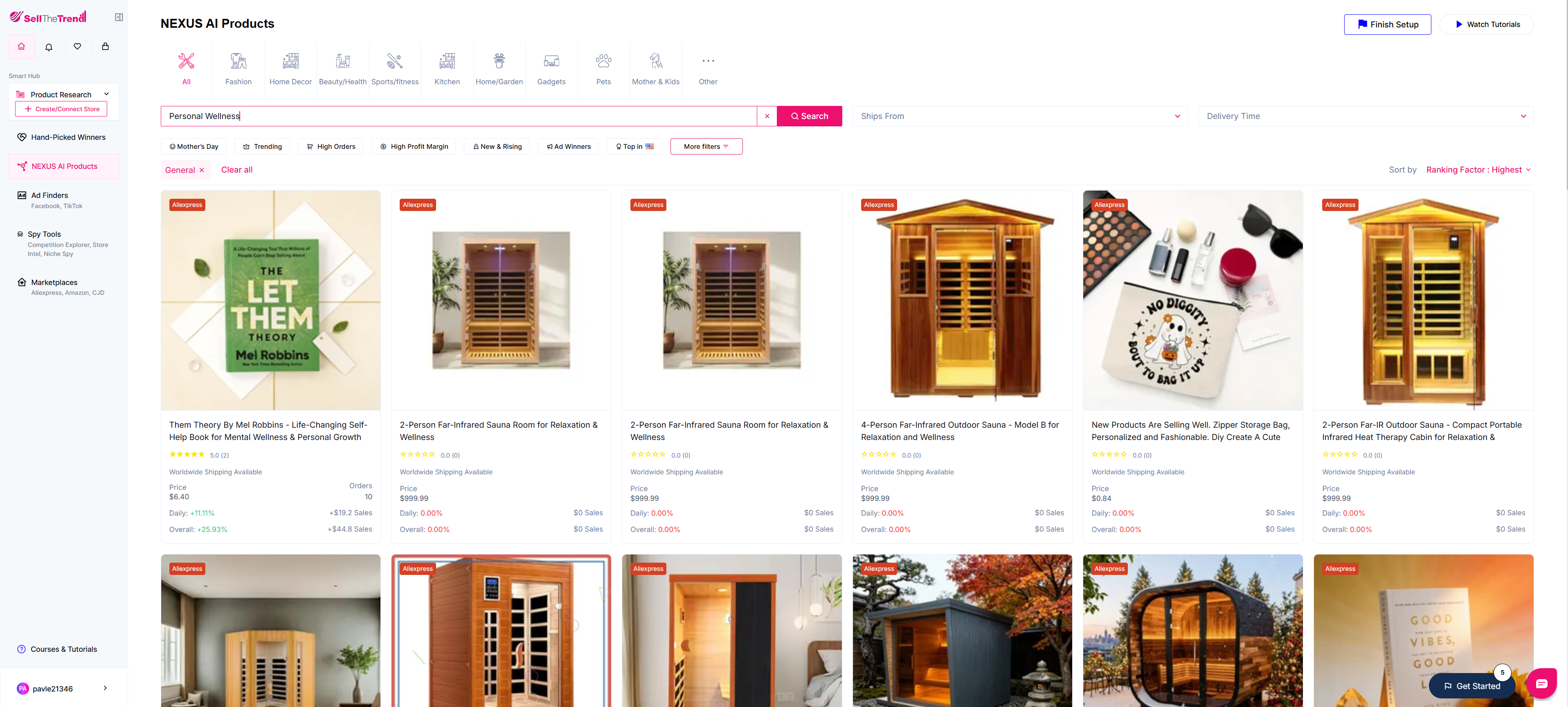
Health is no longer just about the gym. In 2026, people are investing in “bio-hacking” tools like wearable posture correctors, portable red-light therapy devices, and smart water bottles that track hydration via mobile dropshipping apps. This niche allows owners to create a strong brand identity around self-improvement. If you want to see how much profit is possible, look at the recurring revenue potential of wellness accessories.
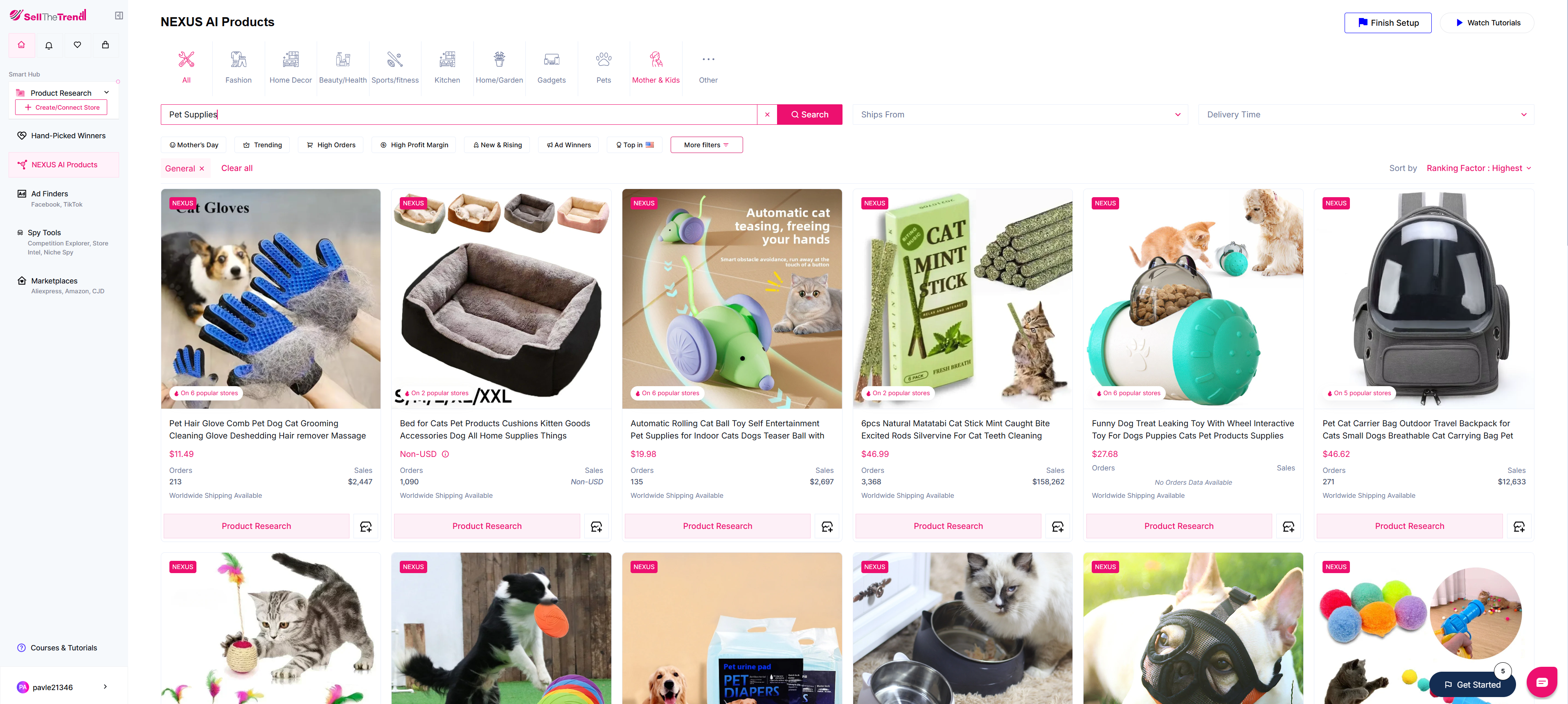
The pet industry remains one of the most resilient models. However, the focus has shifted to automation. Self-cleaning litter boxes, smart pet feeders with camera integration, and GPS-enabled collars are the current “winners” found via the Sell The Trend TikTok Viral Ads Explorer. These products solve major pain points for pet owners, making them high-converting items for any store.
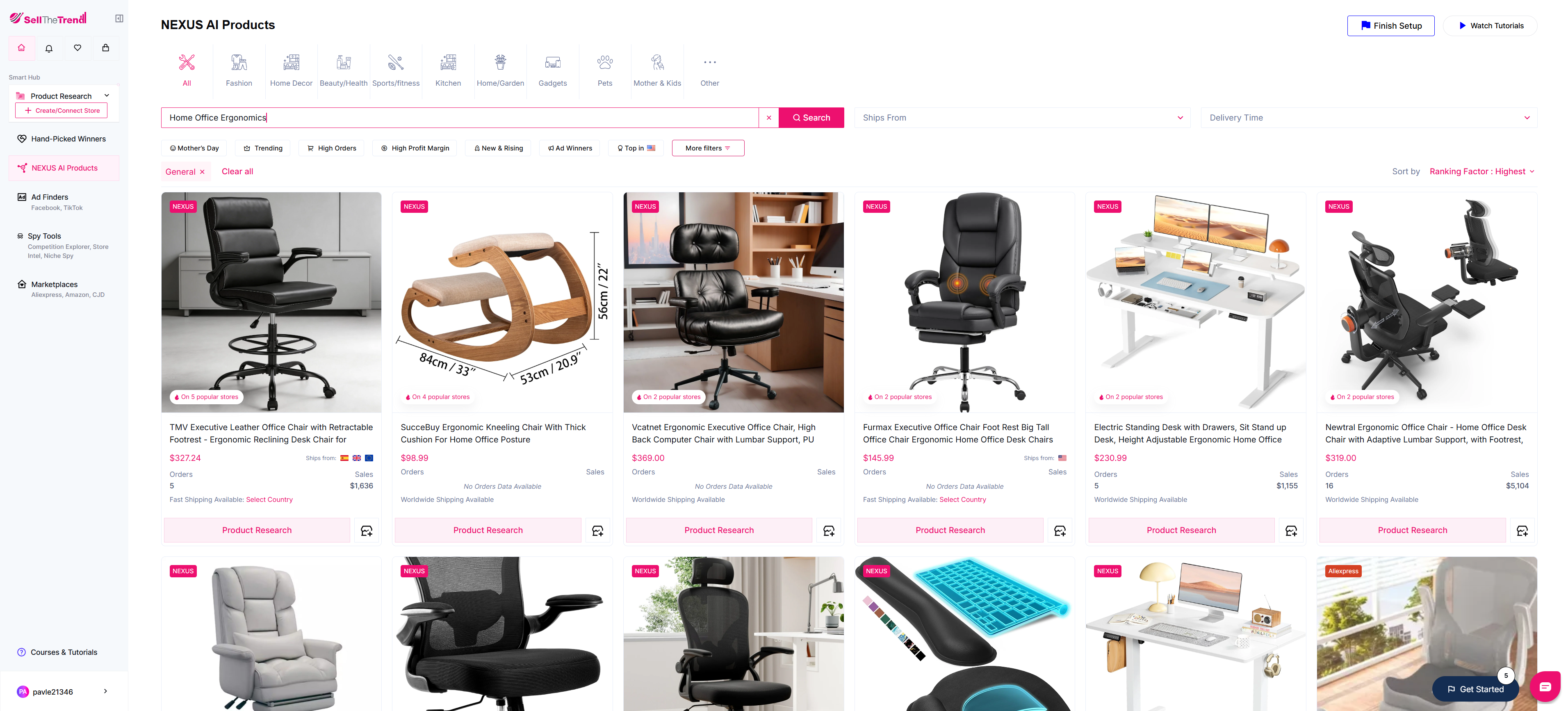
With the permanent shift toward remote and hybrid work, the home office has become a sanctuary. High-ticket items like ergonomic standing desks, specialized lumbar support chairs, and noise-canceling acoustic panels are in high demand. While these involve higher shipping costs, the dropshipping still makes sense here because the high average order value allows for significant margins even after aggressive ad spend on social media platforms.
Pro Tip: Don’t just pick a category and hope for the best. Use Sell The Trend to validate the “Sales Strength” of a specific item within these niches before you add it to your online store.
🔗You can access all the latest winning product data for free with a 14-day trial.

Once you have identified a niche, the next step is choosing where your online store will live. A platform is required to set up a store, and the choice you make will impact everything from your site speed to your ability to scale. In 2026, shoppers have zero patience for slow loading times or clunky checkout processes. Therefore, selecting a high-performance e-commerce store solution is vital.
For many, Shopify dropshipping remains the go-to choice due to its massive app ecosystem and ease of use. However, as the industry matures, many owners are looking for more integrated solutions. Platforms like SellShop let you launch a store with a single click, offering a streamlined experience for those who want to focus on sales rather than web development. Regardless of the ecommerce platforms you consider, ensure they offer robust mobile optimization, as most potential customers will be shopping on their phones.
In the current economy, price-conscious consumers are looking for the best value. This does not necessarily mean being the cheapest, but it does mean providing a professional experience that justifies your price point. Quality product descriptions and images can significantly enhance online sales. By providing high-resolution photos and clear, benefit-driven copy, you reduce the “friction” of the purchase. Furthermore, always display customer feedback and reviews prominently to build trust with new visitors.
To keep your profitable business model running smoothly, you need to automate as much as possible. Using specialized apps for inventory management ensures that you never sell an item that is out of stock at the supplier level. These tools also assist in tracking customer orders and providing real-time shipping updates. Managing a successful dropshipping business requires staying organized, and having a suite of tools to handle the “heavy lifting” makes the dropshipping worth the initial effort.
Pro Tip: Your target market expects a seamless experience. Use the Sell The Trend 1-Click Store feature to ensure your technical setup is perfect from day one, so you can focus on finding quality products.
🔗Start your 14-day free trial of Sell The Trend today!

Having a beautiful store is only half the battle. To achieve dropshipping success, you must drive consistent traffic. In a competitive market, successful dropshippers require strong marketing skills to stand out. You should focus on marketing to attract customers to your store using a mix of paid and organic methods.
In 2026, social media platforms are the primary discovery engines for new brands. Whether it is TikTok, Instagram, or Pinterest, your marketing strategy needs to be visual and engaging. Instead of traditional “salesy” ads, focus on creating content that shows the product in use. This approach helps in reaching potential customers who are scrolling for entertainment but are open to making a purchase if they see something that solves a problem.
One of the most effective strategies today is “trend surfing.” By using the Sell The Trend TikTok Viral Ads Explorer, you can see exactly which products are going viral before they reach peak saturation. This allows dropshipping businesses to stay ahead of the curve. By identifying these trends early, you can create a profitable dropshipping business by being the first to offer a solution to a rising consumer demand.
Research indicates that creating a unique brand identity is essential for dropshipping success. If you want your venture to last, you cannot rely solely on one-off sales. You must build loyalty. This involves consistent branding, personalized email marketing, and demonstrating that you understand your customers’ needs. When you move from being a “random store” to a “trusted brand,” the question of whether dropshipping is still profitable becomes irrelevant because you have built an asset with long-term value.
Pro Tip: Use the NEXUS AI “Competition Tracking” feature to see what other successful dropshipping stores are doing in your niche. Don’t copy them; learn from their successes and failures to refine your own marketing strategies.
🔗You can start your competitive research today with a 14-day free trial.

Is dropshipping worth it for your specific situation? You must look at why others fail. The “beginner reality” is often shaped by avoidable errors. One of the most common pitfalls is failing to perform thorough research. Many new sellers pick products based on personal preference rather than data, leading to low demand.
Dropshippers often face challenges with customer service because they rely on a third-party supplier for fulfillment. If you ignore inquiries about shipping delays, you will quickly see an increase in chargebacks. Success in 2026 requires transparency. If a shipment is late, be proactive. High consumer satisfaction is the only way to ensure your dropshipping still remains a profitable model.
Pro Tip: Automation is your best friend. Use a platform that syncs tracking numbers automatically so customers are never left wondering where their package is.
🔗Start your 14-day free trial of Sell The Trend today!

Many newcomers ask, “Is dropshipping legal?” The answer is a resounding yes. It is a standard retail method used globally. However, it is only a viable model if you follow the law. This means avoiding trademarked or copyrighted products. Selling “knock-off” designer goods is the fastest way to get your online store shut down and face legal consequences.
If you are interested in Amazon dropshipping, you must be even more careful. While dropshipping contributes about 34% of sales on Amazon, the platform has very strict policies regarding packaging and identification. You cannot simply ship an item from another retailer in their branding. To provide good customer service and stay compliant, you must ensure you are the “seller of record” on all documentation.
Ultimately, maintaining top-notch customer service is your best legal defense. When you handle returns fairly and communicate clearly, you minimize the risk of merchant account freezes. Even though the market was different in 2024, the core requirement for legal and ethical operations remains the same in 2026.
🔗Start your 14-day free trial of Sell The Trend today!

Once your store begins generating consistent sales, the challenge shifts from discovery to management. A venture is only as strong as the systems supporting it. Without the right apps, you will quickly find yourself overwhelmed by manual tasks, leading to delays and declining consumer satisfaction.
As you can surmise, the clear winner is Sell The Trend. This tool offers an all-in-one platform with Nexus AI, a built-in store builder (SellShop), supplier automation, 1-click fulfillment, and many more useful features. Some other excellent tools are AutoDS, Spocket, DSers, and a few others.
Here’s a quick comparison table:
| Feature | Sell The Trend | AutoDS | Manual Research |
|---|---|---|---|
| Product Discovery | Nexus AI (predictive) | Trend-based | Manual guesswork |
| Store Builder | Built-in (SellShop) | ❌ | ❌ |
| Supplier Finder | AI-ranked suppliers | Limited | Manual |
| Fulfillment | 1-click automation | Automated | Manual |
| Time to Launch | < 1 hour | Several hours | Days |
In 2026, automation is the dividing line between a hobby and a successful business. By implementing robust management tools, you ensure your store stays in sync with your suppliers in real time. Automation streamlines operations and saves time for entrepreneurs by handling order processing, tracking number updates, and stock level monitoring. If you want to sell products at scale, you cannot afford to place orders manually. The model remains one of the best for growth because it is easy to automate repetitive tasks.
Scaling requires more than just efficiency; it requires foresight. NEXUS AI by Sell The Trend serves as a predictive analytics engine that analyzes millions of data points across the market. Instead of reacting to a trend when it is already worth it in 2024, the AI helps you spot the next big wave in 2026. This allows owners to move into new dropshipping niches with confidence, knowing their target market is already showing high interest. Using these advanced tools is what makes the dropshipping worth the initial learning curve.
Pro Tip: As you scale, look for the best suppliers who offer private labeling or custom packaging. Moving from generic items to a “branded” experience is the most effective way of maintaining profit as your volume increases.
🔗Start your 14-day free trial of Sell The Trend today!
To provide a clear “beginner reality,” we have compiled the most frequently asked questions about the industry in 2026.
Yes, dropshipping remains profitable and a viable model. While competition is higher than in previous years, global ecommerce transaction value is reaching new heights. Digital commerce is projected to reach $9.04 trillion by 2027, creating massive opportunities for those offering quality products and providing excellent customer service.
You can start a dropshipping business with a minimal investment. Most owners require less than $200 for their initial setup, which includes a platform and basic ad testing. While the average eCommerce entrepreneur spends $40,000 in their first year on inventory, dropshipping allows you to spend on marketing instead of stock.
While it is true that many people are starting dropshipping businesses, the market is growing at an average annual rate of 24.39%. Most “saturated” claims come from those who sell the exact same products as everyone else. By focusing on unique niches and building loyalty, you can easily stand out in the industry.
Success typically requires dedication. While some make a sale in the first week, research indicates that success often takes a year of full-time work to replicate an average full-time income. It is a marathon, not a sprint.
The biggest mistake is failing to conduct thorough research. Many beginners pick a product because they think it is “cool” without checking Google Trends or analyzing customers. This leads to low profit and wasted ad spend.
A professional platform like Sell The Trend is essential. You need tools for product discovery (NEXUS AI), inventory, and a vetted list of suppliers. These tools ensure supplier reliability and help you avoid common dropshipping pitfalls.
While $100 can be enough to launch, it might be tight for sustained marketing. If you are on a strict budget, focus on organic traffic via social media before moving to paid ads.
Yes, if you sell copyrighted or trademarked products. To keep it legal, always source items that do not infringe on intellectual property and work only with suppliers who provide quality products.
The final answer to whether dropshipping is worth it in 2026 depends on your expectations. If you are looking for a get-rich-quick scheme, you will likely be disappointed. However, if you view it as a legitimate ecommerce model that requires a solid marketing strategy and commitment to consumer satisfaction, the potential for wealth is immense.
The industry is expected to reach $724.26 billion by 2027, and with more than 30% of eCommerce stores using this model, it is clearly a proven path to success. By utilizing the right technology to automate your inventory and identify winning products, you can build a profitable model that stands the test of time.
If you’re serious about starting dropshipping in 2026, the difference between success and failure comes down to data and automation. Sell The Trend gives you everything in one place — from winning product discovery with Nexus AI to supplier automation and 1-click fulfillment.
🔗Start your 14-day free trial of Sell The Trend today!

Lisa is an eCommerce and digital marketing specialist with over 6 years of experience helping online businesses grow through data-driven strategy and hands-on execution.
She has worked across dropshipping and direct-to-consumer channels, focusing on product research and performance marketing. At Sell The Trend, she creates practical, research-backed content to help merchants make confident decisions.